Bullock Texas State History Museum Review
History Museums · Austin, United States. The Bullock Texas State History Museum, located in Austin, stands as a prominent institution dedicated to the preservation and presentation of Texas’ diverse history. Opening its doors in 2001, it was established with the…
History Museums · Austin, United States. The Bullock Texas State History Museum, located in Austin, stands as a prominent institution dedicated to the preservation and presentation of Texas’ diverse history. Opening its doors in 2001, it was established with the…
Best forHistory lovers, cultural travelers, local heritage
Review focusHistorical collections, local context, and visitor planning
Historical Context
The Bullock Texas State History Museum, located in Austin, stands as a prominent institution dedicated to the preservation and presentation of Texas’ diverse history. Opening its doors in 2001, it was established with the goal of consolidating the state’s rich past into a single narrative space, combining elements of culture, politics, and social development. Named after Bob Bullock, a former Texas lieutenant governor, the museum seeks to provide insight into the stories that have shaped Texas from its earliest inhabitants through to its modern identity.
The museum’s origins lie in state initiatives dating back to the 1950s, initially focusing on archival collections and exhibits housed in various locations before the construction of a dedicated building. The decision to create a comprehensive, state-level history museum was influenced by a desire to curate Texas’ past in a way that was accessible and engaging to the public. Austin, as the state capital, offered a strategic location both symbolic and practical for such an institution. Over the years, the museum has developed not only as a repository of artifacts but as an educational hub, emphasizing statewide relevance rather than local or city-specific histories.
Against the backdrop of Texas’ complex colonial past, its struggles for independence, and its role in modern America, the Bullock Museum has steadily defined its place among institutions interpreting regional history. It approaches Texas history with an awareness of its multifaceted nature—covering indigenous populations, European exploration, frontier expansion, oil heritage, and the cultural mosaic that characterizes the state today. The museum’s establishment marked a broadening of historical perspective in Texas museums, aiming for comprehensive storytelling rather than isolated anecdote.
What You See on Arrival
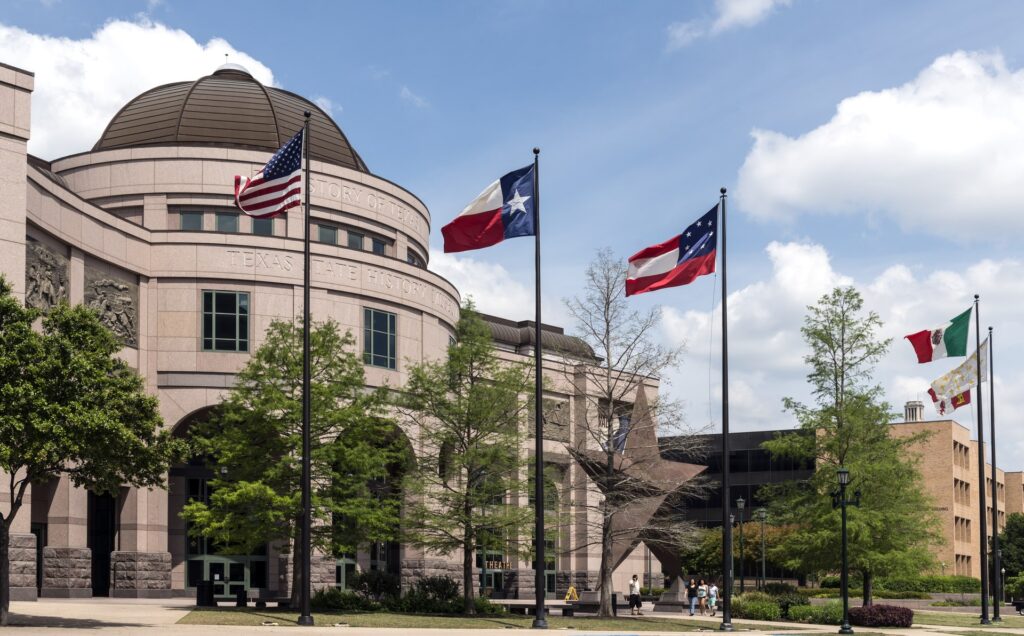
Approaching the Bullock Texas State History Museum, visitors are greeted by a building whose architecture signals both modern civic importance and a connection to the cultural heritage inside. The expansive facade, marked by clean lines and a combination of stone and glass, anchors the museum within Austin’s urban fabric while inviting visitors through a grand entrance. Outside, the setting provides a transitional space from the cityscape into a dedicated place for reflection and learning.
The museum’s external signage and display panels present clear orientation, helping visitors understand they are entering a space devoted to Texas’ past. Artifacts or artistic elements visible through windows provide initial hints at the variety of exhibits housed within. The building’s design, while modern, incorporates motifs and materials that resonate with Texas’ natural environment and history, preparing visitors visually for a blend of old and new narratives.
Inside the lobby, the spatial planning likely supports a smooth initial transition, accommodating visitor services, ticketing, and orientation. This first interior impression would generally introduce thematic cues to the story of Texas, priming visitors for an experience that is chronological and thematic rather than purely aesthetic or abstract. The overall institutional identity conveyed in these opening spaces establishes expectations for a structured, educational encounter with historical content.
Highlights and Key Exhibitions
The core of the Bullock Texas State History Museum lies in its permanent exhibition, which traces the comprehensive history of Texas through well-curated displays, artifacts, and multimedia presentations. This exhibition is arranged chronologically and thematically, covering eras from indigenous cultures and colonization through revolution, statehood, oil, and contemporary developments.
The section on early Texas history includes artifacts related to Native American cultures, offering visitors a glimpse into the lives and legacies of the tribes inhabiting the region before European contact. Objects here include tools, clothing, and artistic items that illustrate diverse indigenous experiences and skills. This foundational section is important because it acknowledges the deep temporal roots of Texas and sets the stage for subsequent historical developments.
European exploration and colonization receive substantial attention, with exhibits portraying Spanish missions, French expeditions, and Anglo-American settlement. These components focus on cultural interactions, conflict, and settlement patterns. The museum’s presentation addresses Texas’ place within larger geopolitical struggles and shifting colonial powers. Replicas, maps, and archival documents support an understanding of how these early dynamics shaped Texas’ identity.
The Texas Revolution and the Republic period follow, spotlighting key events such as the Battle of the Alamo and the fight for independence from Mexico. Here, the museum balances well-known historical moments with lesser-known narratives, including the roles of women, Tejanos, and African Americans during this tumultuous time. Artifacts such as weapons, letters, and flags contribute to a tangible connection to these pivotal moments.
Subsequent exhibits cover Texas’ annexation to the United States, its role in the Civil War, and the transformation during the late 19th and early 20th centuries. The museum addresses economic and social changes, including cattle ranching, railroads, and the oil boom that reshaped both the economy and the landscape. Exhibits in this section combine photographs, industrial objects, and oral histories to communicate the complex progression from frontier society to modern industry.
One of the museum’s strengths lies in its presentation of the cultural diversity of Texas. This includes the histories of Mexican Americans, African Americans, and other ethnic communities whose contributions have been integral but sometimes overlooked. Exhibits pay attention to social and civil rights developments as well as cultural expressions such as music and folk art, broadening the narrative of Texas beyond conventional political history.
The museum’s collection also includes significant archival materials, photographs, and some notable artifacts of state history housed in the permanent collection. Multimedia elements such as film screenings and interactive displays add vitality to the presentations but do not overwhelm the narrative coherence. However, for visitors seeking deep academic study, the museum prioritizes accessible storytelling over exhaustive scholarly detail.
Visitor Experience
Visitors to the Bullock Texas State History Museum can expect a structured journey through Texas history that is generally paced to accommodate a wide range of ages and interests. The layout encourages chronological progression, allowing visitors to build knowledge incrementally. This style suits those who prefer a gradual accumulation of context rather than thematic fragmentation.
Interpretive aids rely on a combination of text panels, multimedia presentations, and artifact displays. The language used is approachable without being overly simplified, aiming to engage both casual visitors and those with a prior interest in history. The museum’s emphasis on balancing multiple perspectives helps avoid a one-dimensional narrative. Attention to indigenous peoples and underrepresented communities is a notable effort to reflect Texas’s complex social fabric.
The inclusion of multimedia helps maintain engagement, particularly for younger visitors or those less familiar with historical topics. Rather than relying solely on static objects, the museum integrates videos, soundscapes, and interactive stations to illustrate cultural aspects and historical events. While these elements add interest, they remain subordinate to the overall narrative, reinforcing rather than distracting from historical understanding.
Some limitations are present regarding visitor flow and potential crowding, especially during peak periods or weekends, which might affect the experience in more popular galleries. Additionally, the museum’s focus on Texas history naturally narrows its scope to state-related themes. Visitors seeking broader American or global contexts may find these less emphasized. The museum’s interpretive choices reflect a commitment to storytelling that centers Texas, which suits its mission but defines its boundaries clearly.
The museum is suitable for families, school groups, and adult visitors with various levels of historical knowledge. Its balance of visual, textual, and interactive content caters to differing learning styles. However, those hoping for highly specialized exhibitions or deep archival engagement might consider the museum more introductory or survey-oriented.
Tickets, Access, and Planning
Information about the Bullock Texas State History Museum’s current ticketing policies, opening hours, and visitor services should be verified on the museum’s official website, as these details are subject to change. This approach is advisable especially when planning visits around holidays or special events.
Given its central location in Austin, the museum is accessible by public transit and is near other cultural institutions, which allows visitors to combine visits. However, parking availability and cost should be confirmed in advance, as these factors can influence convenience.
The museum’s facilities generally support visitors with mobility needs, though specific accommodations and accessibility features are best reviewed through direct contact or official resources to ensure up-to-date information.
The presence of educational programs, guided tours, or audio guides may vary, and potential visitors interested in these should consult the museum’s website or contact staff to understand current offerings. Planning advice should consider the museum’s size and thematic scope, reserving ample time to explore without rush.
Final Verdict
The Bullock Texas State History Museum serves a clear and focused purpose: to narrate the state’s history in a comprehensive, approachable way. Its strengths lie in the thoughtful organization of its permanent exhibition, where chronological and thematic elements combine to reflect the complexity of Texas’s past. The museum reveals a sustained effort to integrate multiple perspectives, particularly on indigenous peoples and minority communities, which enriches the usual historical narrative surrounding this region.
The architectural setting and visitor orientation lay a firm foundation for a coherent visit, preparing audiences for the unfolding story within. While the interpretation generally maintains a clear balance between detail and accessibility, it remains somewhat introductory. Visitors seeking in-depth research or unusually specialized exhibitions might find the museum’s scope intentionally oriented toward public education rather than academic depth.
Practical considerations, such as visitor flow during busy periods and the museum’s location, mean that some planning can help improve the experience. Confirming ticket and accessibility information before arrival is recommended due to potential variations in policy.
In sum, the Bullock Texas State History Museum works well as an institutional teller of Texas’s multifaceted story. It suits a broad audience including families, students, and general history enthusiasts. Its focus on state history is explicit and well-handled, providing a substantial, well-structured overview without attempting to do too much at once. For visitors interested in understanding Texas on its own terms, this museum offers a clear and measured introduction.