Bait Al Zubair Review
Aviation Museums · Muscat, Oman. Bait Al Zubair, located in the heart of Muscat, Oman, is a museum deeply rooted in the preservation and celebration of Omani heritage. This institution exemplifies a commitment to showcasing the rich historical and…
Aviation Museums · Muscat, Oman. Bait Al Zubair, located in the heart of Muscat, Oman, is a museum deeply rooted in the preservation and celebration of Omani heritage. This institution exemplifies a commitment to showcasing the rich historical and…
Best forMasterpieces, architecture, cultural history
Review focusCollection highlights, building, visitor flow
Historical Context
Bait Al Zubair, located in the heart of Muscat, Oman, is a museum deeply rooted in the preservation and celebration of Omani heritage. This institution exemplifies a commitment to showcasing the rich historical and cultural tapestry of Oman, with particular emphasis on traditional crafts, weaponry, and everyday life artifacts that span centuries. The museum’s origins trace back to a private collection assembled by the Zubair family, whose dedication to chronicling Omani history laid the foundation for this institution. With Oman’s historical position as a maritime hub and a cultural crossroads between Africa, Asia, and Europe, Bait Al Zubair stands as a key cultural repository that reflects these influences. The museum not only captures the spirit of Omani identity but also educates both residents and visitors about the country’s invaluable contributions to regional history and culture. It serves a dual function as a guardian of antiquities and a space for the continued appreciation of Oman’s evolving heritage.
What You See on Arrival
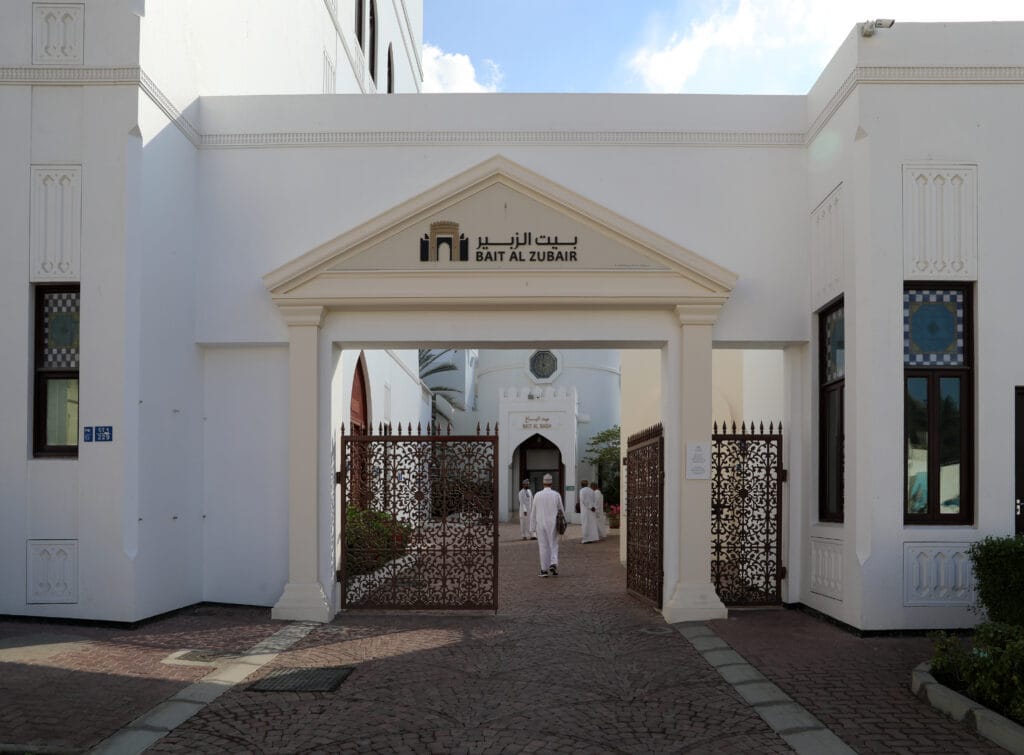
Upon approaching Bait Al Zubair, visitors are greeted by a structure that notably combines traditional Omani architectural elements with a sense of refined elegance. The building echoes the aesthetic principles of Omani forts and residences, featuring stark white walls, wooden lattice windows, and intricately carved doors. This immediately sets an immersive tone reflective of the cultural themes within. The surrounding gardens and courtyard accentuate this atmosphere, providing a tranquil setting before entering the museum proper. The exterior is relatively modest yet dignified, conveying respect for the artifacts housed within rather than ostentation. Outside the entrance, visitors often encounter traditional Omani motifs and craftsmanship in the form of decorative tiles and wooden elements, hinting at the treasures that lie inside. This visual introduction is an effective prelude, framing the museum as a gateway to a deeper understanding of Oman’s past and daily life.
Highlights and Key Exhibitions
Bait Al Zubair’s most compelling exhibitions are centered around Omani weaponry, traditional costumes, jewelry, and household objects. One of the standout features is the extensive collection of traditional Khanjars—curved daggers that are symbols of Omani identity and craftsmanship. These range from simple utilitarian pieces to ornately decorated ones signifying status and ceremonial use. The museum carefully contextualizes these artifacts, explaining their significance both historically and in present-day Oman.
Alongside the Khanjars, the museum’s display of jewelry is noteworthy. The collection highlights the intricate silverwork and gemstone settings that characterize Omani adornment, alongside descriptions of their cultural meanings. Traditional costumes from various regions across Oman showcase the diversity of styles and textiles, reflecting regional identities within the nation.
Beyond personal items, Bait Al Zubair also features domestic artifacts such as pottery, musical instruments, and tools used in daily life. These objects are exhibited in reconstructed room settings that evoke traditional Omani homes, providing a tangible connection to the lifestyle of past generations. The museum’s commitment to authenticity is evident in the detailed curation and narrative supporting each exhibit, which balances visual appeal with educational content.
Visitor Experience
The visitor experience at Bait Al Zubair is structured to be both accessible and enriching. The layout is thoughtfully designed to facilitate a logical flow from one gallery to the next, encouraging an engaging exploration of the themes presented. Labels and informational panels are clear and concise, offering archaeological, ethnographic, and historical insights without overwhelming the audience. The use of both Arabic and English in the signage broadens the museum’s appeal to international visitors, enhancing comprehension and engagement.
Staff members are generally available and approachable, prepared to offer additional context and answer questions. The museum also promotes an atmosphere of quiet reflection, inviting visitors to appreciate the artifacts at their own pace. Photography policies are typically accommodating, allowing visitors to capture memories while respecting the preservation of delicate items.
One noteworthy aspect is the outdoor courtyard and garden area, which acts as a peaceful interlude and a space to contemplate the displays. It is also an ideal spot for families and groups to gather, discuss, and absorb the cultural experience provided by the museum. Overall, the environment encourages curiosity, respect, and learning.
Tickets, Access, and Planning
Admission to Bait Al Zubair is generally affordable, reflecting Oman's broader commitment to cultural accessibility. Ticket prices differ for residents, expatriates, and tourists, with discounts often available for children, students, and seniors. The museum’s operating hours are structured to accommodate various visitor schedules, typically opening in the morning and late afternoon, with a midday closure common to the region’s climate.
The museum is conveniently located within Muscat, making it accessible by car, taxi, or local public transportation options. Ample parking is generally available nearby, although visitors should consider peak times and traffic conditions in the city. The site is well-equipped to welcome visitors with diverse mobility needs, including ramps and accessible restrooms. It is advisable to consult the official museum website prior to visiting for the latest updates on hours, ticketing, and any health and safety protocols.
Planning a visit during cooler months or earlier in the day is recommended due to Muscat’s climate, as outdoor areas form part of the overall experience and can be affected by heat. Facilities such as rest areas, a gift shop specializing in traditional crafts, and a small café contribute to a well-rounded visitor experience.
Final Verdict
Bait Al Zubair stands out as a vital cultural institution within Muscat and the wider Arabian Peninsula. Its strength lies in its focused dedication to presenting the depth and richness of Omani heritage through carefully curated collections and educational narratives. The museum successfully bridges the past and present, offering visitors meaningful insights into Omani identity and tradition.
The setting itself, both architecturally and environmentally, enriches the experience, allowing guests to immerse themselves in an atmosphere steeped in cultural significance. While the museum is relatively compact, it does not sacrifice depth or quality in its exhibitions. Instead, it offers a concentrated and coherent exploration of Oman’s historical and cultural landscape that is both engaging and enlightening.
For travelers interested in Middle Eastern history, traditional arts, or cultural anthropology, Bait Al Zubair provides a rewarding and thoughtful experience. It is particularly valuable for those seeking to understand the nuanced identity of Oman beyond its more commonly known aspects. In sum, Bait Al Zubair is a thoughtfully curated museum that reflects the pride and complexity of Omani heritage, making it a must-visit for anyone exploring the cultural heart of Muscat.