Auburn Cord Duesenberg Automobile Museum Review
Automobile Museums · Auburn, United States. The Auburn Cord Duesenberg Automobile Museum occupies a unique place in the history of American automotive design and industry, set in Auburn, Indiana. The museum is housed within the former administration building of the…
Automobile Museums · Auburn, United States. The Auburn Cord Duesenberg Automobile Museum occupies a unique place in the history of American automotive design and industry, set in Auburn, Indiana. The museum is housed within the former administration building of the…
Best forClassic cars, automotive design, motoring heritage
Review focusVehicle collections, design history, and visitor planning
Historical Context
The Auburn Cord Duesenberg Automobile Museum occupies a unique place in the history of American automotive design and industry, set in Auburn, Indiana. The museum is housed within the former administration building of the Auburn Automobile Company, a business that flourished in the early decades of the 20th century. The company itself was a key player in the luxury car market during the 1920s and early 1930s, producing vehicles under the Auburn, Cord, and Duesenberg marques. These brands represented a high-water mark in craftsmanship, innovation, and style during the pre-Depression automobile age.
Auburn and its sister brands offered some of the most technologically advanced and visually distinctive cars of their time, from the streamlined Auburn Speedster to the powerful Duesenberg Model J. The museum preserves not only these cars but also the story of an era when American automaking was pushing boundaries in both engineering and aesthetic design. The Great Depression and changing market conditions led to the decline of the Auburn Automobile Company by the late 1930s, but its legacy remains influential among collectors and automotive historians.
What You See on Arrival
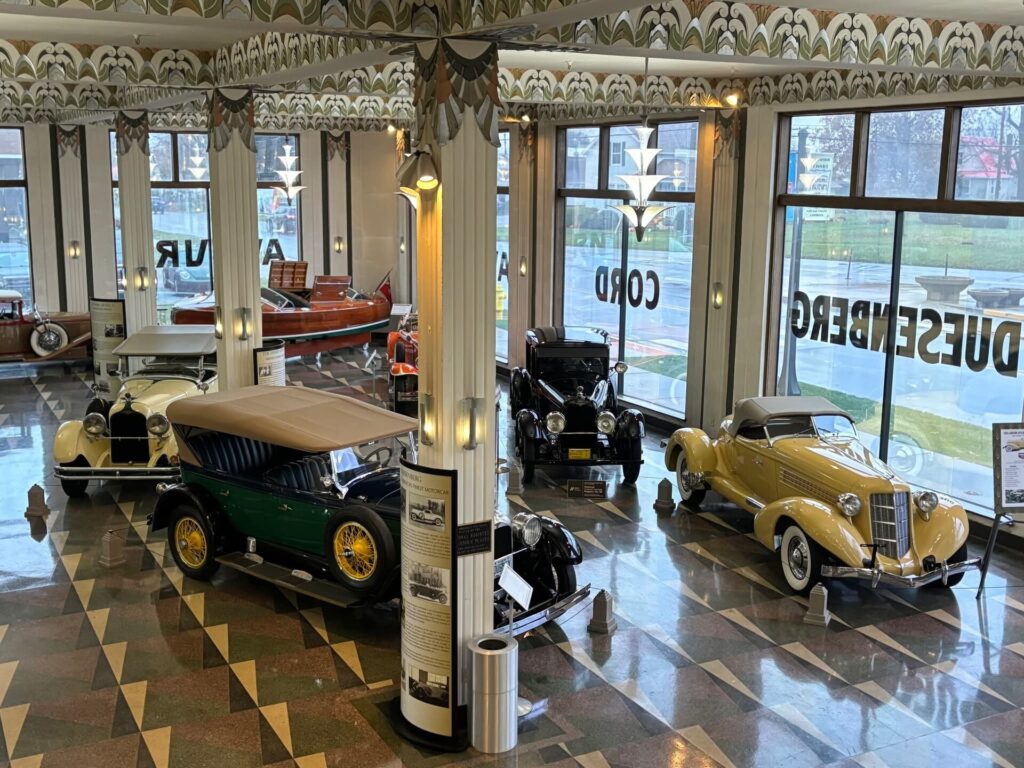
Approaching the Auburn Cord Duesenberg Automobile Museum, visitors encounter an Art Deco building that itself reflects the style and spirit of the era it represents. The architecture is part of the experience, reinforcing the museum’s identity as a site preserving the intersection of design, industry, and luxury. This sets expectations for a focus on automotive heritage within the context of early 20th-century innovation and elegance.
The entrance and lobby serve as a framing device, preparing visitors to explore not just vehicles but the broader story of the Auburn Automobile Company and its related marques. One can anticipate a blend of historical narrative and visual presentation, with vehicles prominently displayed alongside interpretive material that recalls the entrepreneurial spirit and aesthetic ambitions of the period. Although the museum’s exterior and interior architecture contribute to the overall impression, the emphasis clearly remains on the automobiles and related artifacts as key to understanding this segment of American industrial history.
Highlights and Key Exhibitions
The core of the museum’s appeal lies in its collection of vehicles produced under the Auburn, Cord, and Duesenberg brands. Each brand represents a distinct approach to design and engineering, and the museum’s displays allow for comparative insights across these approaches. The Auburn vehicles are often noted for their graceful styling and streamlined forms, emblematic of the Art Deco movement and automotive aerodynamics interests of their time. The Auburn Speedster, in particular, is a focal point, illustrating both aesthetic ambition and technical advancement.
The Cord marque, meanwhile, is recognized for pioneering features such as front-wheel drive and innovative styling cues that anticipated later automotive trends. Cord cars in the collection highlight the company’s willingness to experiment and push against industry norms. The Duesenberg automobiles carry a particular prestige, often cited as some of the most powerful and elegant American cars of the 1920s and 1930s. The Model J, a flagship for luxury and performance, exemplifies the high craftsmanship and mechanical prowess that distinguished American luxury automobiles from their European contemporaries.
Beyond the cars themselves, the museum includes a range of related materials—photographs, documents, and manufacturing artifacts—that provide context about the company’s operations and marketing strategies. Exhibits often address the technological innovations introduced by these cars, such as the use of superchargers on the Duesenberg Model J. Visitors gain perspective not only on the aesthetic qualities but also on engineering challenges and solutions that defined this company’s output.
The museum also pays attention to the cultural and social context in which these vehicles existed. For example, displays explain the market for luxury automobiles during the interwar period, the rise of automobile culture in the United States, and the impact of economic shifts on the company’s fortunes. While the museum’s collection is necessarily limited by the vehicles and artifacts available, the scope and variety of exhibits make it possible to follow a coherent narrative about automotive history, design evolution, and regional industrial heritage.
Visitor Experience
The Auburn Cord Duesenberg Automobile Museum is likely to appeal especially to visitors with an interest in automotive history, industrial design, and American manufacturing heritage. Its emphasis on luxury vehicles from a specific historical period offers depth rather than breadth—meaning that those looking for a general survey of automotive evolution might feel the focus somewhat narrow. However, enthusiasts and specialist audiences will find the details and context rewarding.
Interpretation tends to balance technical explanation with historical storytelling. Information panels, photographs, and archival materials supplement the vehicle displays, aiding understanding of both mechanical features and broader company history. The museum’s presentation style tends to favor clear, accessible language, making it suitable for visitors with a range of prior knowledge—from casual car admirers to more informed collectors or historians.
Visitor flow and physical layout support a paced exploration. The museum’s design encourages moving through the exhibits in a roughly chronological or thematic order, which helps situate individual cars within their historical and industrial framework. The building’s architecture and lighting enhance the presentation of the vehicles, though some areas may feel denser with information or memorabilia, depending on individual visitor preferences.
Those expecting interactive or highly modernized display technologies might find the museum more traditional in approach. The focus remains on the cars and documentary materials rather than digital installations or multimedia experiences. This can be a strength for visitors interested in careful, reflective viewing and scholarship but may feel less engaging for younger audiences or those seeking experiential learning techniques.
Tickets, Access, and Planning
Details on admission, opening hours, accessibility, and visitor services for the Auburn Cord Duesenberg Automobile Museum should be confirmed via the official website or direct inquiry. The museum is housed in a historic building, which may affect some access features. Visitors with mobility concerns or special needs should verify accommodations in advance.
Likewise, information on guided tours, audio guides, or group visits is best sourced directly from the museum to understand current offerings. Because the museum is located in Auburn, Indiana, travel arrangements and timing may require planning, especially for those coming from outside the region.
The museum’s relative specialization suggests that visits are best suited to those with genuine interest in automotive history or industrial heritage. Casual visitors or those with limited time may want to consider whether this focus aligns well with their priorities before committing to a visit.
Final Verdict
The Auburn Cord Duesenberg Automobile Museum serves as a focused and thoughtfully curated institution dedicated to preserving an important niche of American automotive history. Its strengths lie in the depth with which it explores the three interrelated marques—Auburn, Cord, and Duesenberg—and presents them as products of a unique historical moment characterized by luxury, innovation, and industrial ambition.
Visitors will find a well-organized, informative experience that balances technical detail with historical context. While the museum does not seek to compete with larger, more comprehensive automotive museums in scope, it offers a valuable contribution to understanding the development of American cars during a formative period. Its strong identity, rooted in its historic building and specialized collection, lends authenticity and focus.
On the other hand, the museum might challenge those looking for broad overviews of the automotive industry or more interactive contemporary museum experiences. The specialized nature and traditional exhibit style may not appeal to all tastes or age groups equally.
Overall, the Auburn Cord Duesenberg Automobile Museum stands as a worthwhile destination for automotive enthusiasts, historians, and anyone interested in industrial design of the early 20th century. Those planning to visit should check current visitor information from official sources to prepare adequately and make the most of what this distinct museum has to offer.