Atelier des Lumières Review
Art Museums · Paris, France. The Atelier des Lumières is a unique cultural space in Paris that opened in 2018, designed to reinterpret and present visual art through digital technology. Situated in a former foundry in the 11th arrondissement,…
Art Museums · Paris, France. The Atelier des Lumières is a unique cultural space in Paris that opened in 2018, designed to reinterpret and present visual art through digital technology. Situated in a former foundry in the 11th arrondissement,…
Best forMuseum lovers, culture travelers, first-time visitors
Review focusCollections, visitor experience, and practical planning
Historical Context
The Atelier des Lumières is a unique cultural space in Paris that opened in 2018, designed to reinterpret and present visual art through digital technology. Situated in a former foundry in the 11th arrondissement, the museum repurposes industrial architecture for artistic display, offering an alternative model to traditional gallery settings. Rather than focusing on physical artworks, it centers on large-scale projections of paintings, combining high-definition imagery with sound and light in a continuous audiovisual experience.
This venue emerged within a wider trend of digital art museums and immersive exhibitions in Europe and globally. By translating masterworks into vast, enveloping projections, it aims to engage audiences through the senses and scale, moving beyond the static and contemplative mode often associated with conventional museums. The Atelier des Lumières has become known for exploring historically significant painters from various periods—the likes of Klimt, Van Gogh, and Monet—through a novel medium.
Its location also links to Paris’s history as a hub for artistic innovation, bridging the past’s creative achievements with contemporary methods of presentation. The institution’s approach challenges traditional boundaries between the museum visitor’s role and the artwork’s presentation, fostering a participatory rather than passive interaction.
What You See on Arrival
Upon approaching the Atelier des Lumières, visitors encounter a somewhat understated façade housed within a repurposed industrial structure. The building lacks the commanding external gravitas typical of many Parisian museums, instead revealing its character primarily through signage and a discretely marked entrance signifying its digital art identity.
Just inside, the lobby facilitates entry into the expansive main space, a cavernous hall defined by its high ceilings and brick walls that recall the site’s industrial past. This contrast between raw architecture and advanced technology sets the tone for the exhibitions, positioning the visitor between heritage and innovation.
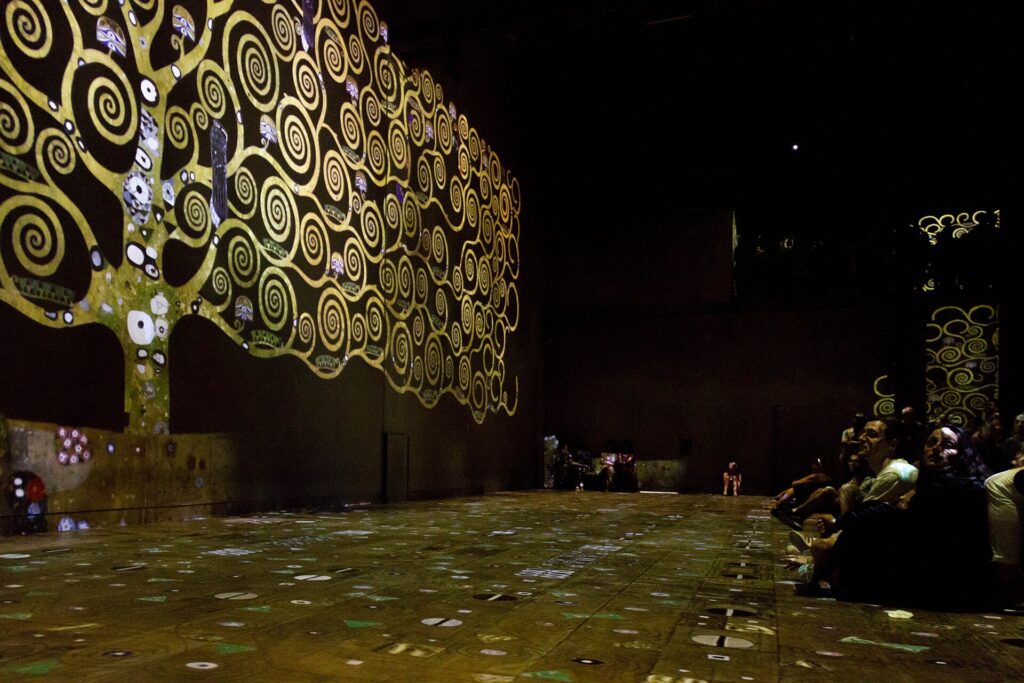
No conventional display cases or framed canvases greet visitors; rather, the environment itself becomes the medium. The space is deliberately minimalist to preserve focus on the projected images, which animate every wall, floor, and ceiling surface. This framing compels visitors to reorient their expectations about how art might be encountered beyond traditional museum layouts.
To the visitor, the museum announces itself as a venue for audiovisual art experiences rooted in classical painting, not a repository of physical artifacts. The design invites exploration across the space, encouraging movement and multiple vantage points within the projections’ immersive reach.
Highlights and Key Exhibitions
The essence of the Atelier des Lumières lies in its programmed cycles of digital exhibitions, each revolving around one or more artists or artistic movements. These exhibitions present sequences of paintings transformed into animated, giant-scale projections synchronized with music, soundscapes, and often thematic narrative elements.
The focus has commonly been on renowned figures of western art history. For example, cycles dedicated to Vincent van Gogh and Gustav Klimt have drawn attention for their ability to reinterpret familiar images in a dynamic format. In the van Gogh shows, his brushstrokes dissolve and flow, colors shift in time with music to evoke emotional resonance rather than static representation. Klimt’s golden patterns and intricate detailing are similarly magnified, with the projections highlighting textures and motifs that might be less noticeable in gallery settings.
Atelier des Lumières has also featured shows on impressionism and post-impressionism. These exhibitions emphasize the sensorial qualities of paintings, bringing to the fore changes in light and atmosphere that these movements prized. Sequences incorporating Monet’s water lilies or Cézanne’s still lifes tend to emphasize color palettes and compositional structure, transforming them into large-scale visual environments.
The museum does not contain an original physical collection but instead curates digital reinterpretations through partnerships with museums and foundations holding the originals. This approach places limits on the variety and depth of art presented but allows for flexibility in programming.
The exhibitions tend to last for several months before changing, giving repeat visitors a reason to return, although the core experience remains consistent: an audiovisual journey rather than close study of material artworks. This format lends itself to a broad audience including those less familiar with the artists, as the immersive spectacle provides a sensorial introduction.
Visitor Experience
The visitor experience at the Atelier des Lumières is governed by its focus on sensory immersion and cumulative viewing rather than traditional art historical learning or detailed interpretation. Visitors move freely through the main projection space, where images shift every few minutes in a looped sequence. The pace is continuous and rhythmic, encouraging a fluid, exploratory approach rather than strict route-following.
This format suits visitors interested in experiencing art at a visceral level. The large-scale projections allow people of all ages to feel physically enveloped by the artworks, which can inspire awe and emotional response. The combination of music and animated imagery creates a mood-driven environment more akin to a concert or multimedia installation than a classical museum visit.
However, the very nature of the experience can be limiting for those seeking deep engagement with specific artworks. The lack of original paintings, explanatory labels, or scholarly context means that the Atelier des Lumières does not offer comprehensive historical or critical insight. Visitors looking for detailed understanding of a painter’s technique, life, or place in art history will find the museum lacking in didactic content.
The space can become crowded during peak times, which may affect the ability to find a quiet moment of reflection or to view the projections without distraction. The accessibility of standing and moving around the space generally suits diverse visitor groups, but individuals requiring seating or with sensory sensitivities may find the intensity of light and sound challenging.
Interpretation relies heavily on the audio-visual spectacle, with minimal physical text or audio guides. This can make the experience more universally accessible in some ways, avoiding language barriers, but it may also leave some visitors wishing for deeper intellectual engagement.
Tickets, Access, and Planning
Information on tickets, hours, and visitor services should be verified through the museum’s official channels before planning a visit. The Atelier des Lumières operates with scheduled entry times, reflecting its popular programming and spatial limitations. Booking in advance is typically advisable, especially in peak seasons.
The museum’s location in the 11th arrondissement places it within Paris’s well-connected public transit network, which facilitates access via metro and bus lines. Its industrial setting means facilities are adapted from the former foundry structure, so visitors should check accessibility provisions if they have mobility or sensory needs.
As a projection-based exhibition space, the museum may have particular policies regarding photography or filming, reflecting copyright arrangements for the images and music. Visitors should follow any posted guidelines.
While the museum’s interior does not resemble a traditional art museum with extensive amenities, its simplicity of layout means there are no guided tours as part of normal admission. Visitors who prefer structured interpretation might consider pairing the visit with external resources for context on the artists featured.
Final Verdict
The Atelier des Lumières occupies a distinctive position within Paris’s cultural landscape by presenting art history through the medium of digital projection and sound. Its innovative use of technology offers a compelling alternative to conventional museums, turning well-known paintings into living, shifting environments that engage visitors through sight and sound rather than textual information or physical artifacts.
This format serves particular visitor interests well—those attracted to multimedia, experiential art, and those looking for an accessible introduction to painters like van Gogh or Klimt in a format that minimizes traditional barriers. The scale and dynamism transform familiar works in ways that can be both impressive and emotionally engaging.
However, this same approach imposes constraints. The absence of original objects and detailed historical interpretation limits the museum’s use for those seeking in-depth art historical knowledge or close study. The continuous audiovisual loop and relatively brief runs of images do not allow prolonged examination, and the legibility can suffer in crowded conditions.
In sum, Atelier des Lumières is an intriguing venue for exploratory and sensory engagement with art, especially suited to audiences open to alternative forms of cultural experience. Visitors should approach it as a presentation of artworks reimagined for a contemporary digital context rather than a traditional repository of art history. For those aware of its specific offerings and limitations, it represents a worthwhile addition to Paris’s diverse art scene, but not a substitute for museums that hold original paintings and extensive scholarship. Checking current programming and visitor information directly is essential for anyone planning a trip.