Astrup Fearnley Museum Review
Art Museums · Oslo, Norway. The Astrup Fearnley Museum of Modern Art occupies a distinctive place in Oslo’s cultural scene, established to house the private collection of the Norwegian shipping magnate couple Thomas and Heddy Fearnley. Founded in 1993…
Art Museums · Oslo, Norway. The Astrup Fearnley Museum of Modern Art occupies a distinctive place in Oslo’s cultural scene, established to house the private collection of the Norwegian shipping magnate couple Thomas and Heddy Fearnley. Founded in 1993…
Best forMuseum lovers, culture travelers, first-time visitors
Review focusCollections, visitor experience, and practical planning
Historical Context
The Astrup Fearnley Museum of Modern Art occupies a distinctive place in Oslo’s cultural scene, established to house the private collection of the Norwegian shipping magnate couple Thomas and Heddy Fearnley. Founded in 1993 and relocated to a custom-built waterfront building in the Tjuvholmen district in 2012, the museum reflects a commitment to contemporary and modern art, particularly works from the late 20th century to the present. The institution has aligned itself with international dialogues in art through its collection and architecture, emphasizing connections between Norwegian and international contemporary art rather than focusing solely on local or historical Norwegian art traditions.
The museum’s move to the striking Renzo Piano–designed building empowered it to take a more prominent role as not just a container of art but a cultural landmark in an evolving urban waterfront. Its location near the Oslofjord and the city’s new art district enhances its identity as a forward-facing institution amid multifaceted urban renewal. Over its history, the Astrup Fearnley Museum has curated a reputation for commissioning and acquiring notable works and has fostered exchanges with major international art institutions. Its continued evolution appears intertwined with the city’s expanding cultural ambitions and Norway’s engagement with global contemporary art networks.
What You See on Arrival
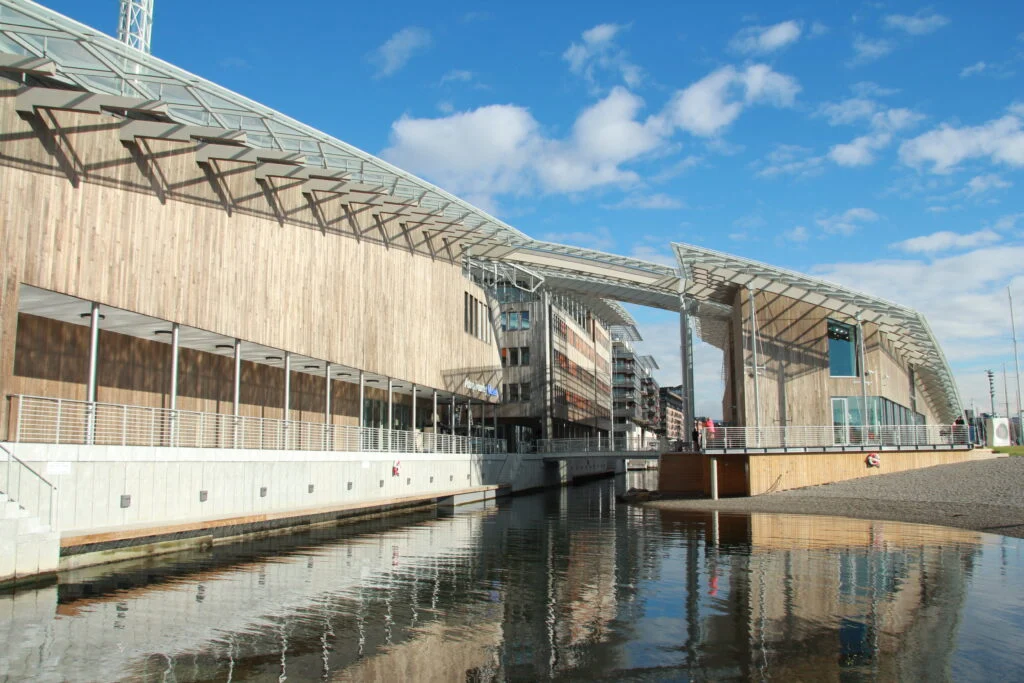
Approaching the museum at Tjuvholmen, visitors can expect a setting where architecture and the surrounding environment frame the art experience. The building’s sleek, angular structure, dominated by glass façades and white timber, is designed to engage with natural light and offer varying views of the Oslofjord. This architectural approach presents the museum not just as a container of art but as a spatial experience that unfolds between the indoors and outdoors.
The immediate surroundings blend urban renewal projects, public spaces, and sculpture gardens, situating the museum within an accessible and contemporary neighborhood. This setting helps to create an initial impression that the institution is dedicated to innovation and open to multiple sensory and contextual art encounters. The external grounds, including the sculpture park that is part of the museum’s collection, extend the visitor’s engagement beyond the building itself. The arrival experience may already signal a museum that pays close attention to visual dialogue – both between artworks and between art and setting – framing expectations about what kind of encounter the visitor is about to have.
Highlights and Key Exhibitions
The Astrup Fearnley’s core strength lies in its permanent collection, which comprises significant works of contemporary art with an emphasis on international artists alongside Norwegian contributors. The collection spans painting, sculpture, installation, and video art, typically focusing on artists who gained prominence in the late 20th century and who continue to influence contemporary art dialogues.
Artists featured in the collection include prominent figures such as Jeff Koons, Anselm Kiefer, Richard Prince, Cindy Sherman, and Damien Hirst. These names suggest a focus on postmodern and contemporary practices that engage themes of media, identity, consumer culture, and conceptual inquiry. The museum is known for displaying large-scale, often visually commanding works, such as Koons’s sculptures, which engage with ideas of spectacle and popular iconography.
Norwegian and Scandinavian contemporary artists are also represented but not in an overwhelmingly nationalistic way. The museum’s curatorial approach contextualizes Norwegian art within global trends, offering visitors a vantage point for comparing regional practices with worldwide contemporary movements. In addition to traditional gallery spaces, the museum includes areas for photography and film, expanding its presentation beyond static objects to media arts.
The sculpture park adjacent to the museum features works by artists such as Louise Bourgeois and Tony Cragg, offering an outdoor extension to the museum’s thematic concerns with form, materiality, and scale. The integration of art with the environment here complements the indoor exhibitions and allows for a contrast in presentation mode and visitor experience.
While temporary exhibitions have varied, they usually align with the museum’s emphasis on contemporary practices, often spotlighting individual artists from the permanent collection or related thematic investigations. However, because the review avoids conjecture or inventing details about particular transient shows, the core focus remains on the collection’s ability to ground a visit in a comprehensive survey of contemporary art from diverse origins.
Visitor Experience
The layout and spatial flow of the building encourage a relatively open, airy experience, with natural light used to articulate and sometimes complicate how artworks are viewed. Visitors are likely to encounter a mix of large-scale installations and more intimate pieces, requiring shifts in viewing distance and focus. This spatial dynamic supports an engagement with contemporary art that is both physical and intellectual, as visitors must navigate scale and media diversity.
The museum appeals principally to visitors with a prior interest or some familiarity with contemporary art language and practices. The inclusion of influential international figures alongside Norwegian artists stimulates comparative viewing but might be less accessible to casual visitors who prefer more chronological or narrative-driven presentations.
Interpretation and contextual materials tend to be concise but thoughtful, often focusing on artist intent, materiality, and conceptual frameworks rather than exhaustive historical background. For some audiences, this can be an asset, providing room to form individual reactions but for others, the lack of more extensive wall texts or didactic materials might limit deeper understanding without external preparation or supplementary resources.
Pacing a visit to the Astrup Fearnley generally involves moving between different types of artworks and scales, an experience that suits visitors who appreciate variety in visual experience and conceptual engagement. Visitors interested in Norwegian contemporary art’s place on the world stage will find meaningful touch points. However, those looking for a broader survey of art history or more participatory or family-friendly programming might find the museum’s focus relatively narrow.
Tickets, Access, and Planning
Details regarding ticketing, opening hours, discounts, guided tours, or audio guides are not fully confirmed here. Prospective visitors should consult the museum’s official website for accurate and current information on admission requirements, operating hours, accessibility services, and available tours or educational resources. Being located in a developing urban neighborhood, public transportation options are typically available, but visitors should plan accordingly, especially if coming from outside Oslo’s center.
Given the museum’s architectural design, the interior visitor flow can be affected by natural lighting conditions, meaning some artworks may be best seen at particular times of day. Checking the museum’s schedule ahead of time, especially when planning a visit to coincide with specific exhibitions or events, is advisable.
Final Verdict
The Astrup Fearnley Museum offers a focused and relatively compact window into contemporary art’s global and Norwegian currents. It stands apart in Norway’s cultural landscape by hosting a collection that privileges recent and current artistic production from high-profile international artists alongside regional contemporaries. The museum’s architecture and waterfront setting contribute to an experience that is visually compelling and spatially open, although the quality of engagement depends largely on visitor familiarity with contemporary art’s often challenging aesthetics and ideas.
Its strength lies in presenting ambitious, large-scale works and fostering an environment where art responds dynamically to natural light and open spaces, but this can also make the experience less uniform or accessible than more conventional museum formats. Interpretation tends toward the minimalist, encouraging personal interpretation at the possible cost of leaving some visitors wanting more contextual support.
For visitors seriously interested in post-1970s art trends and the dialogue between Norwegian and international contemporary art, the Astrup Fearnley Museum will deliver a worthwhile experience. It may be less suited to those seeking a wide-ranging historical overview or family-oriented programming. Overall, it occupies a clear position as an institution dedicated to contemporary artistic expressions in varied media, making it an important cultural proposition within Oslo’s expanding art district and Norway’s public cultural offer.