Sudan National Museum
The Sudan National Museum in Khartoum, Sudan, is one of the most important museums for the archaeology of the Nile Valley south of Egypt. It.
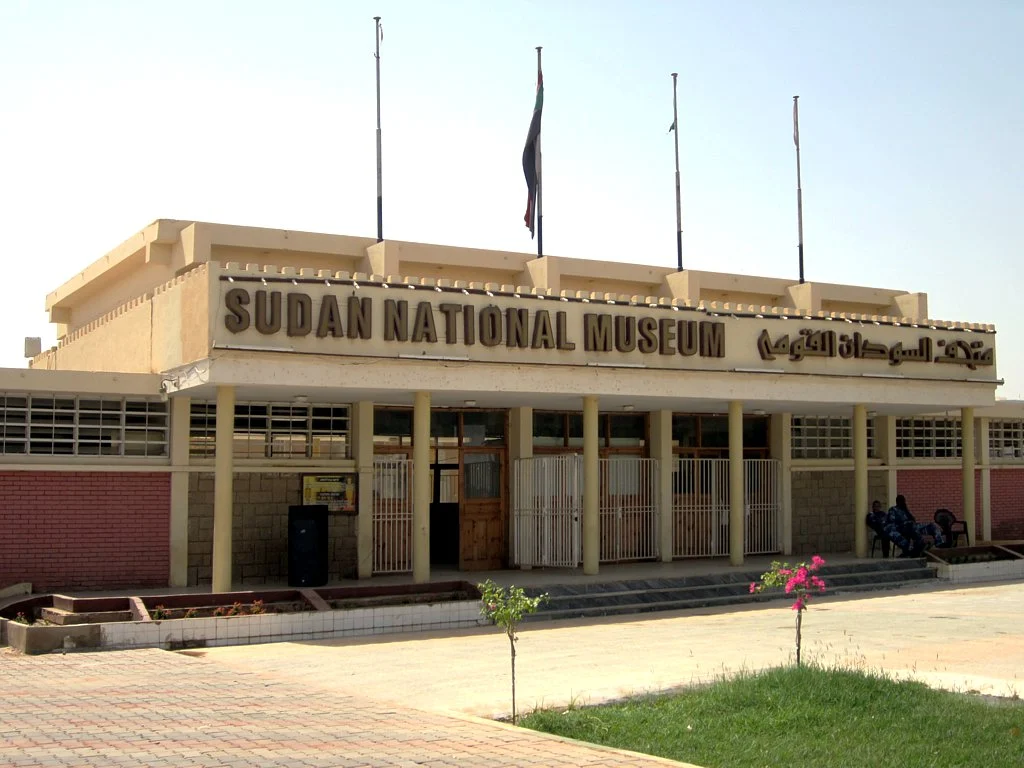
Best forMasterpieces, architecture, cultural history
Setting / nearbyAfrica
Overview
The Sudan National Museum in Khartoum is one of the most important museums in Northeast Africa and one of the clearest places to understand Sudan as a meeting point of ancient kingdoms, Nile cultures, African histories, and Mediterranean connections. More than many national museums, it has the power to reshape a visitor’s sense of regional history. Instead of seeing Sudan only through the shadow of Egypt or through modern political borders, the museum reveals a much deeper story in which Nubian, Kushite, Meroitic, Christian, and Islamic histories all play essential roles.
What makes the museum especially compelling is that it presents Sudan not as a peripheral landscape, but as a civilizational center in its own right. This is one of its greatest strengths. Visitors encounter material that shows the Nile Valley south of Egypt as a region of kingdoms, temples, writing systems, artistic traditions, and religious change over long stretches of time. That perspective matters because it corrects a common imbalance in how ancient northeastern Africa is understood. The museum makes clear that Sudan’s past is not an appendix to someone else’s history. It is a major historical field of its own.
The museum is also valuable because it gives shape to long chronology. In many archaeological museums, objects can feel disconnected from one another if the historical frame is too weak. Here, the strongest experience comes when visitors recognize the continuity and transformation across different periods. Ancient Nubian cultures, the Kingdom of Kush, Meroitic civilization, Christian Nubia, and later Sudanese history all contribute to a much richer view of the region than one might expect before arriving.
For visitors, this makes the Sudan National Museum especially rewarding. It is not only a museum of impressive ancient artifacts. It is a museum of perspective. It helps explain why Sudan matters historically, geographically, and culturally, and why the Nile world extends beyond the stories most commonly told elsewhere.
Collection Highlights
One of the museum’s greatest strengths is its concentration of Nubian and Kushite material. This gives the institution a distinctive identity that sets it apart from many better-known museums of ancient history. Sculpture, relief fragments, inscriptions, ceramics, funerary objects, and temple material together show the visual and political sophistication of kingdoms that flourished in what is now Sudan. These collections matter not only because they are old or rare, but because they reveal a region with its own systems of power, kingship, belief, and artistic expression.
The museum is especially well known for material linked to ancient Nubia and the Kingdom of Kush. This is often where the visit becomes most powerful. Visitors begin to see that the ancient Nile was not the possession of one civilization alone, but a corridor of interacting cultures. Objects associated with Nubian rulers, temple life, and elite burial traditions reveal both local identity and cross-regional exchange. That balance makes the collection intellectually rich as well as visually memorable.
Another major strength is the museum’s temple and architectural material. In museums of ancient history, large sculptural or architectural fragments often provide the strongest sense of scale, and here they help give form to worlds that would otherwise remain abstract. Reliefs, columns, carved blocks, and sacred imagery are especially important because they bring visitors closer to the ceremonial and religious life of the region. Such works are not merely decorative remains. They are part of how kingdoms represented divine order, power, and legitimacy.
The museum is also valuable for the later historical layers it preserves. Christian Nubian material adds an especially important dimension, because it reminds visitors that the history of Sudan did not move in a simple line from ancient kingdoms to modernity. Religious transformation, artistic adaptation, and cultural continuity all shaped the region across centuries. This deepens the visit and prevents the museum from being reduced to a single ancient period alone.
Building and Setting
The setting of the Sudan National Museum contributes greatly to its authority as a national institution. A museum of this kind is not simply a place where excavated objects are stored. It is a public statement about what a country chooses to preserve, emphasize, and teach about itself. That civic role is especially important in a museum whose collections speak to such long and complex histories.
Architecturally, the museum’s strength lies in how it supports the scale of the material. Ancient sculpture, relief, and architectural fragments need room, and a museum like this becomes most effective when it allows visitors to feel the presence of large historical worlds rather than only study isolated fragments. The Sudan National Museum is at its best when visitors can move gradually between smaller archaeological objects and the more monumental remains that give the collection visual force.
Its setting in Khartoum also matters symbolically. Located in the capital, the museum acts as a point where the country’s ancient heritage and modern national identity intersect. This gives the visit broader meaning. The museum is not only about the distant past. It is also about the role of heritage in public memory and national understanding.
The atmosphere of the museum is usually most rewarding when approached slowly. Museums of deep antiquity tend to reveal themselves through accumulation rather than instant spectacle. Here, the strongest effect often comes from the gradual realization that Sudan’s past is broader, older, and more culturally layered than many visitors first assumed.
Practical Information
The Sudan National Museum is best visited with enough time to follow the historical range of the collection rather than focusing only on the most immediately dramatic ancient objects. A slower visit helps visitors see how Nubian, Kushite, Meroitic, and later histories relate to one another. This is especially important in a museum where the real value lies not only in masterpieces, but in the larger historical picture they create together.
It is particularly rewarding for visitors interested in archaeology, ancient Africa, Nile civilizations, and the connections between local kingdoms and wider regional histories. At the same time, it can also be meaningful for general visitors because the museum so clearly expands the usual mental map of the ancient world. Even without specialist knowledge, one can come away with a far deeper sense of Sudan’s historical importance.
Because institutions and access conditions can change, especially in difficult periods, it is always wise to check the latest reliable local information before planning a visit. But as a museum subject, the Sudan National Museum remains one of the most important cultural references for understanding the country’s archaeological and historical legacy.
Why Visit
The Sudan National Museum is worth visiting because it offers one of the strongest introductions to ancient Sudan and Nubia available anywhere. It shows that the history of the Nile Valley cannot be fully understood without Sudan, and it gives material form to civilizations that are too often overlooked in broader public narratives.
It is also worth visiting because it changes perspective. Many museums confirm what visitors already think they know. This one expands the picture. It reveals Sudan as a place of kingdoms, sacred architecture, artistic achievement, and long historical continuity. That makes the museum not only informative, but genuinely corrective in the best sense.
If you want a museum that deepens your understanding of ancient Africa and the Nile world beyond the most familiar stories, the Sudan National Museum is one of the clearest choices. It is historically important, intellectually rich, and one of the most meaningful museum subjects in the region.