State Hermitage Museum
About: Plan by building/route. The Winter Palace interiors are as memorable as the paintings — don’t rush past them.What to see: Start with the signature.
Best forMasterpieces, architecture, cultural history
Setting / nearbyEurope
Overview
The State Hermitage Museum is one of the greatest museums in the world and one of the most overwhelming cultural institutions any visitor can experience. Located in Saint Petersburg and centered on the Winter Palace, it is not simply a museum of paintings or a palace with art inside. It is both at once, and that dual identity is one of its greatest strengths. Visitors come to see masterpieces of European art, but they also come to experience imperial rooms, ceremonial staircases, richly decorated interiors, and the broader sense of dynastic power that shaped the collection’s setting. This means the Hermitage works on several levels at the same time: as a museum of art history, as an architectural and political monument, and as a preserved expression of imperial Russia.
What makes the Hermitage especially distinctive is its sheer scale. This is not a museum that can be “done” easily in a single visit, and in many ways that is part of its character. It contains so much that no one route can fully represent it. Paintings, sculpture, decorative arts, archaeology, furniture, imperial interiors, classical antiquities, and whole sequences of rooms accumulate into an experience that can feel almost inexhaustible. Yet this scale is not only a challenge. It is also one of the reasons the museum has such power. The Hermitage does not feel like a tight, carefully edited institution. It feels like an empire turned into a museum.
At the same time, the museum is strongest when approached with some discipline. Visitors who try to see everything often leave exhausted and with little sense of structure. Those who plan by building or route tend to have a far richer experience. This is because the Hermitage is not simply a treasure house of individual works. It is a complex environment in which the rooms themselves shape memory. A staircase, a palace hall, a gilded interior, or a sequence of state rooms can remain as vivid as the paintings hanging inside them. That is one of the museum’s special qualities. Art and architecture are constantly in conversation.
The Hermitage is also particularly important because it places Russia within a larger European and global artistic world. Its collections show not only Russian imperial ambition, but the enormous cultural appetite of a court that wanted to gather and display the highest achievements of other civilizations. This gives the museum both magnificence and complexity. It is not simply national. It is international in aspiration, yet profoundly shaped by the historical context of imperial Russia. That tension is part of what makes the museum so compelling.
Collection Highlights
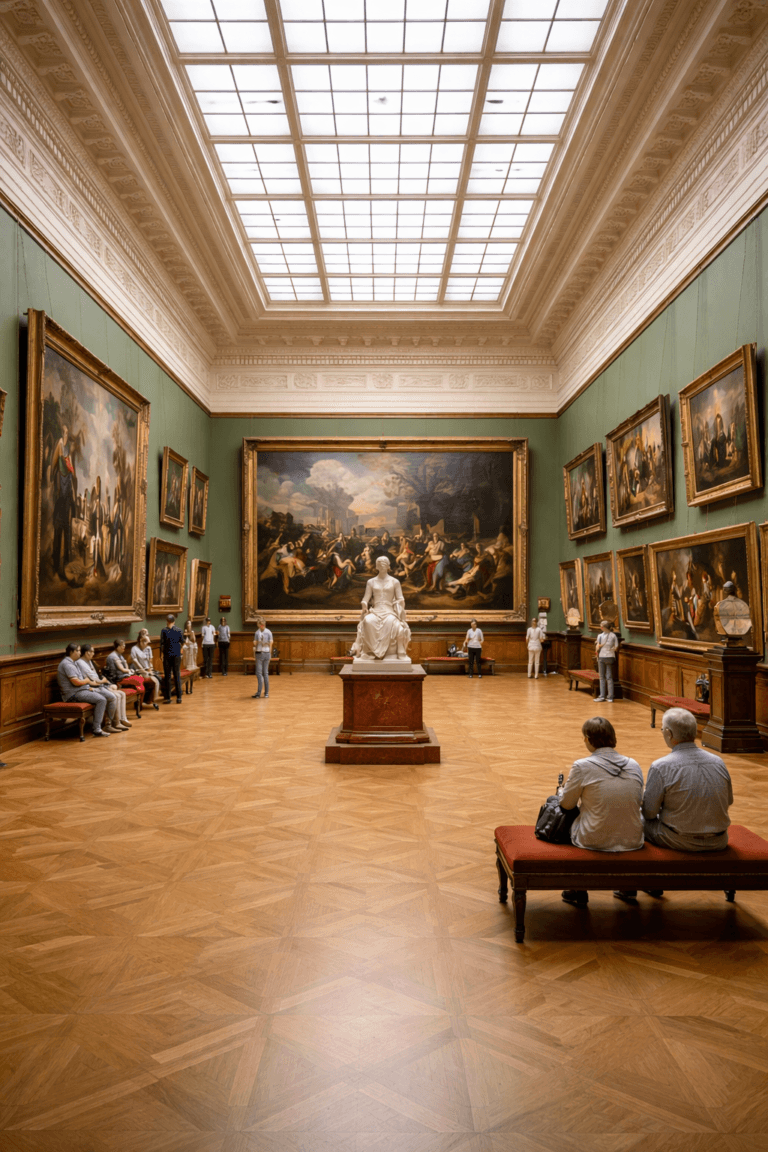
The European painting collection is among the museum’s most celebrated strengths, and for many visitors it forms the core of the visit. The depth of the holdings means that major figures do not appear as isolated tokens but as parts of a genuinely rich collection. This is important. In weaker museums, famous artists appear in thin contexts, but here the visitor often has the sense of moving through a sustained concentration of high-level works. The Hermitage’s strength in Italian, Dutch, Flemish, French, and later European painting makes it one of the essential museums in the world for following major strands of Western art history outside Western Europe itself.
The Dutch and Flemish rooms are especially rewarding because they combine technical brilliance with the museum’s larger sense of abundance. Likewise, Italian painting offers visitors a way into the collection through some of the most historically central schools of European art. The French holdings add yet another level, especially for visitors interested in the development of painting from older traditions toward modernity. The museum’s power here comes not only from names, but from range and density. You do not simply encounter one admired canvas; you encounter a whole visual world.
Yet the Hermitage is much more than painting. Decorative arts and imperial interiors are among the museum’s most memorable experiences. Furniture, clocks, gold objects, ceremonial pieces, and richly furnished rooms help widen the visit and remind visitors that the Hermitage is also a museum of collecting, luxury, and court culture. These sections are not decorative extras around the paintings. They are essential to understanding how the museum came into being and what kind of institution it still is. The collection is not only about aesthetic judgment in the modern museum sense. It is also about prestige, ownership, imperial display, and cultivated magnificence.
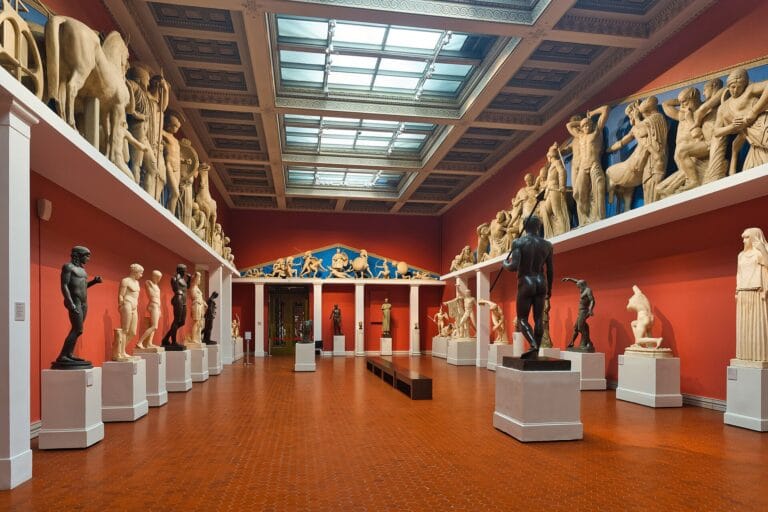
The classical antiquities and archaeological material provide another important dimension. These areas broaden the museum beyond the great European palace-museum tradition and show how the institution gathered material across time and place. For many visitors, these sections may not be the first priority, but they contribute to the Hermitage’s identity as a universal museum rather than a specialist palace gallery.
The Winter Palace interiors themselves are also a kind of highlight. This is not metaphorical. The state rooms, staircases, and ceremonial spaces are as memorable as many individual works of art. Visitors who rush past them in search of only the most famous paintings often miss one of the museum’s defining pleasures. The Hermitage is one of those rare museums where the setting is not merely grand background. It is one of the collection’s central experiences.
Building and Setting
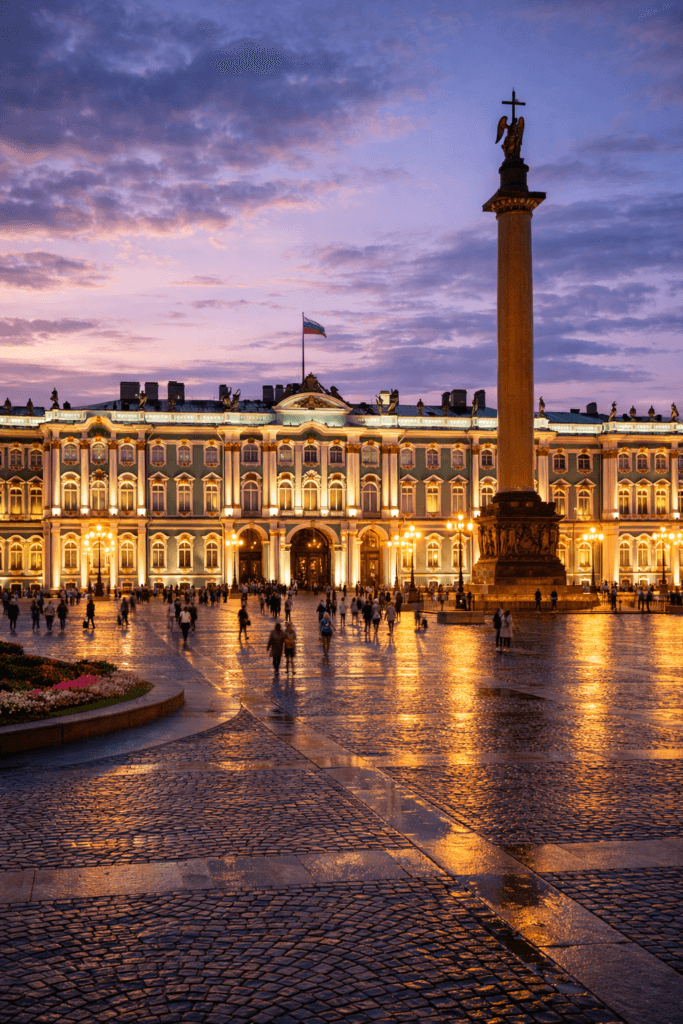
The museum’s setting within the Winter Palace and associated Hermitage buildings is fundamental to its identity. Few museums in the world can match the combination of collection and architectural setting found here. The Winter Palace is not just a historic shell. It is a place of imperial ceremony, political history, and visual excess, and walking through it changes how the art is experienced. Paintings and objects are never seen in a neutral environment. They are seen within spaces designed to proclaim dynastic power and cultivated authority.
This is one reason the Hermitage can feel so overwhelming. The interiors themselves demand attention: gilded ceilings, polished floors, broad staircases, richly decorated walls, and long ceremonial enfilades create a visual richness that competes with the artworks. Yet when approached properly, this is not a weakness. It is a major part of the museum’s unique power. The visitor experiences not just art, but art as part of an imperial world.
Its location in Saint Petersburg also strengthens everything. The museum sits at the heart of one of Europe’s most visually controlled and historically charged cities. The relationship between the museum, the river, the square, and the surrounding urban setting gives the Hermitage a civic grandeur that few museums can match. It feels inevitable there, as though the city and the museum were shaped for one another.
Practical Information
The most important practical advice is to plan by building or route. The Hermitage is too large and too rich to reward an unstructured approach. A good visit usually involves deciding in advance whether the priority is European painting, palace interiors, decorative arts, antiquities, or some combination of these. Without a plan, the museum can quickly become visually exhausting.
A sensible approach for first-time visitors is to let the Winter Palace interiors play a major role in the visit rather than treating them as something to rush through on the way to the paintings. This creates a more distinctively Hermitage experience. If you focus only on paintings, you risk turning the museum into a very large art gallery and losing what makes it unique.
Breaks matter here. The museum is one of those places where visual fatigue can arrive suddenly, and when it does the collection begins to blur. Short pauses and willingness to leave some sections for another visit usually produce a much stronger experience than trying to force completeness.
Why Visit
The State Hermitage Museum is best for art lovers, first-time visitors to Saint Petersburg, and anyone planning a city itinerary around major cultural institutions. Its greatest strength is the combination of collection and setting. Many museums have great paintings. Many palaces are impressive. Very few places unite those things at this level.
What makes the Hermitage worth prioritising is that it offers more than a sequence of masterpieces. It offers the experience of moving through a historical world in which art, collecting, imperial power, and architecture all remain visible together. The Winter Palace interiors are as memorable as the paintings, and the paintings are deep enough to justify the museum’s world reputation.
For many visitors, the Hermitage becomes one of the defining museum experiences of a lifetime because it refuses to be reduced to one category. It is a great art museum, a great palace, and a great historical monument at once. That combination gives it a scale, richness, and atmosphere that very few institutions in the world can match.