Palace of the Grand Dukes of Lithuania
Vilnius, Lithuania. The Palace of the Grand Dukes of Lithuania, located in Vilnius, serves as both an archaeological and historical museum dedicated to the political and cultural history of Lithuania’s medieval period. It occupies a historically…
Best forMuseum lovers, culture travelers, first-time visitors
Setting / nearbyVilnius, Lithuania
Overview
The Palace of the Grand Dukes of Lithuania, located in Vilnius, serves as both an archaeological and historical museum dedicated to the political and cultural history of Lithuania’s medieval period. It occupies a historically significant site that once functioned as the principal residence of Lithuanian grand dukes and later kings. The original palace, which dates back several centuries, was a prominent center for political events and royal ceremonies. Although the original structures were lost over time, the modern museum complex seeks to reconstruct and interpret the evolution of the palace and its role in Lithuanian history. The site stands on Cathedral Square near Vilnius Cathedral, placing it at the heart of the city’s historic district. This context offers visitors an opportunity to connect the museum’s displays with the wider architectural and archaeological fabric of the capital.
Collection Highlights
The exhibition concentrates on artifacts, reconstructed interiors, historical documents, and multimedia presentations that illuminate the history of the Grand Duchy of Lithuania. Visitors can expect a range of archaeological finds uncovered during extensive excavations at the site. These may include items such as medieval ceramics, metalworks, and fragments of the palace’s construction materials. Some objects offer insight into the daily lives of the nobility and artisans who inhabited or worked at the palace.
The museum also presents reconstructions of select palace interiors, giving a sense of the architectural style and opulence characteristic of the late medieval period. While not an art museum in the classical sense, it does include elements of period decorative arts to help contextualize Lithuania’s cultural connections with neighboring regions in Europe. Exhibits also explore key historical moments, such as coronation ceremonies, diplomatic meetings, and the role the palace played in shaping Lithuanian statehood.
In particular, there is attention given to the political importance of the site during the era when Lithuania expanded as a significant power in Eastern Europe. Written sources displayed in the museum help illuminate the palace’s function as a seat of government and royal authority, though these may be primarily in Lithuanian or translated selectively.
Building and Setting
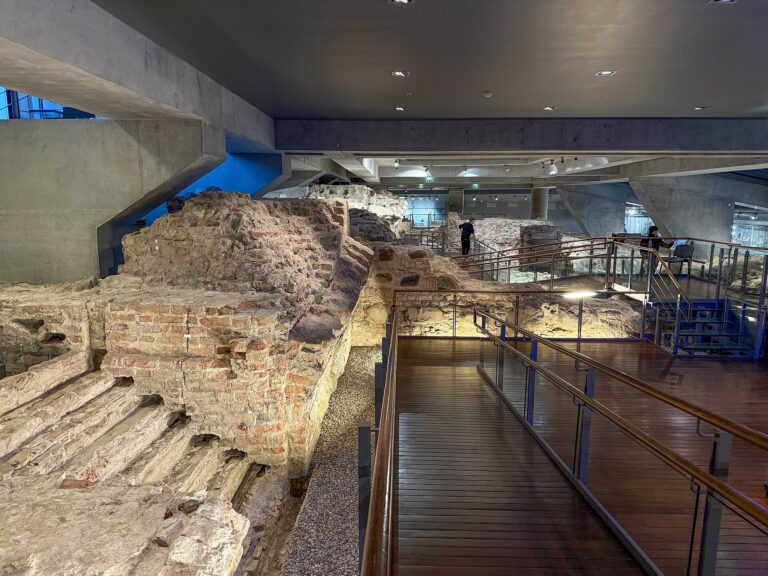
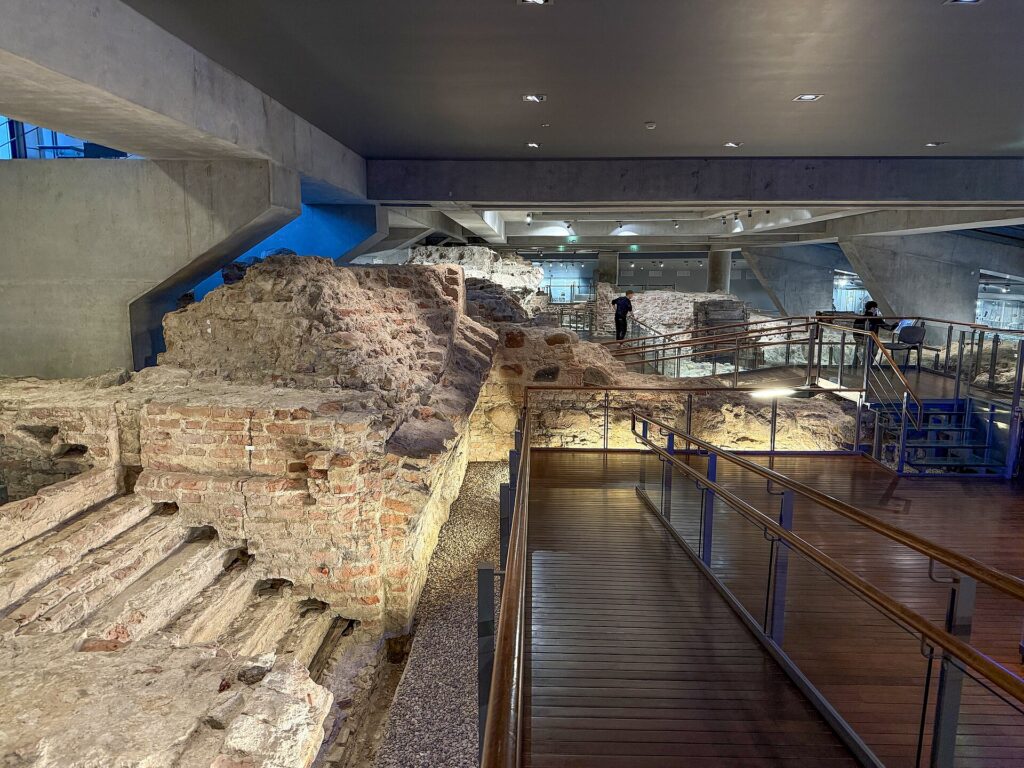
The museum occupies a modern reconstruction inspired by historical research, overlaying remains of the original palace foundations uncovered through archaeological work. This rebuilding aims to evoke the scale and architectural form of the original complex while incorporating contemporary museum design standards. It blends exhibition spaces with underground archaeological galleries, allowing visitors to view excavated remains in situ.
Situated on Vilnius’s Cathedral Square, the palace museum benefits from a central location surrounded by other important historical and cultural sites. This placement enhances its accessibility and provides visitors easy access to additional points of interest. The square itself has been historically significant as a focal point of civic and religious life in Vilnius, adding layers of context to the museum visit.
Practical Information
Potential visitors should consult the official website for current information regarding opening hours, admission fees, guided tours, accessibility options, and any visitor services provided, as these details can change. The museum’s location in the city center means it is generally reachable by public transport or on foot from many parts of Vilnius.
As the museum includes underground archaeological zones, some areas may have limitations related to accessibility for those with mobility challenges. The onsite facilities for eating and shopping, if available, should also be verified in advance. While audio guides or informational materials may be offered, it is advisable to check what language options are provided.
Since the museum focuses significantly on Lithuanian history and archaeological materials, visitors with a particular interest in medieval Eastern European history or archaeology are likely to appreciate the content more than those seeking exclusively art-centric exhibitions. The exhibition text and presentation style aim to be informative but may be denser than in museums targeting a general tourist audience.
Why Visit
The Palace of the Grand Dukes of Lithuania offers visitors a chance to engage directly with an important aspect of Lithuania’s medieval heritage and the story of its once-powerful state. For those interested in political history, archaeology, and the development of royal institutions in Eastern Europe, the museum provides detailed insights supported by real archaeological evidence and thoughtful reconstruction.
Its setting on Cathedral Square places it within easy reach of other historic sites, encouraging a broader exploration of Vilnius’s past. While the museum’s reconstructed form is inevitably an interpretation, it helps bridge the gap between lost historical architecture and present-day cultural memory.
This museum suits visitors who appreciate historical depth and archaeological context more than purely visual or artistic displays. The exhibits reflect Lithuania’s endeavors to preserve and understand its national past, offering perspective on the complexities of medieval political life and the role monumental architecture played in expressing power.
In summary, the Palace of the Grand Dukes of Lithuania functions as a historical museum with archaeological elements centered on the grand ducal residence’s history and significance. It provides an educational experience grounded in tangible artifacts and careful reconstruction. Visitors should plan their visit with practical details in mind and adjust expectations to the museum’s interpretive focus. The Palace’s location and exhibition style invite anyone with an interest in Lithuanian history, medieval archaeology, or the architecture of power in the region to explore one of Vilnius’s key cultural landmarks.