Norwegian Resistance Museum
About: Approach the museum as a focused historical experience rather than a large military collection. Move slowly through the occupation and resistance.

Best forArchitecture, royal history, heritage
Setting / nearbyEurope
Overview
The Norwegian Resistance Museum is one of the most important museums in Oslo for understanding Norway during the Second World War. Located at Akershus Fortress, it focuses on the years of German occupation and the many forms of resistance that emerged during that period. Rather than presenting wartime history only through large military events, the museum gives attention to the people, networks, risks, and moral choices that shaped everyday resistance. That makes it a deeply human museum as well as a historical one.
What makes the museum especially effective is its focus on pressure and reality. Resistance history can easily be turned into a simple heroic narrative, but the strongest museums in this field show something more complicated. They reveal fear, secrecy, surveillance, sacrifice, and uncertainty alongside courage and determination. The Norwegian Resistance Museum succeeds because it explains that resistance was not one single activity carried out by one type of person. It included underground newspapers, intelligence work, sabotage, illegal transport, coded communication, escape routes, and quiet acts of refusal. This broader view helps visitors understand how resistance movements functioned and why they mattered.
The museum also places Norway’s wartime experience within a wider European context. Occupation was not only a military condition. It transformed politics, public life, institutions, and ordinary routines. By showing how Norwegians responded to those pressures, the museum becomes more than a record of wartime events. It becomes a study of society under occupation and the many ways individuals and groups chose to respond.
For visitors to Oslo, this gives the museum a particular value. It offers an experience very different from art museums, royal sites, or broader national history displays. Instead of surveying centuries, it concentrates on a period of extreme tension and consequence. That tighter focus gives the museum emotional weight and historical clarity, making it one of the city’s most meaningful museums for those interested in modern European history.
Collection Highlights
The museum’s greatest strength lies in the way it combines documents, objects, photographs, equipment, and personal material to tell the story of resistance from the inside. Museums dealing with wartime occupation often rely heavily on text, and that is understandable because so much of the story involves networks, decisions, and hidden actions rather than monumental artifacts. At the Norwegian Resistance Museum, this becomes a strength rather than a weakness. The collection is most powerful when it shows the physical traces of clandestine activity: illegal newspapers, false papers, coded messages, radios, uniforms, and objects linked to arrest, imprisonment, or escape.
These kinds of items are compelling because they bring visitors close to the daily mechanics of resistance. A radio transmitter or forged identity document may look modest at first, yet it carries enormous historical weight. Such objects remind us that resistance often depended not on large battles but on communication, concealment, logistics, and trust. The museum’s material culture helps make these abstract qualities tangible.
Another important aspect of the collection is its attention to individual experience. Personal testimonies, photographs, and smaller belongings can often be more affecting than larger displays. They show that resistance was carried out by people who lived under constant threat, and they help visitors move beyond general concepts like “occupation” or “liberation” toward the lived reality of those years. This is especially important in a museum of resistance history, where the emotional and moral dimensions are central to the subject.
The museum is also effective when it shows the broader structure surrounding the resistance movement. Occupation authorities, collaboration, censorship, propaganda, imprisonment, and deportation all form part of the context. Without this, resistance would appear isolated or simplified. By presenting both oppression and response, the museum allows visitors to understand not only what resistance groups did, but why those actions carried such risk and importance.
There is also a cumulative power in the collection. One object on its own may seem small, but taken together the displays build a larger picture of courage, coordination, and national strain. That layered effect is one of the reasons the museum stays with visitors. It does not depend on spectacle. Its impact comes from the steady accumulation of evidence and story.
Building and Setting
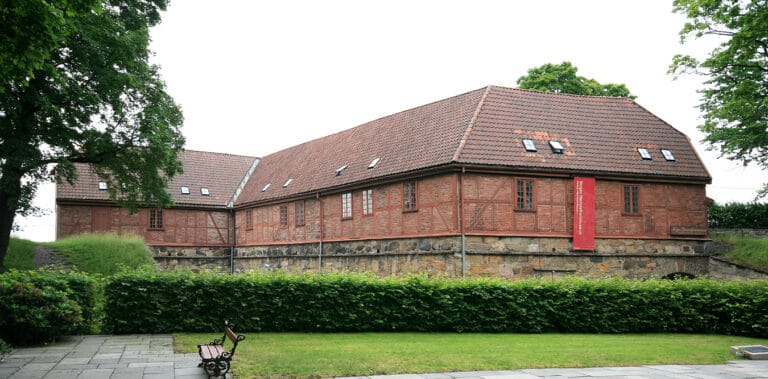
The museum’s location at Akershus Fortress gives it an especially strong setting. This is one of Oslo’s most historic sites, and it already carries associations of defense, state power, and national memory. Housing the Resistance Museum here gives the visit an added resonance. The surroundings remind visitors that wartime history is not separate from the larger story of Norway’s political and military past. The fortress setting helps frame the museum as a place of memory as well as interpretation.
Architecturally, this kind of museum does not need a dramatic or highly contemporary building to succeed. In fact, a more restrained environment often works better. Resistance history depends on concentration, reading, and reflection. Visitors need to absorb details, follow chronology, and engage with smaller objects and documents. A quieter museum atmosphere supports that kind of attention. The Norwegian Resistance Museum is strongest when its setting encourages seriousness rather than distraction.
The relationship between the museum and its site also adds emotional force. To visit a museum about occupation and resistance within a historic fortress makes the experience feel grounded in place rather than abstract. Even before entering the galleries, the location prepares the visitor for a museum concerned with national endurance, conflict, and state history. Once inside, that atmosphere supports the displays without overshadowing them.
Its position in Oslo also makes it easy to include within a broader cultural day, yet the museum has a distinct identity of its own. Many city museums provide general background or broader survey history. The Norwegian Resistance Museum feels more focused and morally intense. That difference is part of its appeal. It offers a quieter, more concentrated encounter with history in a setting that reinforces the subject.
Practical Information
The Norwegian Resistance Museum is best visited at a steady pace. Although it may not appear overwhelming in scale, it is a museum that asks for careful attention. The subject matter is dense, and much of the museum’s value lies in reading, looking closely, and understanding how individual displays connect to the larger wartime story. Visitors who move too quickly may miss much of what gives the museum its depth.
It is especially rewarding for those interested in the Second World War, occupation history, Scandinavian history, or the moral and political dimensions of resistance movements. At the same time, it can also work well for general visitors because the human scale of the subject is so strong. Even people without specialist knowledge can connect with the themes of fear, courage, secrecy, loyalty, and survival.
Because the museum is located within a larger historic area, it works well as part of a visit to Akershus Fortress and the surrounding parts of Oslo. That said, it deserves proper time rather than being treated as a brief add-on. The material is more affecting when visitors allow space for reflection instead of rushing through on the way to another attraction.
As always, it is sensible to check the official museum information before visiting for current opening hours, ticket details, and any temporary arrangements. Practical details can change, and it is best to confirm them directly before the visit.
Why Visit
The Norwegian Resistance Museum is worth visiting because it presents one of the most serious and important chapters of modern Norwegian history with clarity and human depth. It shows that wartime resistance was not an abstract national myth but a network of real actions carried out by real people under extraordinary pressure. That gives the museum a weight and integrity that many visitors will find deeply affecting.
It is also one of the best places in Oslo to understand how occupation changes a society from within. The museum does not only tell stories of bravery. It also shows control, fear, censorship, danger, and the fragile conditions under which resistance became possible. This makes the history feel real rather than ceremonial.
For visitors interested in modern Europe, the museum offers a valuable reminder that the history of the Second World War was lived not only on battlefields but also in homes, offices, prisons, streets, and secret meeting places. That perspective gives the museum lasting importance. It contributes to memory, but it also encourages reflection on civic responsibility and the choices people make when freedom is under threat.
If you want a museum in Oslo that offers depth, seriousness, and a powerful human perspective on wartime history, the Norwegian Resistance Museum is an excellent choice. It is thoughtful, moving, and one of the city’s most meaningful historical visits.