Kon-Tiki Museum
Archaeology Museums · Oslo, Norway. The Kon-Tiki Museum in Oslo, Norway, is a maritime museum dedicated to the life and expeditions of Thor Heyerdahl, a Norwegian explorer known for his remarkable voyages across the Pacific Ocean. Established to preserve…
Best forMuseum lovers, culture travelers, first-time visitors
Setting / nearbyOslo, Norway
Overview
The Kon-Tiki Museum in Oslo, Norway, is a maritime museum dedicated to the life and expeditions of Thor Heyerdahl, a Norwegian explorer known for his remarkable voyages across the Pacific Ocean. Established to preserve and present the vessels and artifacts related to Heyerdahl’s endeavors, the museum offers a focused insight into mid-20th century oceanic exploration and anthropology. It is primarily recognized for its exhibition of the original Kon-Tiki raft, which Heyerdahl and his crew used in 1947 to sail from South America to the Polynesian islands. The museum’s narrative explores themes of human migration, maritime technology of the time, and the spirit of adventure.
The collection and exhibitions are designed to shed light on Heyerdahl’s efforts to test theories about prehistoric transoceanic contact. This makes the museum of particular interest to visitors drawn to maritime history, anthropology, and the history of exploration. Rather than a broadly general maritime or natural history institution, the Kon-Tiki Museum maintains a specific focus on Heyerdahl’s voyages, their planning, execution, and cultural implications.
Collection Highlights
At the heart of the museum’s collection is the original Kon-Tiki raft. Constructed from balsa wood and other native materials, this raft was built using traditional techniques inspired by pre-Columbian craft. The actual vessel on display has been carefully preserved, offering a rare physical connection to a daring experiment in experimental archaeology and exploration.
Alongside the Kon-Tiki raft is a smaller craft known as the Ra II, another vessel used by Heyerdahl in a separate expedition across the Atlantic in 1970. The Ra II was based on ancient Egyptian boat designs and represents Heyerdahl’s continuing interest in demonstrating contacts between distant ancient civilizations.
The museum exhibits a variety of other items related to these voyages, including tools, navigational instruments, personal belongings of the crew, and photographic documentation. These artifacts support the overall story of the expeditions and provide tangible context about the practical challenges faced during long sea journeys on primitive vessels.
Additional displays cover the films and books that Heyerdahl produced to document his travels. The museum shows how the expeditions were both scientific tests and media events that captured global attention. Visitors can find audio-visual materials that enhance understanding of the voyages without relying solely on textual interpretation.
While the museum operates with a clear focus, the scope of its collection is naturally limited to objects tied to Heyerdahl’s major expeditions. Those interested in broader maritime history, seafaring traditions from other regions, or contemporary oceanographic research will find the collection specialized rather than comprehensive.
Building and Setting
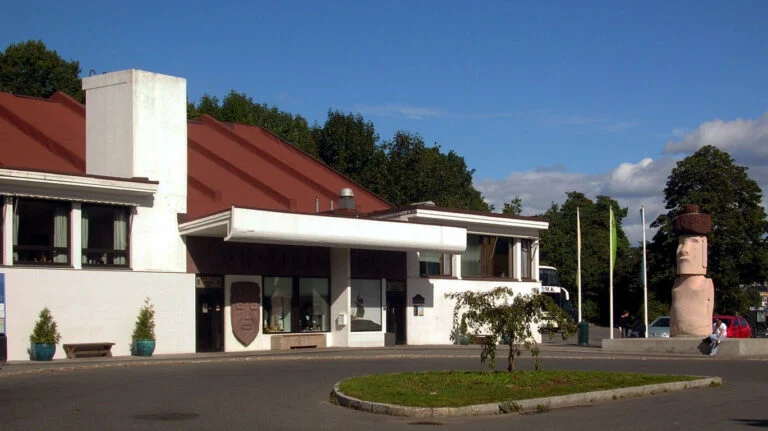
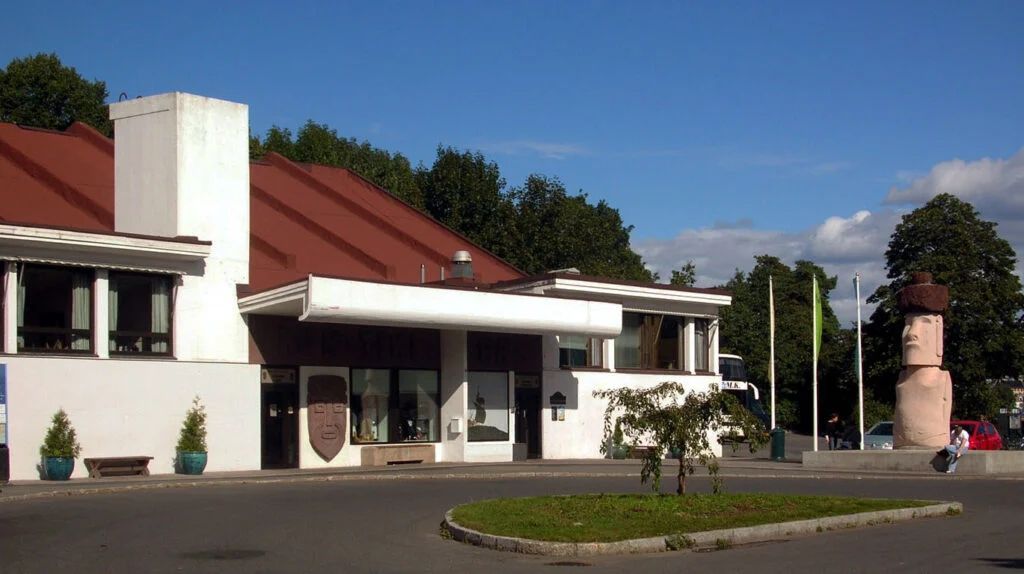
Situated in Oslo, the museum is located near the Oslofjord, which provides a fitting maritime backdrop for its exhibits. Its location connects the narrative of oceanic exploration with the surrounding water landscape, offering context and resonance. The building itself is purpose-built for the display of the large rafts and related objects, featuring spacious galleries with controlled lighting and clear sightlines to accommodate the scale and fragility of the vessels.
The museum is arranged to guide visitors through the chronology and thematic sections of the exhibitions in a coherent manner. Exhibits range from large-scale ship displays to smaller artifact cases and multimedia presentations, structured to support visitor engagement with the story rather than to overwhelm.
The building is functional with an emphasis on preservation of the collection, and it includes basic visitor amenities without extensive architectural ornamentation or additional decorative features. Its proximity to central Oslo means it is accessible within the city, though precise considerations such as parking and transit connections should be verified before visit.
Practical Information
Given that operational details for the Kon-Tiki Museum may vary, prospective visitors should consult the museum’s official website or contact its administration directly for current information on opening hours, admission fees, guided tours, and accessibility. There are no definitive, universally applicable statements about ticket prices or available discounts here.
The museum’s layout and size are manageable for most visitors, but those with mobility concerns should check accessibility provisions in advance. The display of the large vessels requires special care in the design of exhibition spaces, and so some areas may involve steps or narrow paths.
Visitors interested in photography and film should clarify permission policies before arrival, as these can vary and are not necessarily publicized widely. Similarly, any special exhibits or events should be confirmed ahead of time to avoid disappointment.
Why Visit
The Kon-Tiki Museum provides a focused window into an extraordinary moment in maritime exploration history. It appeals especially to those fascinated by the idea of voyages that test historical and anthropological hypotheses through practical experiment. The museum stands as a record of one individual’s determination to connect distant cultures and question accepted assumptions about human migration.
Its importance lies less in a broad survey of oceanic history and more in the specific story of Thor Heyerdahl’s ventures. This makes it well suited to visitors interested in adventure narratives, maritime craft, experimental archaeology, and the interplay between myth, science, and popular culture.
That said, those looking for a wider-ranging maritime museum might find the scope too narrow. The strong emphasis on Heyerdahl’s expeditions also means that other global or chronological aspects of maritime history play a limited role. However, for those who appreciate firsthand artifacts and detailed storytelling related to historical exploration efforts on the high seas, the Kon-Tiki Museum delivers a distinctive perspective.
The museum also invites reflection on the nature of exploration as a human endeavor, positioned between scientific inquiry, personal courage, and the challenge of unknown environments. In this respect, it highlights an episode from the mid-20th century that continues to resonate in discussions about cultural contact and the boundaries of knowledge about the past.
In summary, the Kon-Tiki Museum in Oslo offers a specialized encounter with maritime exploration history, centered on a landmark experiment that captured worldwide attention. Its collection and presentation give a concrete sense of adventure and scientific quest in a way that is both educational and accessible for a wide range of audiences. Checking practical details before visiting will help ensure a smooth experience, and the museum rewards curiosity about how humans have sought to understand their origins through high-risk, hands-on voyages.