Museum of Broken Relationships
The Museum of Broken Relationships in Zagreb presents an unusual but deeply human concept: ordinary objects connected to relationships that.

Best forMasterpieces, architecture, cultural history
Setting / nearbyEurope
Overview
The Museum of Broken Relationships is one of the most unusual museums in Europe and one of Zagreb’s most distinctive cultural attractions. Rather than focusing on archaeology, fine art, military history, or natural science, it is built around a simple but powerful idea: ordinary objects can carry extraordinary emotional weight. The museum collects personal items left behind after relationships have ended and presents them alongside short anonymous stories from the people who donated them. In doing so, it turns private heartbreak into a public exhibition that is often moving, surprising, and unexpectedly thoughtful.
What makes the museum so effective is that it treats emotional experience with seriousness but without self-importance. The concept could easily have become a gimmick, yet the institution avoids that by relying on real contributions and careful presentation. Visitors do not come here to see famous masterpieces or grand historical artifacts. They come to see the emotional meaning that everyday things can hold: a shoe, a letter, a toy, a household object, or a gift that became impossible to keep. The result is a museum experience that feels intimate, direct, and very human.
This also means the museum appeals to a wide audience. Some visitors arrive because they are curious about the concept, while others are drawn by its international reputation. Many leave with the feeling that they have seen something far more substantial than expected. The museum works because its subject is universal. Although every donation comes from a specific relationship and a specific story, the emotions behind them are recognizable across cultures and generations.
In a city known for its historic core and strong museum scene, the Museum of Broken Relationships stands out by doing something entirely different. It shows that museums do not need monumental collections or royal heritage to matter. Sometimes a collection of personal objects can say just as much about modern life, memory, and loss as more traditional institutions.
Collection Highlights
The collection is built around donated objects connected to failed relationships, and this gives the museum a structure unlike that of a conventional museum. Instead of grouping works by school, dynasty, or period, it presents a series of emotional fragments. Each object is paired with a short written account explaining its significance. These texts are crucial. Without them, the objects might appear ordinary or even trivial. With them, they become vivid reminders of affection, conflict, disappointment, longing, and change.
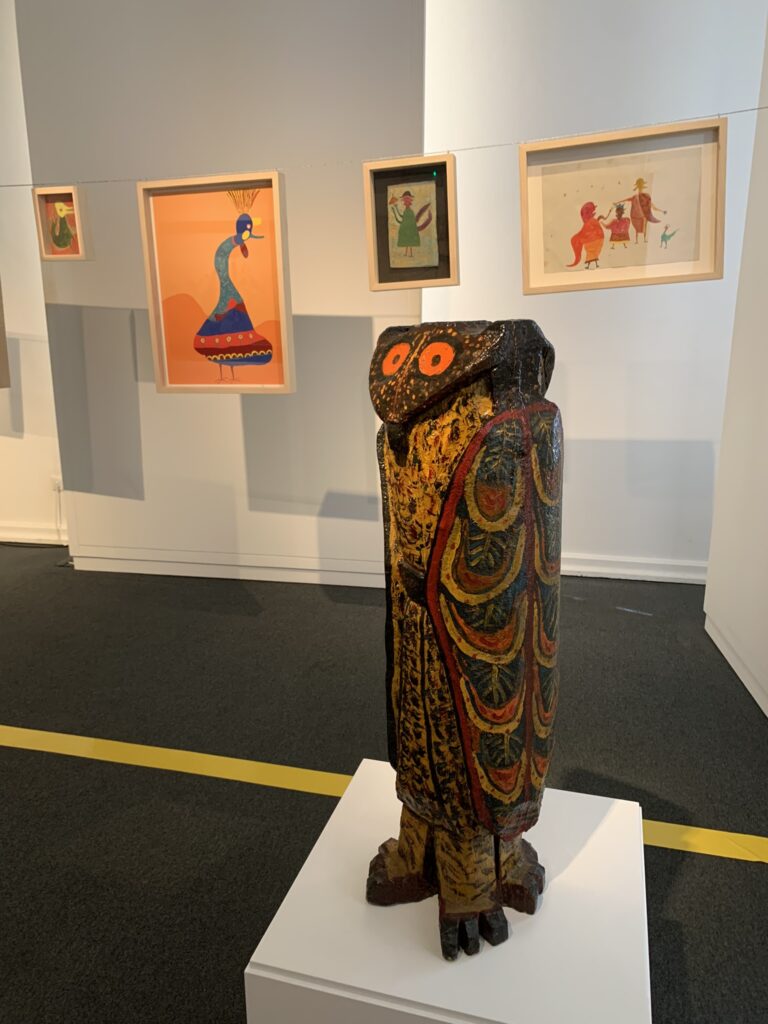
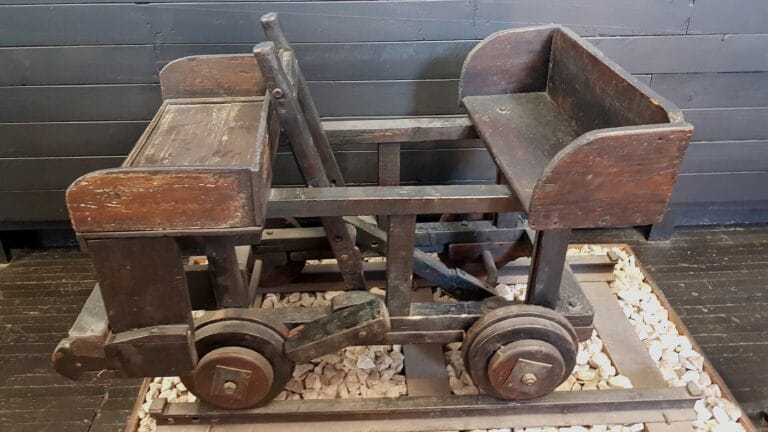
One of the strongest aspects of the museum is the variety of objects it includes. Some are small and understated, while others are more eccentric or darkly humorous. A soft toy, an article of clothing, a piece of furniture, or a domestic item may become the center of a story about years of shared life. This contrast between the everyday appearance of the object and the depth of feeling attached to it is what gives the museum much of its impact.
The collection also benefits from its international scope. Although the museum began in Croatia, the stories it presents are not limited to one country or one culture. Donations have reflected many places, life stages, and relationship types. This broadens the museum beyond a local curiosity and makes it feel like a record of shared emotional experience across borders. Love, separation, resentment, tenderness, regret, and memory appear here in many forms, but the language of objects makes them understandable even when the lives behind them are very different.
Another important strength is tone. The museum does not present every story in the same way. Some are sad, others sharp, others unexpectedly funny. That tonal range helps prevent the visit from becoming monotonous. It also feels truthful. Relationships rarely end with one single emotion, and the museum captures that complexity. Visitors may laugh at one display, pause silently at the next, and then find themselves reflecting on their own experiences a few minutes later. That shifting emotional rhythm is one of the reasons the museum stays in the memory.
Building and Setting
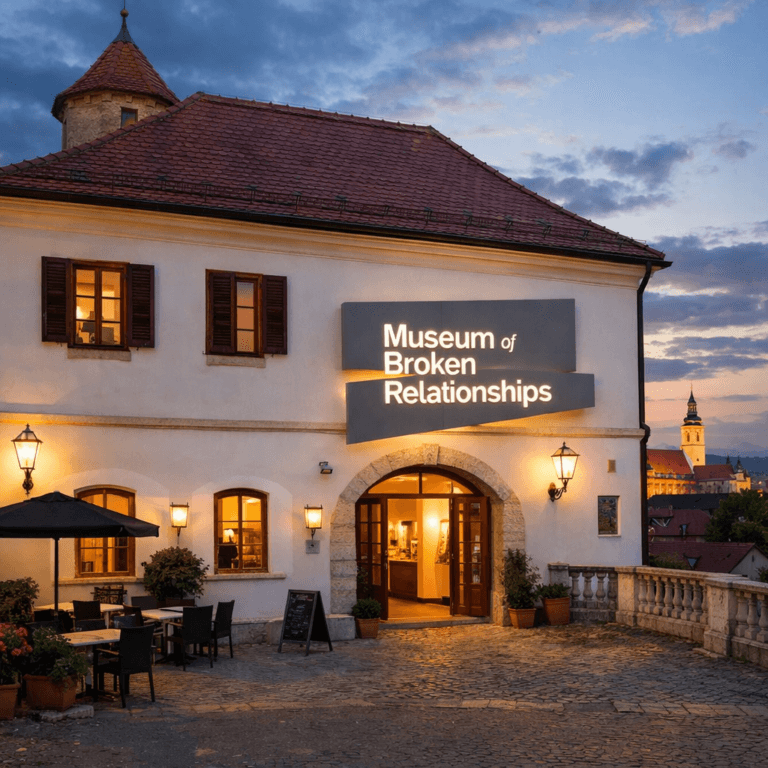
The museum’s setting in Zagreb’s Upper Town suits it well. This historic part of the city is full of character, with older streets, cultural sites, and a strong sense of place. Within that context, the Museum of Broken Relationships feels both at home and distinctive. It does not rely on monumental architecture to make its impression. Instead, it uses a more modest setting to draw attention inward, toward the stories and objects themselves.
That relative architectural restraint is actually an advantage. In many museums, the building competes with the collection for attention. Here, the design approach tends to support the content rather than overwhelm it. The exhibition spaces are arranged to encourage slow looking and reading. Because so much of the museum’s power lies in the short texts accompanying the objects, the visitor needs an environment that allows for concentration. The museum generally succeeds in creating that quieter atmosphere.
The interior presentation is usually simple and controlled, which is the right choice for this type of collection. The objects are not displayed as luxury treasures. They are shown with clarity and enough distance for the visitor to consider both their physical presence and the story attached to them. This gives the museum a balance between emotional immediacy and curatorial discipline. It feels personal, but it still feels like a museum rather than a sentimental installation.
Its setting also makes it easy to include in a broader visit to Zagreb. Because it is located in a culturally rich part of the city, the museum can be experienced as part of a day spent exploring the historic center. Yet once inside, it offers a very different mood from the surrounding churches, squares, and historic buildings. That contrast adds to its identity. It is not simply another stop on a sightseeing list; it feels like a place with its own distinct voice.
Practical Information
The Museum of Broken Relationships is best visited at a calm pace. Although it is not necessarily a huge museum in physical scale, it asks for attention in a way that many larger museums do not. The visitor is reading, thinking, and reacting throughout the visit, so it is better approached as a reflective experience rather than a quick photo stop.
Because the museum depends so much on written interpretation, it is especially rewarding for visitors who are willing to spend time with individual displays. Rushing through the galleries can reduce the impact. The strongest visits usually come when people allow themselves to pause, read the stories fully, and notice how different objects create very different emotional responses.
It is also sensible to check the latest official visitor information before going, especially for opening hours, admission details, and any temporary exhibitions or touring displays. As with any museum, current arrangements can change, and official information is the safest source for planning.
The museum works particularly well for travelers interested in unusual museums, contemporary cultural ideas, and places that offer something more personal than standard tourist attractions. It may not be the first choice for visitors wanting large-scale historical collections or famous masterpieces, but for those open to a museum built around memory and emotion, it can be one of the most memorable stops in Zagreb.
Why Visit
The Museum of Broken Relationships is worth visiting because it proves that a museum can be emotionally powerful without relying on fame, wealth, or traditional prestige. Its collection is made up of ordinary things, yet it turns them into something meaningful through context, storytelling, and careful curation. That alone makes it stand out in a crowded international museum landscape.
It is also one of those rare museums whose concept remains strong after the first explanation. The idea is immediately understandable, but the actual visit reveals much more depth than the title alone suggests. What could have been a novelty becomes a serious reflection on attachment, memory, and the traces people leave in each other’s lives.
For some visitors, the museum’s appeal lies in its originality. For others, it lies in its honesty. It does not pretend that emotional life is tidy, heroic, or easily explained. Instead, it offers fragments, contradictions, and lingering feelings, all carried by objects that have outlived the relationships they once belonged to. That is a compelling curatorial idea, and it gives the museum a distinctive place not only in Zagreb but in modern museum culture more broadly.
If you want a museum that feels different from the usual art or history visit, this is one of the clearest choices in Croatia. It is thoughtful, memorable, and often surprisingly moving. More than many larger institutions, it stays with you after you leave.