Museu de Arte de São Paulo (MASP)
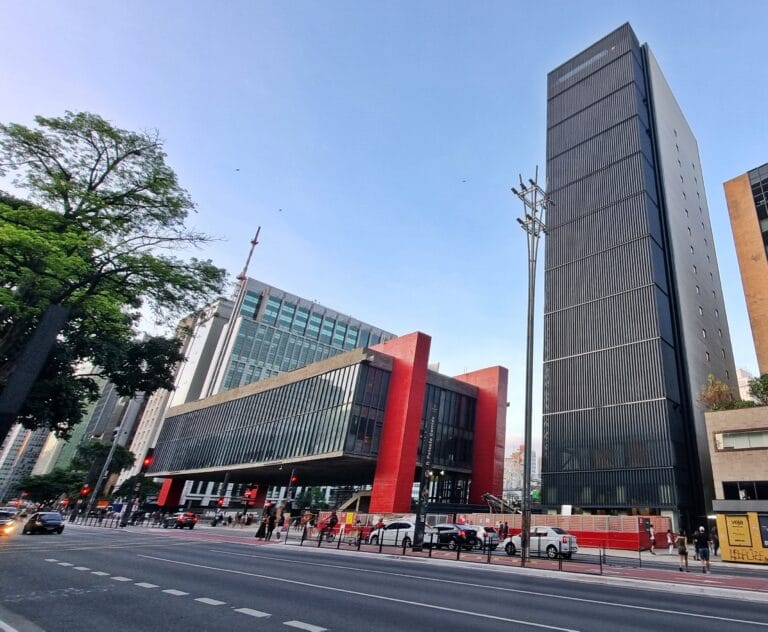
About: MASP is architecture as civic statement. Lina Bo Bardi’s suspended structure — red beams lifting the galleries above Avenida Paulista — creates a.

Best forMasterpieces, architecture, cultural history
Setting / nearbySouth America
Overview
Museu de Arte de São Paulo (MASP) is one of the most important art museums in Latin America and one of the most distinctive museum experiences in the world because its power lies equally in its collection, its architecture, and its radical way of displaying art. Located on Avenida Paulista, MASP is not simply a great museum placed in a major city. It is a civic statement about how culture should exist within urban life. Lina Bo Bardi’s famous suspended structure, lifted above the avenue by red concrete beams, creates an open public space beneath the building and turns the museum itself into part of the life of the city. This is one of MASP’s greatest strengths. It does not stand above São Paulo as a distant monument. It stands inside the city’s movement, noise, and public energy.
What makes MASP especially rewarding is that it refuses to separate collection from display philosophy. Many museums have fine works, but show them in predictable ways. MASP is different. Its glass-easel display system changes how visitors move, how paintings are encountered, and how art history is read. Instead of following a conventional sequence of works pinned to walls, visitors often experience paintings in open space, with the physical act of walking around them becoming part of interpretation. This makes the museum feel unusually alive and intellectually alert. It reminds visitors that museums are not neutral containers. They are also arguments about how art should be seen.
The museum is also especially significant because of the breadth and ambition of its collection. European works sit beside Brazilian material and other international holdings in a context that feels larger than simple borrowing from European standards. MASP’s collection shows the reach of the institution, but it also raises questions about how art history has been organized and who gets to define cultural importance. That gives the museum a different tone from more conventional old-world institutions. It is not only displaying masterpieces; it is also asking how they should be placed within a broader global and Brazilian cultural story.
For visitors to São Paulo, MASP is often an essential museum because it captures something fundamental about the city itself: boldness, public intensity, contradiction, and cultural ambition. It is not a quiet retreat from São Paulo so much as an expression of it. That is one reason the museum remains so memorable. It feels rooted in its place while also speaking to much larger questions about museums, modernity, and public life.
Collection Highlights
MASP’s collection is best approached not as a simple list of famous names, but as a conversation between Brazilian and international art. This is one of the museum’s greatest strengths. European painting is a major attraction, and rightly so, because the museum holds works of real international significance. Visitors encounter major traditions of Western painting at a level that immediately establishes MASP as a serious art institution on the global stage. Yet the museum becomes more interesting when those works are not treated as isolated trophies. They gain force from being seen in São Paulo, inside a museum with a different curatorial and architectural logic from the institutions where European art is usually canonized.
Brazilian art is equally essential to the museum’s identity. These works ensure that MASP is not experienced only as a South American home for European prestige. Instead, they make clear that the museum is also part of Brazil’s own art-historical and cultural conversation. This gives the collection more tension and depth. The visitor is not only seeing imported narratives of art history, but also the work of a museum that insists on Brazil’s place within larger visual culture while maintaining the distinctiveness of its own artistic traditions.
One of the most memorable aspects of the collection is therefore not a single gallery but the juxtaposition itself. Seeing European works and Brazilian works in the same institution, and often through a more open display logic, changes how the collection is read. The museum becomes less about fixed hierarchies and more about relationships: between center and margin, between canon and context, between old forms of authority and newer questions about display and access.
The glass-easel installation is also a highlight in its own right. While not an “object” in the normal sense, it is one of MASP’s defining museum experiences. Paintings presented in this system are encountered differently from works on walls. Visitors can see front and back, move around them, and experience a more spatial relation to art. This does not merely modernize the look of the museum. It alters interpretation. The visitor’s body becomes more active, and the collection becomes less like a sequence of fixed icons and more like a field of visual encounters.
Temporary exhibitions also matter greatly at MASP. Because the museum has such a strong architectural and conceptual identity, changing exhibitions can take on unusual force here. They often interact not only with the collection, but with the museum’s larger curatorial ideas and public role. For repeat visitors, these exhibitions are often one of the main reasons the museum remains culturally alive rather than frozen around its best-known holdings.
Building and Setting
The building is one of the most important museum structures of the twentieth century and one of the main reasons MASP is globally famous. The great suspended volume over Avenida Paulista is not only visually striking. It is politically and socially meaningful. By lifting the museum up and leaving a public plaza beneath, Lina Bo Bardi created a building that acknowledges the city rather than turning its back on it. This is a rare architectural gesture. Many museums seek authority through separation. MASP finds authority through public openness.
The red beams, the hovering mass of the galleries, and the city-facing presence of the structure make the museum itself feel like a statement about public culture. Even before entering, visitors are already inside the museum’s argument: that art belongs in civic life, not hidden from it. This is one of the reasons walking around the museum from outside is so important. The exterior is not just a shell. It is part of the meaning.
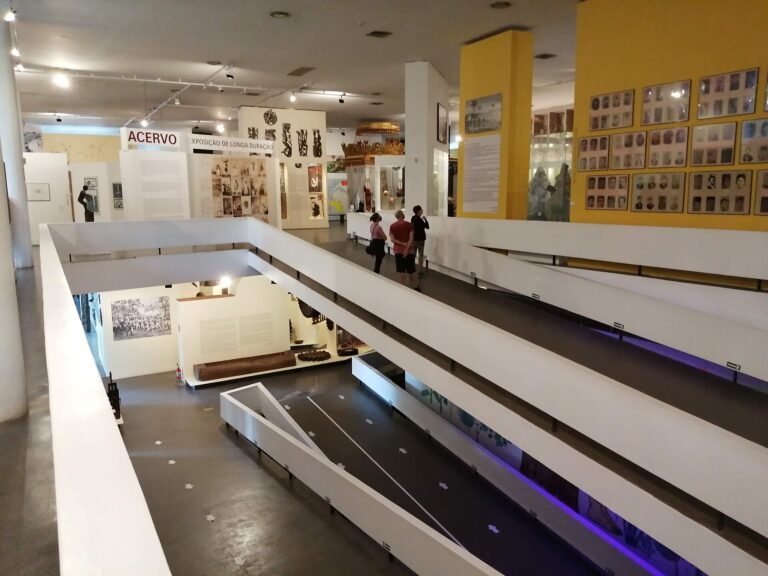
Inside, the open gallery spaces and glass-easel displays continue that argument. The architecture does not merely house art. It shapes how art can be seen. The result is a museum experience that feels unusually direct and modern, even decades after the building’s completion. MASP is one of those rare places where architecture, curatorial method, and collection identity all reinforce one another.
Its location on Avenida Paulista strengthens everything. The museum stands within one of São Paulo’s most intense and symbolically important urban spaces, and that energy matters. MASP feels inseparable from the city around it, and that rootedness is one of its greatest qualities.
Practical Information
MASP is best visited with enough time not only to see the collection but to absorb the building and the display method. A good visit often begins outside, walking around the structure and understanding its suspended form in relation to the avenue and the public space beneath. Only after that does the interior fully make sense.
Inside, it is worth moving more slowly than usual because the glass-easel system changes the normal museum rhythm. Rather than scanning walls, visitors need time to adjust to a more spatial kind of looking. That can make the museum feel refreshing, but it also means the visit is more rewarding when not rushed.
A strong route usually balances the permanent collection with any temporary exhibitions, since MASP’s changing programme is often central to the institution’s current life. Shorter visits can still be excellent, but even then it is wise to focus on depth rather than trying to cover everything.
Why Visit
MASP is best for art lovers, architecture enthusiasts, first-time visitors to São Paulo, and anyone interested in museums that question how art is displayed as much as what is displayed. Its greatest strength is that it offers a complete and distinctive museum experience: a major collection, a world-famous building, and a radical display philosophy all working together.
What makes it worth prioritising is that few museums combine civic architecture, curatorial intelligence, and collection quality at this level. MASP is not only a great art museum in Brazil. It is one of the most original museum experiences anywhere, precisely because it does not accept the usual rules of museum viewing without challenge.
For many visitors, MASP becomes unforgettable because it feels like an institution with ideas. It is not just storing art. It is thinking about art, public life, and the city all at once. That makes it one of São Paulo’s essential cultural destinations and one of the most important museums in Latin America.