Grigore Antipa National Museum of Natural History
Natural History Museums · Bucharest, Romania. The Grigore Antipa National Museum of Natural History is Romania’s primary institution dedicated to the natural sciences, located in Bucharest. With roots reaching back to the 19th century, the museum has grown into a…
Best forFamilies, nature lovers, science travelers
Setting / nearbyBucharest, Romania
Overview
The Grigore Antipa National Museum of Natural History is Romania’s primary institution dedicated to the natural sciences, located in Bucharest. With roots reaching back to the 19th century, the museum has grown into a repository of natural specimens and an educational facility focused on the rich biodiversity and geological history of Romania and the wider world. Named after Grigore Antipa, a pioneering Romanian biologist and museum director, it serves both scientific research and public education. It is a natural history museum in the fullest sense, combining elements of zoology, paleontology, geology, and ethnography under one roof.
Visitors to the museum will find a comprehensive overview of natural history, from prehistoric fossils to present-day fauna and ecosystems. The museum’s collections aim to provide insight into the diversity of life and its changes over millions of years. While the museum is well regarded locally and among natural history institutions in Eastern Europe, it is not as large or as well funded as some Western European or North American counterparts. As a result, it conveys its scientific narratives in a somewhat straightforward style, with exhibits that prioritize detailed specimen display over high-tech interpretations.
The museum plays a role beyond exhibition, supporting educational programs and research activities. It often collaborates with universities and scientific bodies. Situated in Romania’s capital, it is accessible to residents and visitors with an interest in natural sciences, Romanian natural heritage, or museum collections in general.
Collection Highlights
Among the museum’s strengths is its extensive zoological collection. It encompasses a vast array of animal specimens, including mammals, birds, reptiles, fish, and insects, many native to the Carpathian Mountains and the Danube Delta regions. Specimens range from taxidermied animals to skeletal remains and invertebrates preserved in fluid. For those interested in European biodiversity, these exhibits offer detailed opportunities to examine the native and introduced fauna of the region.
The paleontological displays present fossils from Romania and wider geographies, focusing on vertebrates but also featuring invertebrates and plant remains. Romania’s geological record is highlighted by fossils from the Miocene epoch and earlier periods, revealing the evolution of its natural environment. Visitors will encounter specimens such as mammoth remains and prehistoric fish fossils, which illuminate the shifts in climate and topography across millennia.
The museum holds notable exhibits on mineralogy and petrology, showcasing rocks, minerals, and gemstones that reflect the geological diversity found throughout Romania. These displays provide insight into the country’s mineral wealth and the scientific study of earth sciences.
Ethnographic elements are present but more limited and primarily serve to contextualize the relationship between human culture and the natural environment. The focus remains largely on the scientific and ecological rather than anthropological.
Displays are typically traditional in style, with specimens arranged for close examination and accompanied by text panels explaining their significance. While the museum does not heavily rely on multimedia or interactive technology, its collections are substantial and well-curated for those interested in the natural sciences.
Building and Setting
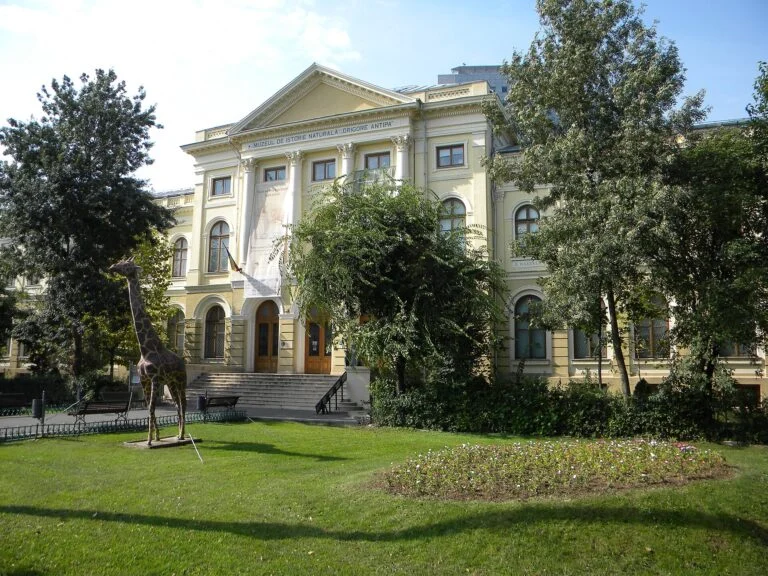
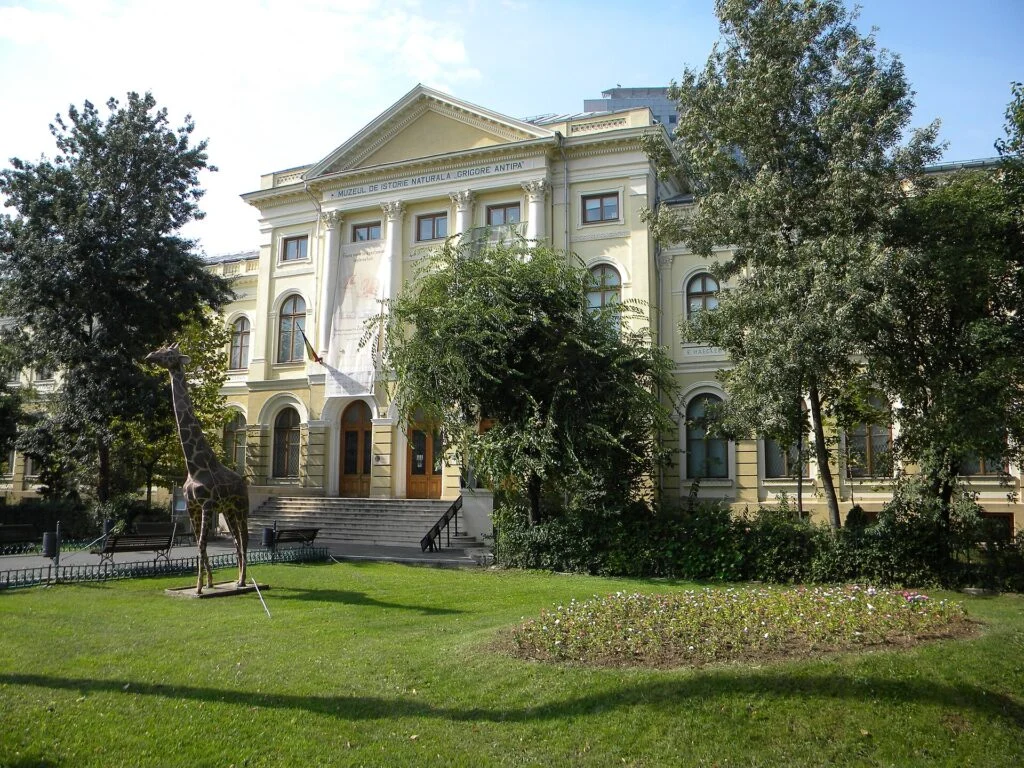
The Grigore Antipa Museum is housed in an architecturally distinct early 20th-century building in central Bucharest. This purpose-built structure was designed to accommodate a scientific collection and includes large halls with high ceilings, which allow for sizable specimen displays and dioramas. The historic nature of the building adds a sense of continuity with the scientific heritage of its founder, Grigore Antipa.
Its central location in Bucharest makes the museum relatively easy to reach via public transport or on foot from nearby attractions. The neighborhood combines both cultural institutions and residential areas, contributing to a balanced urban experience.
The museum’s interior spaces can feel a little dense at times, as the collection fills much of the exhibition area. This can make it less spacious compared to newer natural history museums designed with more open flow and visitor space. Lighting is functional but tends toward the traditional, focusing on highlighting specimens rather than creating ambient effects.
Practical Information
For those planning to visit, it is advisable to check the museum’s official website prior to arrival for up-to-date details regarding opening hours, ticketing, and potential visitor services such as guided tours or educational programs, as this information may change. Admission policies, discount options, and accessibility accommodations are also best confirmed directly from official sources.
The museum’s layout is relatively straightforward, though visitors should be prepared for some walking over uneven floors typical of older buildings. Information and exhibit labels are primarily in Romanian, with some English translations, but non-Romanian speakers should be ready for limited multilingual support compared to larger institutions.
Photography policies vary, so consulting the museum’s guidelines on picture-taking is recommended to avoid any issues. Facilities such as cafés and shops are modest but available. The museum may experience increased visitor numbers during school holidays and weekends, so visitors preferring quieter conditions might consider weekdays or early hours.
Why Visit
The Grigore Antipa National Museum of Natural History appeals particularly to those with a serious interest in natural science collections and Romanian natural heritage. It is well-suited for students, researchers, educators, and families looking for an educational outing focused on the natural world. The museum puts a spotlight on regional wildlife, fossil history, and geology more than on global biodiversity, which, for some visitors, offers a valuable concentration on an area less emphasized in other natural history museums.
At the same time, the museum’s presentation style is more traditional, which may not satisfy those seeking interactive or highly interpretive experiences. It is important to have realistic expectations about the scale and modernity of the exhibits. The museum serves best as a place to engage directly with carefully preserved specimens and established scientific classifications.
Given the museum’s central location and established reputation, it can form part of a broader cultural itinerary in Bucharest, especially for those interested in scientific museums or natural history. However, it is not a museum aimed at general entertainment or casual browsing, so visitors who prefer dynamic or theatrical museum experiences may find it less compelling.
In summary, the Grigore Antipa Museum offers a substantial natural history collection with a clear national focus. Its scientific approach, historical setting, and wide-ranging specimens make it a meaningful stop for visitors drawn to the study of natural sciences and Eastern European natural history. As with many specialized institutions, its impact lies in depth and authenticity rather than spectacle. Visitors who appreciate this approach will find it a valuable addition to Bucharest’s cultural offerings.