Auschwitz-Birkenau Memorial and Museum
About: Established on the grounds of the former German Nazi concentration and extermination camp, the Auschwitz-Birkenau Memorial and Museum preserves.

Best forScience, technology, hands-on learning
Setting / nearbyEurope
Overview
Auschwitz-Birkenau Memorial and Museum is one of the most important historical and memorial sites in Europe and one of the most necessary places for understanding the scale, system, and human reality of Nazi persecution and mass murder. Established on the grounds of the former German Nazi concentration and extermination camp, the site preserves physical evidence of crimes carried out between 1940 and 1945. It includes Auschwitz I, the original camp, and Auschwitz II-Birkenau, the vast complex where most victims were murdered. Unlike a conventional museum, Auschwitz-Birkenau is not a place of admiration, aesthetic pleasure, or ordinary cultural tourism. It is a memorial site, a place of evidence, and a historical warning. That difference shapes the entire visit.
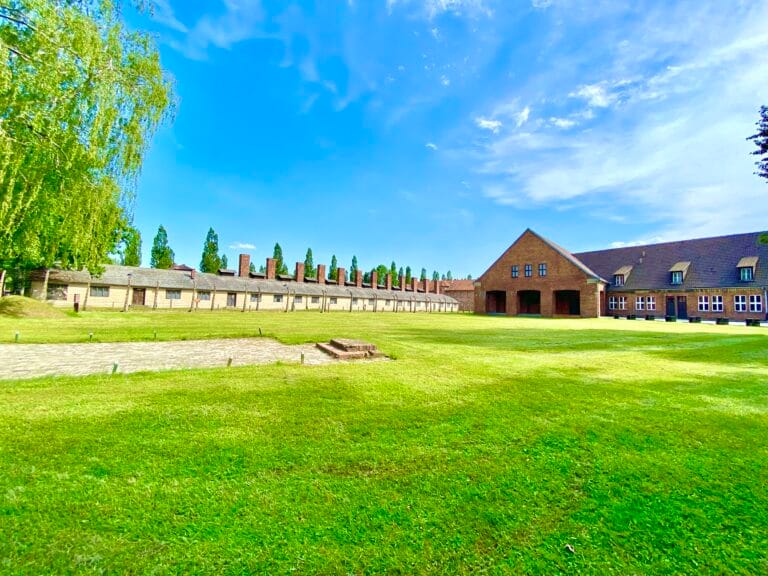
What makes Auschwitz-Birkenau especially powerful is the relationship between documentation and place. Many people know the name Auschwitz before they arrive, but the physical reality of the site changes that knowledge. Brick barracks, barbed wire, watchtowers, railway tracks, ruined crematoria, wooden structures, and the sheer distances within Birkenau make visible the scale of the system in a way that books alone cannot. This is one of the reasons the memorial remains so important. It does not ask visitors to imagine a distant abstraction. It confronts them with a preserved landscape in which persecution, forced labor, starvation, humiliation, and industrialized murder were organized.
The memorial is also historically essential because it preserves both the administrative and exterminatory dimensions of the camp complex. Auschwitz was not one single space with one single function. It was a system. Auschwitz I can show visitors the structures of imprisonment, punishment, documentation, and camp administration. Birkenau reveals scale, transport, selection, mass killing, and the terrifying logic of the extermination process. Together, they make clear that Auschwitz was not merely a symbol of evil in the abstract, but a highly organized machinery of oppression and murder built through architecture, transport, bureaucracy, and ideology.
For visitors, this means the site must be approached differently from an ordinary museum. It is not a place to rush, and it is not a place to treat as a checklist stop. The memorial asks for seriousness, time, and emotional readiness. The visit can be difficult, but that difficulty is part of its value. Auschwitz-Birkenau remains one of the most important historical visits in Europe because it preserves evidence where evidence matters most: at the place itself.
Collection Highlights
At Auschwitz-Birkenau, the most important points of attention are not “highlights” in the usual museum sense, but preserved spaces, documentary exhibitions, and material evidence that make the history of the camp system concrete. Auschwitz I is often the starting point for visitors, and its preserved brick blocks contain exhibitions that are among the most important parts of the visit. These displays provide documentary context, historical explanation, and material evidence that help visitors understand the systems of deportation, imprisonment, and murder connected to the site.
Among the most affecting elements are the personal belongings of victims preserved in the exhibitions. Shoes, suitcases, hair, utensils, clothing, and other objects are powerful precisely because they strip away abstraction. They return individuality to a history that can otherwise feel overwhelming in scale. These materials are not simply historical artefacts. They are evidence of interrupted lives, and they are central to the memorial’s moral and historical force. Many visitors remember these rooms more vividly than any broader explanatory panel because they compress the enormity of the crime into direct human traces.
The prison blocks and related preserved spaces are also crucial. They show how confinement, punishment, and terror operated in physical terms. These structures help explain that the camp system was not only about death at its endpoint, but about continuous degradation, discipline, violence, and control. The architecture matters. Narrow corridors, cells, yards, and block arrangements are part of the historical record, and walking through them gives the visitor a deeper understanding of how imprisonment functioned as a total system.
Birkenau, however, often becomes the emotional and spatial centre of the visit because it reveals scale in a different way. The railway entrance, the long tracks, the barracks, the ruins of the gas chambers and crematoria, and the vast open ground make visible the industrial and exterminatory dimension of the site. What is so powerful about Birkenau is not only what remains, but the space itself. Distance matters there. Emptiness matters. The scale of the camp is part of the evidence. Birkenau often leaves the strongest impression because it makes mass murder intelligible not through one object or one room, but through geography and ruin.
The ruins of the crematoria are especially important. They are among the clearest surviving traces of the extermination process and help keep the visit anchored in evidence rather than symbolic abstraction. Likewise, the barracks and surviving infrastructure show that Birkenau was not a single site of killing but an immense environment built to manage people as transport, labor, and victims.
Building and Setting
The setting is inseparable from the meaning of the memorial. Auschwitz I and Birkenau are not simply historical backdrops for exhibitions; they are the historical record in physical form. The built environment is evidence. The brick buildings of Auschwitz I convey institutional control and imprisonment, while the scale and exposed landscape of Birkenau communicate something even more terrible: the vastness and organization of extermination. The contrast between the two is one of the most important things a visitor can register.
At Auschwitz I, the preserved built environment often feels more enclosed and administrative. This can make the first part of the visit feel structured, even if emotionally difficult. Birkenau changes that. There, the openness and the distances create a different experience. The site feels harsher, more exposed, and more spatially overwhelming. That shift is essential to understanding the camp complex. It helps the visitor grasp that Auschwitz was not one camp with one purpose, but a broader machine of persecution and murder.
The surrounding landscape also matters. The site is not removed from the ordinary world in some abstract moral sense. It exists in a real geography, in a real part of Europe, and that fact is part of its continuing force. Auschwitz-Birkenau reminds visitors that genocide was not carried out in some mythical elsewhere, but in actual places built, run, and normalized within the modern world.
Practical Information
Auschwitz-Birkenau requires time and emotional concentration. It should not be treated as a quick stop. A proper visit usually involves both Auschwitz I and Birkenau, and the movement between them matters because each part reveals something different about the system. Visitors should expect the experience to be mentally and emotionally demanding, and they should allow enough time not to rush through the exhibitions or the wider grounds.
Reading and listening carefully are important. The memorial is strongest when approached through evidence and attention rather than through prior assumptions alone. Comfortable pacing also matters, especially because Birkenau involves substantial walking and because the emotional weight of the site can be exhausting.
Most importantly, the memorial should be approached respectfully and quietly. This is not simply a historic attraction but a cemetery, a place of mourning, and a preserved record of one of the greatest crimes in human history.
Why Visit
Auschwitz-Birkenau Memorial and Museum is essential for visitors who want to understand the Nazi camp system through preserved place, documentary evidence, and the physical reality of how persecution and extermination were organized. It is not a visit to recommend lightly, but it is one of the most important historical sites in Europe and one of the clearest reminders of why memory must remain tied to evidence.
What makes the memorial worth visiting is not only its historical significance, but the force with which it shows that mass murder was built through systems, structures, transport, ideology, and ordinary administration. Auschwitz-Birkenau does not allow the past to remain vague. It preserves the place where it happened and insists that the visitor confront the evidence directly.
For those willing to approach it with seriousness, patience, and respect, Auschwitz-Birkenau is one of the most necessary historical visits in the world. It is a place not of cultural admiration, but of witness, remembrance, and historical responsibility.