Canadian Museum for Human Rights
The Canadian Museum for Human Rights in Winnipeg, Canada, is a museum built around ideas, law, memory, and public responsibility rather than.
Best forMasterpieces, architecture, cultural history
Setting / nearbyNorth America
Overview
The Canadian Museum for Human Rights in Winnipeg, Canada, is a museum built around ideas, law, memory, and public responsibility rather than around a traditional art or artifact collection. Its central subject is the history and meaning of human rights, approached through Canadian and international examples. As a result, the institution occupies a distinct place within the museum landscape. It is not an encyclopedic history museum, nor a memorial site devoted to one event alone. Instead, it is a museum that asks how rights are articulated, denied, defended, and remembered.
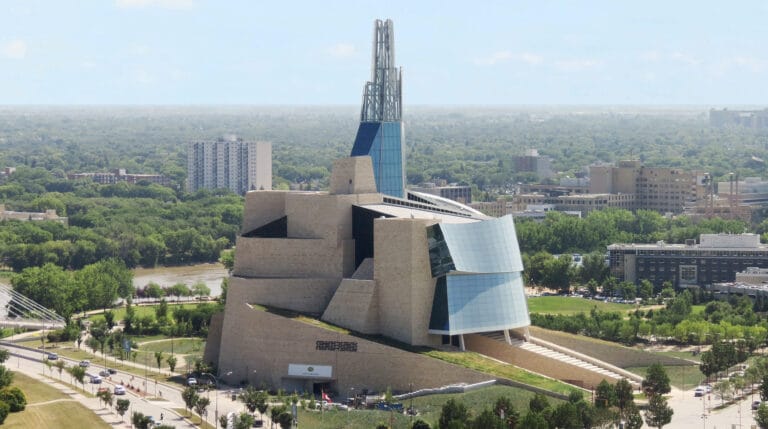
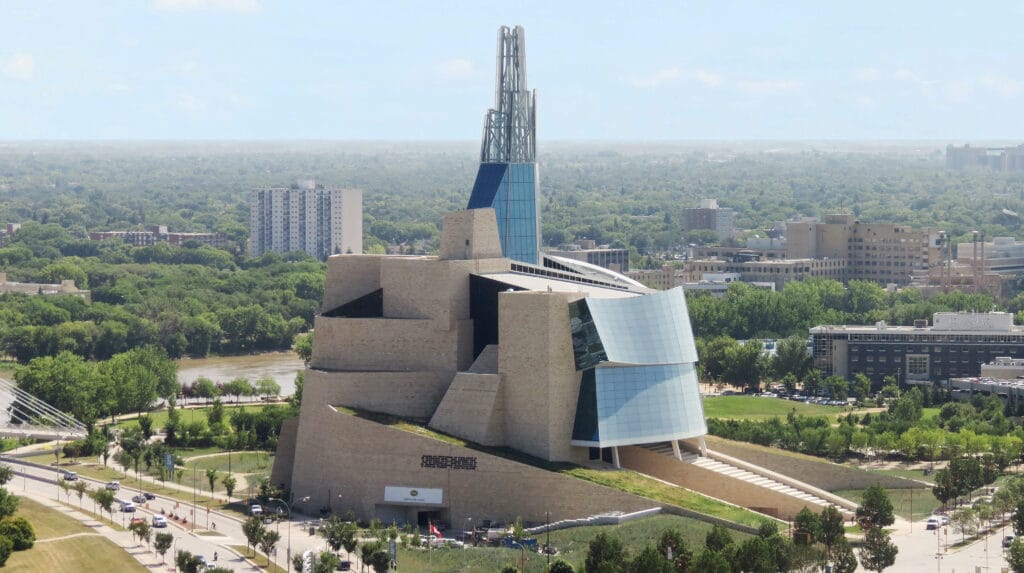
The museum stands out immediately because of its architecture and location at The Forks in Winnipeg. It is designed as a major civic institution, and its physical presence reflects that ambition. For visitors interested in public history, civic identity, and contemporary museum interpretation, it offers a different kind of experience from object-heavy institutions.
History
The museum was established as a national institution dedicated to the exploration of human rights in Canada and around the world. Its creation reflected a broader recognition that museums can address not only the past, but also the legal, ethical, and social frameworks that shape public life in the present. In Winnipeg, the museum gained additional meaning through its location in a city with deep Indigenous histories and a complex modern civic identity.
From its opening, the museum was positioned as both an educational and symbolic institution. Its task was never simple. Human rights history crosses multiple eras, cultures, and political systems, requiring the museum to work with testimony, law, documents, images, case studies, and public debate rather than a single conventional collection base.
Collection Highlights
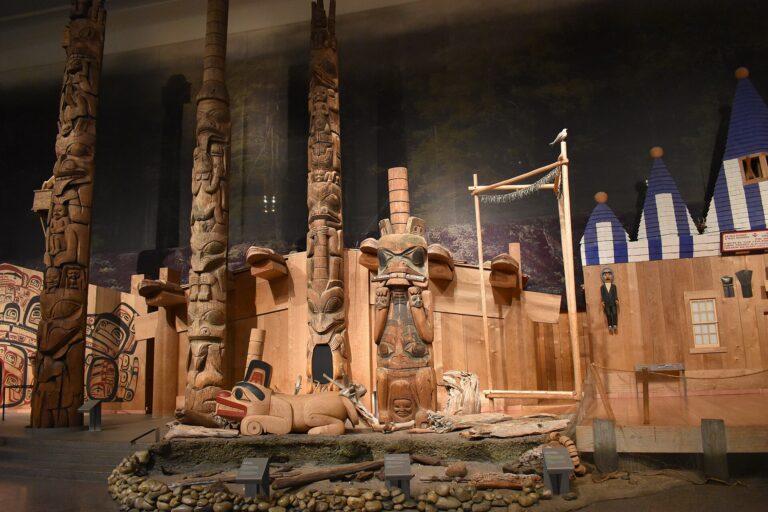
The museum’s greatest strength lies in its thematic exhibitions and interpretive approach. It uses oral histories, documentary evidence, media installations, historical case studies, and design-led presentation to examine subjects such as discrimination, genocide, civil rights, Indigenous experiences, legal change, and international human rights frameworks. The emphasis is often on testimony and interpretation rather than on iconic standalone objects.
This gives the museum a distinctive texture. Visitors encounter exhibitions structured around questions of dignity, injustice, resistance, and legal recognition. The Canadian context is important, but the museum also connects national experience to wider global histories. That combination helps the institution maintain both specificity and broader relevance.
Building and Location
The building is one of the museum’s defining features. Rising prominently in Winnipeg, it has a sculptural form that signals public significance even before entry. Interior routes guide visitors upward through a sequence of spaces, giving the museum a physical sense of progression. This vertical movement suits the institution’s thematic structure and reinforces the feeling that the visit is designed as a sequence rather than a loose set of rooms.
Its position at The Forks is also meaningful. This area has long served as a meeting place, and the museum’s presence there gives the institution civic as well as symbolic visibility. The surrounding urban context helps frame the museum as part of a larger conversation about place, history, and public life in Canada.
Visitor Experience
The visitor experience is reflective and often emotionally serious. Because the museum deals with themes of injustice, exclusion, violence, and legal struggle, it requires concentration rather than casual browsing. At the same time, the museum’s design and narrative flow make it accessible to general visitors. It is especially effective for those who value museums that combine education with civic purpose.
The route through the galleries creates a sense of progression, and the changing subjects help maintain focus. Some visitors may find certain sections more persuasive than others, but the museum is consistently committed to interpretation and public engagement.
Why Visit
The Canadian Museum for Human Rights is worth visiting because it addresses one of the most important subjects any museum can attempt: the relationship between historical experience and public ethical language. It is especially valuable for visitors interested in human rights history, Canadian public institutions, Indigenous and social history, and contemporary museum design. It also offers one of the most distinctive museum buildings in Winnipeg.
For travelers seeking a museum with civic ambition and a strong thematic identity, it is an essential stop.
Practical Information
The museum should be visited with time to move carefully through its galleries and architectural routes. It is well suited to a half-day visit and pairs naturally with wider exploration of central Winnipeg. Because the institution relies on reading, viewing, and reflection, it is best approached at a steady pace rather than hurriedly. Visitors interested in architecture as well as museum interpretation will likely find the building itself part of the experience.
Those who prefer conventional object-based museums may find the interpretive format different, but visitors open to thematic and idea-based exhibitions are likely to find it rewarding.