Canadian Museum for Human Rights Review
Intro The Canadian Museum for Human Rights in Winnipeg, Canada, is one of the more ambitious museums in North America because it attempts something.
Intro The Canadian Museum for Human Rights in Winnipeg, Canada, is one of the more ambitious museums in North America because it attempts something.
Best forMasterpieces, architecture, cultural history
Review focusCollection highlights, building, visitor flow
Historical Context
The Canadian Museum for Human Rights, located in Winnipeg, Canada, represents a notable evolution in contemporary museology. Unlike traditional institutions centered on art or artifacts, this museum engages with broad ethical and legal concepts surrounding human rights. It situates itself within a global context of museums addressing public ethics, memory, and civic responsibility, reflecting a growing trend to confront histories of injustice through public institutions. Within Canada, the museum carries significant cultural importance by embedding themes of rights, law, testimony, and challenging national histories in a major public venue. This positioning underscores that human rights are historically constructed narratives shaped by both struggle and failure, rather than fixed ideals. Consequently, the museum plays a vital role in shaping Canada’s public self-understanding and contributing to ongoing dialogues about justice and recognition.
What You See on Arrival
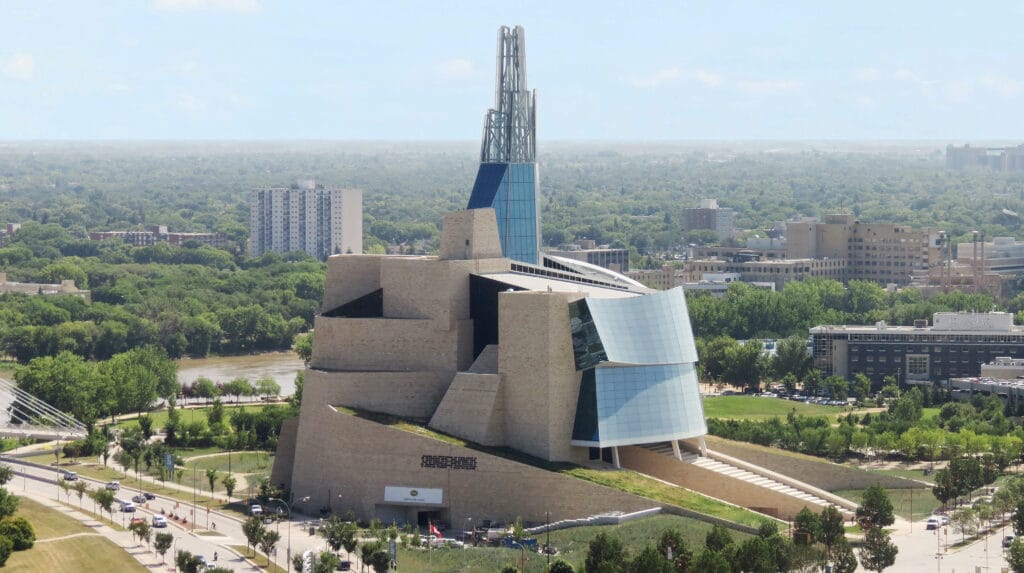
Approaching the Canadian Museum for Human Rights, visitors are greeted by a striking architectural presence that boldly signals the museum’s civic prominence. The building’s design is dramatic and symbolic, situated at The Forks—a historic Winnipeg site known for gathering, exchange, and enduring human presence. This meaningful urban setting enhances the institution’s public role. Upon entering, the spatial experience is notable for its distinctive flow: a sequence of ramps, bridges, and varying elevations gradually leads visitors upward through the galleries. Natural light increases with height, reinforcing a sense of progression and openness. Rather than a static space, the architecture actively shapes the journey, creating a rhythm that guides visitors through layered thematic explorations and invites reflection. Views outward from the building help contextualize the museum’s themes as part of broader social realities beyond its walls.
Highlights and Key Exhibitions
The museum is not centered on traditional collections of artifacts but excels through carefully curated interpretive exhibitions employing testimonies, photographs, videos, archival documents, and case studies. These thematic displays explore how human rights have been denied, claimed, and advanced across local and global contexts. Key subjects include Indigenous histories, colonialism, discrimination, genocide, civil liberties, legal developments, and public accountability. A distinguishing strength is the museum’s ability to present human rights as contested and fragile achievements rather than abstract, inevitable truths. Exhibitions refrain from general slogans; instead, they ground broad themes in personal narratives, community experiences, and moments of institutional change. This approach provides historical depth and honesty, confronting difficult aspects of Canada’s past alongside international struggles. The alternating tones—from contemplative and testimonial to explanatory and legal—deliver a varied visitor experience that balances emotional engagement with intellectual rigor, making this museum a dynamic space for learning and reflection.
Visitor Experience
Visitors can expect a serious and thoughtful experience that prioritizes intellectual engagement and reflective pacing over casual browsing or sensory stimulation. The museum encourages reading, listening to testimony, and absorbing complex narratives, making it suited to those who appreciate depth and critical inquiry. The architectural design supports this engagement by maintaining momentum through spatial transitions, preventing stagnation even when topics become intense or challenging. The museum’s variation in presentation—combining storytelling, multimedia, and legal exposition—helps sustain visitor attention and mitigates fatigue. It appeals especially to visitors interested in public history, social justice, Indigenous issues, legal history, and contemporary museology. Those anticipating a conventional object-driven museum may find the focus on interpretation unfamiliar, yet this very distinction contributes to the institution’s unique identity and impact.
Tickets, Access, and Planning
For planning a visit, it is advisable to allocate sufficient time to experience the entire building and its exhibitions without rushing, as the architecture and content are interdependent parts of the overall journey. A half-day is generally appropriate to absorb the museum’s depth and complexity. Visitors should be prepared for a mostly interpretive experience centered on testimonies and documents rather than object displays. Because details such as ticket prices, current opening hours, and temporary exhibitions can change, prospective visitors should verify these practical aspects through the museum’s official website or contact points before their visit to ensure up-to-date information. Accessibility features and transport options are also best confirmed ahead of time, facilitating a smooth and comfortable visit.
Final Verdict
The Canadian Museum for Human Rights stands out as an ambitious and thoughtfully executed institution dedicated to one of the most challenging and significant public themes of our time. Its combination of striking architecture, civic intention, and rigorous interpretive content distinguishes it from conventional museums. By grounding universal human rights themes in specific historical contexts and lived experiences—including difficult national narratives—it offers a nuanced and credible exploration that invites serious reflection and engagement. While the visit demands intellectual investment and may feel intense for those seeking lighter museum outings, it ultimately provides a meaningful and memorable experience. As a cultural landmark in Winnipeg and Canada, the museum succeeds in fostering critical conversations around justice, memory, and responsibility in ways that are both substantial and lasting.