Capitoline Museums

Overview
The Capitoline Museums in Rome are among the most important museum complexes in Italy and one of the foundational institutions in the history of public museums. Located on the Capitoline Hill, they bring together ancient sculpture, inscriptions, paintings, decorative arts, and the long civic history of Rome in a setting that feels inseparable from the city itself. This is not only a museum of beautiful objects. It is a museum that helps explain how Rome has represented its own past across centuries, from antiquity through the papal and modern eras.
What makes the Capitoline Museums especially compelling is the relationship between collection and place. Many museums hold Roman antiquities, but few are so closely tied to Rome’s own civic identity. Here, visitors are not just looking at fragments of the ancient world inside a neutral institution. They are standing on one of the city’s most symbolically charged hills, within buildings shaped by a long history of public display and urban power. That gives the visit unusual weight. The museum feels less like a container of objects and more like part of the historical fabric of Rome itself.
The Capitoline Museums are also rewarding because they combine several types of museum experience. Visitors come for major ancient sculptures, but they also encounter portrait busts, inscriptions, medieval and Renaissance material, paintings, and views into the wider story of Rome as a living city built on layers of history. This breadth is one of the museum’s greatest strengths. It prevents the experience from becoming only a parade of famous statues and instead turns it into a richer encounter with Roman memory and representation.
For visitors to Rome, the museum offers a useful counterpoint to the city’s churches, archaeological sites, and larger Vatican collections. It is one of the clearest places to understand how the city collected, preserved, and reinterpreted its own past. That makes it especially valuable for anyone who wants more than a quick sequence of famous monuments.
Collection Highlights
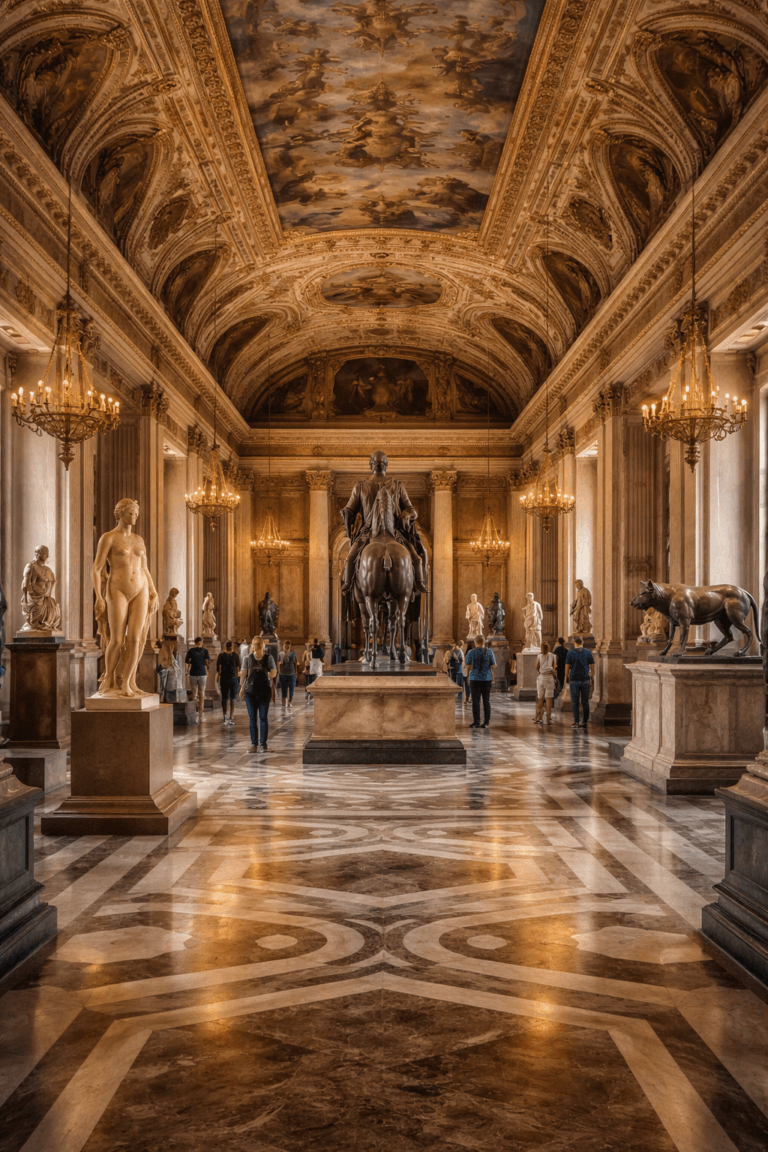
One of the museum’s greatest strengths is the quality of its ancient sculpture. The Capitoline Museums are especially famous for works that have become central to the visual identity of Rome itself. Statues, busts, reliefs, and fragments here are not simply examples of Roman art. Many are works that have shaped how later centuries imagined classical antiquity. This gives the museum a particularly strong historical presence. Visitors are not only seeing ancient pieces; they are seeing objects that have had long afterlives in scholarship, collecting, and public culture.
The collection is especially effective in the way it presents Roman portraiture. Busts of emperors, officials, philosophers, and private individuals help create one of the most vivid encounters with Roman self-representation available anywhere. Portrait sculpture in Rome was never only about likeness. It was also about status, memory, family identity, and public image. The Capitoline Museums make this especially clear because the quantity and quality of the material allow visitors to see variation across periods and personalities.
Another major highlight is the way mythology and civic symbolism appear throughout the museum. This gives the galleries a broader significance beyond individual works of art. Ancient Rome understood sculpture and public imagery as part of political and social life, and that meaning remains visible here. Visitors move between works that once had strong civic, religious, or commemorative functions, and that helps make the museum feel connected to public history rather than detached from it.
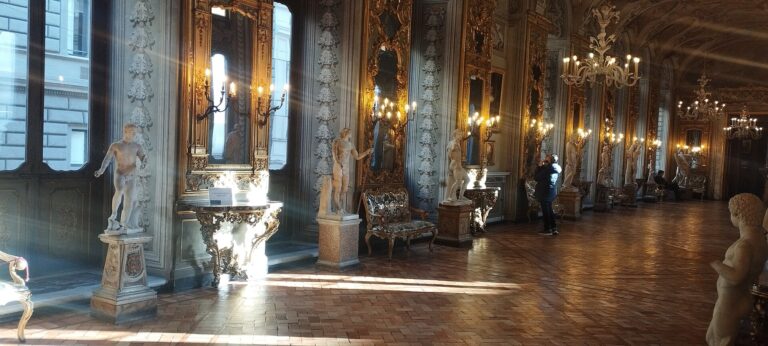
The museum is also richer than many visitors first expect because it includes more than antiquities alone. Paintings, decorative material, and objects linked to later periods expand the visit and show how Rome’s past was interpreted and displayed over time. This makes the institution feel broader and more layered than a purely archaeological museum. It becomes a place where the ancient city and the later city meet.
Building and Setting
The setting of the Capitoline Museums is one of the most important parts of the experience. The museum occupies buildings around the Piazza del Campidoglio, one of Rome’s great civic spaces. This immediately changes the visit. Before entering the galleries, visitors are already in a location dense with political, urban, and symbolic meaning. The experience begins not at the first display case, but in the square itself.
Architecturally, this gives the museum a special strength. The buildings feel ceremonial and historical without becoming overpowering. They support the collection by reminding visitors that these objects belong to a long tradition of civic display. In a museum devoted so strongly to Rome, this matters enormously. The city is present not only in the exhibits but in the surrounding stone, space, and views.
The museum’s position above the Roman Forum area also contributes to its importance. Even when the galleries turn inward toward sculpture and painting, the wider city remains close at hand. This reinforces one of the museum’s main strengths: the sense that art, memory, archaeology, and urban identity are all connected. Few museums are so thoroughly embedded in the historical geography of their subject.
The atmosphere inside is also especially rewarding. Because the museum is spread across connected spaces and buildings, the visit unfolds gradually rather than all at once. This gives it rhythm. Visitors move between grand rooms, quieter galleries, and moments where architecture and collection seem to support each other perfectly. That progression makes the museum feel richer than its individual highlights alone.
Practical Information
The Capitoline Museums are best visited with enough time to move beyond the most famous works. Because the museum contains so many layers of material, rushing can reduce the experience to a checklist of highlights. A slower visit is much more rewarding, especially for those interested in Roman history, portraiture, civic culture, and the long afterlife of antiquity.
It works well for different kinds of visitors. Those with a strong interest in ancient Rome will find obvious depth here, but the museum is also rewarding for travelers who simply want one major museum in Rome that connects objects directly to the city’s identity. It is especially useful for visitors who have already seen archaeological sites and want to understand how Roman material culture has been preserved and interpreted indoors.
Because the museum sits in such an important central location, it fits naturally into a broader day of walking through historic Rome. At the same time, it is strong enough to justify focused time of its own. It is not just an extra stop near the Capitoline Hill. It is one of the city’s most meaningful museum visits.
Why Visit
The Capitoline Museums are worth visiting because they offer one of the richest ways to understand Rome through objects, architecture, and place at the same time. They are not only full of important works. They also show how the city has remembered and displayed itself across centuries. That gives the museum unusual depth.
It is also one of the best museums in Rome for visitors who want more than isolated masterpieces. The real strength of the institution lies in the relationship between sculpture, civic identity, and the setting of the Capitoline Hill. That combination makes the visit feel especially complete.
If you want a Rome museum that combines ancient art, urban history, and a powerful sense of place, the Capitoline Museums are one of the clearest choices. They are essential not only for what they contain, but for where and how they present it.