Capitoline Museums Review
Ancient Rome in Its Own Voice · Rome, Italy A Museum Built on Civic Memory The Capitoline Museums offer one of the most satisfying museum experiences in.
Ancient Rome in Its Own Voice · Rome, Italy A Museum Built on Civic Memory The Capitoline Museums offer one of the most satisfying museum experiences in.
Best forMasterpieces, architecture, cultural history
Review focusCollection highlights, building, visitor flow
Historical Context
The Capitoline Museums occupy a site imbued with profound civic symbolism atop Capitoline Hill, overlooking the ruins of the Roman Forum in the heart of Rome. This location anchors the institution’s identity and lends a unique dimension to the visitor experience. Unlike many museums that could be relocated without losing meaning, these museums are inseparable from their architectural setting and the vista of the city unfolding below. Their story is one of continuity, connecting the ancient Roman republic and empire, the Renaissance city, and modern Rome in a dialogue expressed through art, architecture, and urban design. The museums are housed mainly in two historic palaces, the Palazzo dei Conservatori and the Palazzo Nuovo, linked by an underground passage. This arrangement has evolved over centuries, reflecting Rome’s enduring role as a seat of political power and cultural memory. The institution’s mission is not merely to display artifacts but to make the narrative of Rome’s public image, mythology, and civic identity legible and alive.
What You See on Arrival
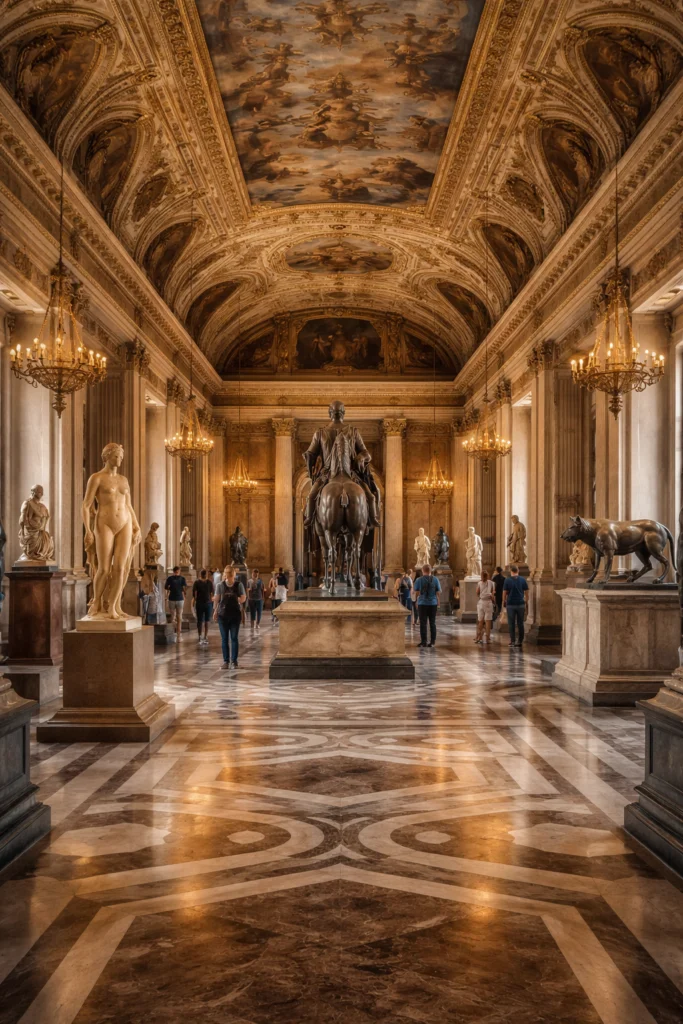
Approaching the Capitoline Museums begins in the splendid Piazza del Campidoglio, a masterpiece of Renaissance urban planning redesigned by Michelangelo. The piazza itself is part of the museum experience, offering a ceremonial threshold that prepares visitors through its geometry, symmetry, and commanding views. This elegant civic square sets the tone with a sense of order and dignity that permeates the visit. From the piazza, visitors enter either the Palazzo dei Conservatori or the Palazzo Nuovo. The interiors combine grandeur and intimacy, with large sculpture halls interspersed by smaller rooms adorned with painted ceilings and decorative details. Architectural elements such as wide staircases and galleries with framed views of Rome’s rooftops, domes, and ruins contribute to a dynamic spatial rhythm. The atmosphere immediately signals that this is a museum where form and content are inseparable, and where the city itself is incorporated into the narrative.
Highlights and Key Exhibitions
The Capitoline Museums’ collection is distinguished by its coherence and narrative focus rather than sheer scale, offering a concentrated exploration of Rome’s civic and mythological identity. Among the most iconic objects is the Capitoline Wolf, a bronze statue that encapsulates the founding myth of Rome and symbolizes the city’s enduring legacy. Its significance extends beyond artistic merit, embodying the intersection of story, identity, and municipal pride.
Another monumental highlight comprises the colossal fragments of the statue of Emperor Constantine. These enormous marble pieces — an oversized head, limbs, and other elements — evoke the overwhelming presence of imperial power, giving visitors a visceral sense of the grandeur and authority Rome sought to project.
Beyond these star pieces, the museums boast an extensive array of portrait busts, relief sculptures, inscriptions, and mythological representations. These works invite close, comparative examination of Roman portraiture, revealing tensions between realism and idealization, and the ways emperors managed their public images. The collection of inscriptions provides a vital link to Roman civic life, attesting to administration, ritual, and public memory beyond the imperial and divine narratives. Paintings and richly decorated interiors add further layers to the experience, broadening appeal and connecting Rome’s antique past with its Renaissance and later forms of art and decoration.
Visitor Experience
One of the Capitoline Museums’ defining strengths is the measured rhythm of the visit. Rome’s monumental attractions can often be overwhelming due to crowds, heat, and noise, but the museums offer a more reflective and tranquil environment. Even when busy, the atmosphere remains calm, encouraging visitors to pause and engage deeply with the artworks and surroundings. The layout, with alternating large and smaller spaces and an underground gallery that shifts the pace, helps prevent fatigue and sustains attention.
Most visitors find that two to three hours sufficiently reveal the highlights and core themes, making the museums accessible within the constraints of a busy itinerary. Yet there is ample opportunity for longer, more focused visits, particularly for those interested in portraiture, epigraphy, or the dialogue between art and site. The visit also enriches subsequent exploration of Rome, providing interpretative keys that make monuments and ruins outside the museum more intelligible and meaningful.
Tickets, Access, and Planning
Visitors should verify current ticketing details ahead of their visit, as prices, opening hours, and special exhibitions may change. The museums are centrally located and often combined with nearby major sights such as the Roman Forum and Piazza Venezia, allowing for convenient itinerary integration. The physical demands of the visit are moderate compared to some larger museum complexes, although comfortable footwear is advisable for navigating the historic square and varied interior spaces. Morning visits are frequently recommended for a balanced experience, though the museum’s controlled internal pacing allows for rewarding visits at other times of day. The manageable size of the collection means that visitors can experience a major cultural institution in Rome without dedicating an entire day, making it an attractive option for both first-time guests and repeat visitors seeking deeper engagement.
Final Verdict
The Capitoline Museums offer one of Rome’s most coherent and intellectually satisfying museum experiences by virtue of their focused purpose and exceptional sense of place. They do not strive to be encyclopedic but instead present a refined, cohesive narrative centered on Rome’s civic, mythological, and visual memory. This narrative is inseparable from the hill, the piazza, and the city itself, making the museums a living extension of Rome’s identity rather than a detached repository.
Visitors who appreciate museums where architecture and atmosphere are as essential as the collections will find great reward here. The institution encourages thoughtful contemplation rather than spectacle, expressing an enduring civic memory with dignity and clarity. It successfully balances accessibility for newcomers with intellectual depth for seasoned visitors. In this respect, the Capitoline Museums serve not only as a custodian of antiquity but also as a key to understanding the city’s layered history. For those seeking an immersive yet manageable cultural experience in Rome, these museums remain compelling, substantiating the city’s continuing dialogue with its past through art, space, and memory.