Baltic Maritime Museum Review
Maritime History · Gdańsk, Poland A port city explained through the sea The Baltic Maritime Museum in Gdańsk offers one of the clearest ways to.
Maritime History · Gdańsk, Poland A port city explained through the sea The Baltic Maritime Museum in Gdańsk offers one of the clearest ways to.
Best forMasterpieces, architecture, cultural history
Review focusCollection highlights, building, visitor flow
Historical Context
The Baltic Maritime Museum in Gdańsk offers an insightful window into the city’s deep-rooted connection with the Baltic Sea, a relationship that has shaped its identity for centuries. While Gdańsk is often admired for its picturesque facades, riverside setting, and reconstructed old town, the museum reveals a more fundamental narrative: the city’s role as a significant maritime hub in northern Europe. Throughout history, Gdańsk has been a crucial link in extensive trading networks that tied together the Baltic region through commerce, navigation, and shipbuilding. The museum’s focus extends beyond the local, illustrating the city’s place within broader routes, industries, and social systems that defined maritime life in this part of the world. This expansive perspective invites visitors to understand maritime history not only as a series of technical achievements but also as a vibrant social and economic tapestry.
What You See on Arrival
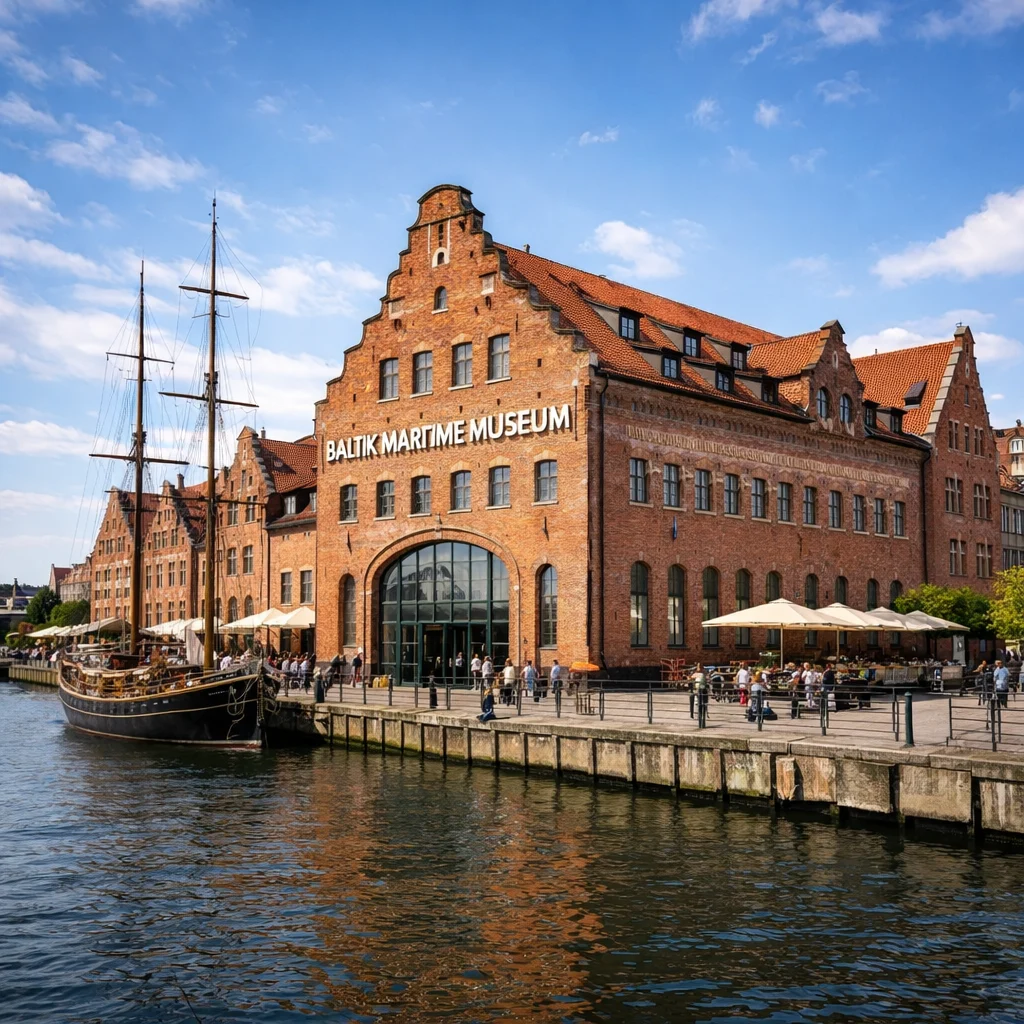
Situated prominently on Gdańsk’s historic waterfront, the museum’s location itself sets the tone for the visit. Rather than serving merely as a backdrop, the portside environment – including nearby warehouses, riverside views, and continuing maritime activity – forms a living context for the exhibits inside. Upon entering, visitors encounter a space designed to be practical and clear, emphasizing thoughtful display over theatricality. The galleries offer a quiet atmosphere conducive to careful observation, with well-lit cases and open spaces that invite visitors to explore ship models, navigation instruments, and trade artifacts at their own pace. The proximity to the actual waterfront enhances the sense that the museum is part of a dynamic urban landscape shaped by centuries of maritime commerce and labour.
Highlights and Key Exhibitions
A particular strength of the Baltic Maritime Museum lies in its extensive collection of ship models, which serve as more than mere artistic displays. These models are expertly used to demonstrate the evolution of ship design in response to the demands of Baltic trade, navigation challenges, and the economic priorities of regional ports. They reveal how vessels were engineered to meet specific cargo needs and environmental conditions, making them an invaluable resource for understanding maritime technology in context.
Equally compelling is the navigation section, showcasing instruments, charts, and tools that bring to life the skill and expertise required for Baltic seafaring. These objects effectually dispel romanticized notions of navigation by highlighting the precision and labour involved in plotting safe courses across challenging waters.
Trade-related artifacts further illuminate the critical economic role played by Gdańsk and similar port cities. Displays relating to goods handling, storage, harbour labour, and networks of exchange underscore maritime trade as the engine driving urban growth and shaping social structures along the waterfront.
Notably, the museum embraces a social history approach, maintaining a focus on the human dimension of maritime industry. It gives prominence to the lives and labour of sailors, shipbuilders, dock workers, and craftsmen, areas sometimes overlooked in favour of grander narratives about ships or exploration. This emphasis provides a more grounded and inclusive picture of maritime culture.
Outdoor elements and historic vessels, where accessible, add another layer to the experience. These create a tangible connection to the physical reality of life at sea, allowing visitors to appreciate scale, cramped working conditions, and the everyday challenges of seafaring beyond the gallery walls.
Visitor Experience
The museum’s layout and content facilitate a paced and layered visit, rewarding those who measure their time carefully and approach the displays with curiosity. Unlike institutions centred around singular, high-profile masterpieces, this museum’s value accrues cumulatively, as visitors gradually build an understanding of Gdańsk’s maritime identity through interconnected objects and themes.
A typical visit begins with an introduction to the city’s maritime significance before progressing into detailed explorations of ship design, navigation, trade, and labour history. Complementing the galleries, the surrounding port scenery repeatedly reaffirms the museum’s themes, reinforcing the sense of place and adding physical depth to the narrative.
Crowd levels tend to be moderate and well-distributed across exhibits, which encourages leisurely examination and comparative study. The museum especially suits visitors who appreciate technical detail and contextual interpretation over simple visual spectacle.
To gain the fullest experience, the museum operates best when integrated into a broader itinerary of Gdańsk’s waterfront and old port area. Seen in this light, the visit lends new meaning to the city’s historic environment, turning streets, warehouses, and docks into a living extension of the stories explored inside.
Tickets, Access, and Planning
While specific ticket prices, opening hours, and temporary exhibitions may vary, visitors are advised to check current details on the museum’s official website or local tourist information before planning their visit. Allowing ample time is recommended, as the museum benefits from a unhurried approach that includes both indoor galleries and surrounding outdoor elements.
The site’s waterfront location makes comfortable footwear advisable, particularly if one plans to explore accompanying historic port areas. Visiting earlier in the day or before walking the broader old town setting can enhance the cohesiveness of the experience, with the museum visit priming visitors to perceive the city through a richer maritime lens.
Final Verdict
The Baltic Maritime Museum distinguishes itself by portraying maritime history as a multifaceted phenomenon encompassing trade, labour, urban development, and technical skill—all intricately linked to the city of Gdańsk and its Baltic setting. Rather than relying on spectacle or singular attractions, the museum excels through thoughtful accumulation and clear contextualisation, making complex histories accessible without oversimplification.
For visitors seeking to deepen their understanding of Gdańsk beyond its surface attractions or those with an interest in maritime culture, navigation, and port economies, the museum offers a richly rewarding experience. Its social history focus ensures a more inclusive narrative, while the authentic waterfront environment bridges the gap between past and present.
In essence, the Baltic Maritime Museum is one of Gdańsk’s most illuminating cultural sites. It transforms the city’s maritime heritage from abstract history into something tangible and immediate, enriching any visit to this Baltic coast port.