National Museum of Pakistan
Karachi, Pakistan. The National Museum of Pakistan in Karachi serves as a repository for the country’s diverse and complex history, bringing together archaeological finds, ethnological materials, and Islamic art under one roof. Unlike museums focused solely…
Best forMuseum lovers, culture travelers, first-time visitors
Setting / nearbyKarachi, Pakistan
Overview
The National Museum of Pakistan in Karachi serves as a repository for the country’s diverse and complex history, bringing together archaeological finds, ethnological materials, and Islamic art under one roof. Unlike museums focused solely on art or history, this institution blends multiple disciplines to reflect Pakistan’s layered identity, from ancient civilizations to contemporary cultural expressions. Its range of artifacts aims to illuminate the region’s past, not just in chronological order but through objects and displays that highlight interactions among peoples, regions, and eras within the subcontinent.
Collection Highlights
At the heart of the museum’s holdings are archaeological discoveries from across Pakistan, including items linked to the Indus Valley Civilization, which reaches back over 4,000 years. Objects like pottery, seals, and tools from sites such as Mohenjo-daro illustrate early urban life in this part of the world. These artifacts provide tangible connection points to one of the world’s earliest urban cultures.
Moving forward in time, the museum contains a substantive collection of Islamic art and manuscripts. This includes calligraphy, textiles, ceramics, and numismatic items that document the artistic and religious traditions that have shaped the region since the early Islamic period. Such materials offer insight into the craftsmanship and intellectual currents that circulated in what is now Pakistan.
The ethnological ensemble presents traditional handicrafts and cultural objects from various ethnic groups across Pakistan’s provinces. These items demonstrate the country’s ethnolinguistic diversity and provide context for the everyday and ceremonial life of its peoples. Faces found throughout the collection also serve to link national narratives with regional identities.
Historical photographs and colonial-era documents complement the archaeological and art objects, drawing attention to more recent chapters in Pakistan’s story. These records contribute to an understanding of the country's transformation during the British Raj and post-independence period.
Building and Setting
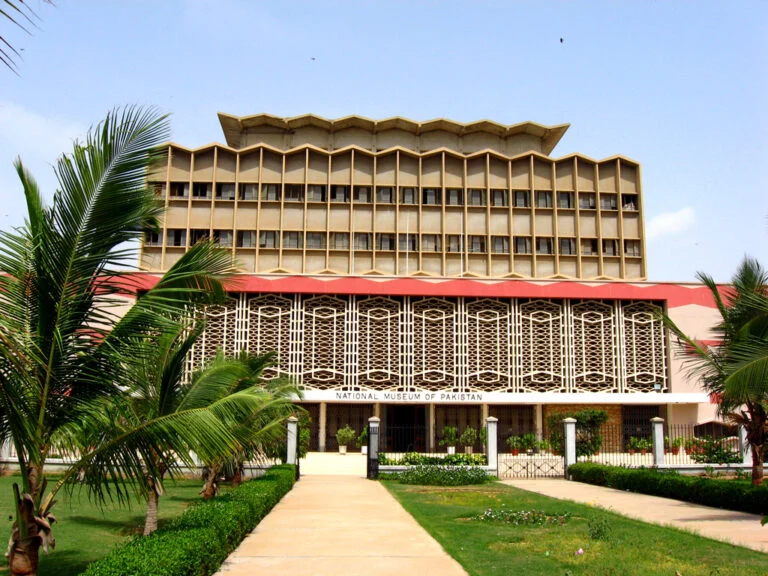
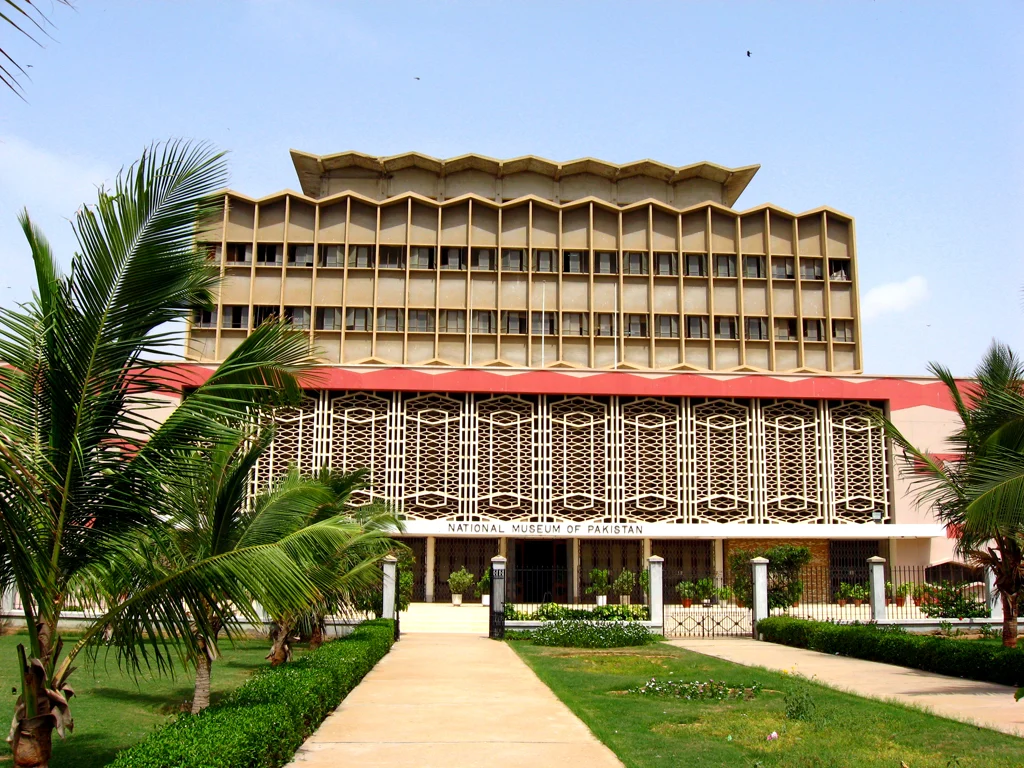
Situated in Karachi, Pakistan’s largest city and economic hub, the National Museum occupies a structure designed to house its multiple collection types in a museum setting shaped by its history. The building’s architecture and layout have accommodated a consolidation of diverse collections that might otherwise be scattered between archaeological, ethnographic, and fine arts institutions. Although exact architectural details are less often noted, the museum’s physical setting anchors it within Karachi’s cultural infrastructure.
The locale benefits from Karachi’s role as a crossroads of trade and culture within Pakistan, providing context for the collection’s geographic and historical breadth. Visitors can approach the museum as part of an urban itinerary that includes other cultural institutions, but the building itself primarily serves as a dedicated space for preserving and presenting Pakistan’s material heritage.
Practical Information
Current operational details, including opening hours, ticket prices, booking requirements, accessibility provisions, guided tours, and available visitor services, should be confirmed on the museum’s official website before planning a visit. Like many national museums, it might have varying schedules around public holidays or special events.
Advanced planning is advisable to accommodate potential waits or verify conditions for entry, especially since practical information online can change. The museum’s location in Karachi is accessible by various urban transport options commonly used in the city’s public and private transit networks.
Why Visit
This museum rewards those with an interest in the archaeology and cultural history of South Asia and offers a rare window into the complex past of a country often discussed in political or contemporary terms alone. Its layered collections encourage reflection on how Pakistan’s diverse peoples and historical eras have intersected across millennia.
One of its clearest strengths is the range of material types it brings together—from ancient seals to Islamic manuscripts and traditional crafts. This variety allows visitors to move beyond a single narrative and engage with multiple identities and historical phases in one place.
However, the museum might not provide the same level of polished presentation or interpretive storytelling found in some larger global institutions. The focus tends to rest more on the material evidence itself than on creating immersive or multimedia experiences. For visitors specifically seeking advanced art historical or archaeological scholarship, supplementary research might be needed to contextualize some objects.
Even so, its collections act as a key reference point for modern Pakistan’s historical geography and cultural development. The museum serves as a reminder that the region’s past is as complex and rich as its present challenges and achievements. For anyone grappling with the overlaps of culture, religion, and history in South Asia, the museum is a site where these elements converge in the material record.