National Museum of Nepal Review
Kathmandu, Nepal. The National Museum of Nepal in Kathmandu carries a distinctly national character that sets it apart from broader regional or international museums. Its core identity revolves around being the principal repository of Nepal’s material…
Kathmandu, Nepal. The National Museum of Nepal in Kathmandu carries a distinctly national character that sets it apart from broader regional or international museums. Its core identity revolves around being the principal repository of Nepal’s material…
Best forMuseum lovers, culture travelers, first-time visitors
Review focusCollections, visitor experience, and practical planning
Context and Identity
The National Museum of Nepal in Kathmandu carries a distinctly national character that sets it apart from broader regional or international museums. Its core identity revolves around being the principal repository of Nepal’s material culture, art, history, and ethnography, presenting Nepal not as a peripheral Himalayan state but as a sovereign civilization with its own rich traditions. Situated in the palatial grounds of Chhauni, the museum reflects the country’s post-Rana architectural phase and implicitly recalls the transition from monarchy towards a modern republic. It was established in the 1960s, a time when Nepal was consolidating its national identity and defining the narrative of cultural heritage in the shadow of larger powers like India and China. This positioning defines much about the museum’s collection choices and its presentation style.
Unlike an encyclopedic museum that attempts a comprehensive global sweep, the National Museum of Nepal narrows the lens firmly on artifacts that explicate the country’s unique historical trajectory, religious syncretism, and artistic idioms. It is a museum about Nepal’s own self-understanding and how it fits into the broader Himalayan and South Asian contexts. The institution’s ambition is to represent the depth and diversity of Nepalese culture, with special emphasis on the Newar civilization—Kathmandu Valley’s dominant cultural force—as well as Tibet-linked Buddhist artworks and Hindu ceremonial objects that maintain everyday and ritual relevance. The museum thus stakes its claim not by the scope of universal relevance but by the specificity of focus, making it an essential resource for anyone seeking substance on Nepal’s cultural continuities and disruptions.
Inside the Collection
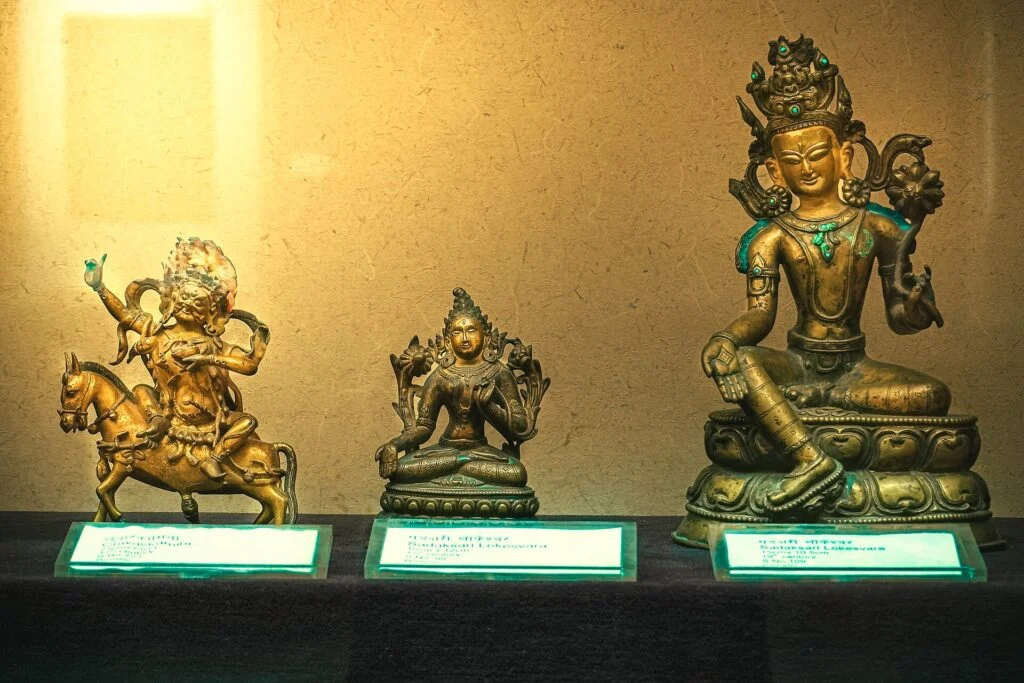
The core strength of the museum lies in its extensive collection of religious art, weaponry, and anthropological artifacts. Particularly notable are the statues, reliquaries, and thangka paintings connected to Nepal’s longstanding Buddhist and Hindu traditions. In the Buddhist section, numerous sculptures from the Licchavi period (circa 400–750 CE) provide insight into Nepal’s role as a crucible for Newar artistic innovation, blending Indian Gupta and Pala artistry with local styles. One can see the interplay between spiritual symbolism and technical skill in the delicate bronze figures and copper repoussé work.
While the museum holds important examples of painted thangkas, it is the breadth of wood and stone carvings that underline Nepal’s artistry in sacred objects. Many statues of Avalokiteshvara, Tara, and Manjushri reveal Nepalese artists’ emphasis on intricate iconography and devotional complexity. These works illustrate the shift from Tang dynasty influences towards indigenous methods that have influenced Tibetan Buddhist art as well. The collection also includes numerous ritual objects, such as masks used in religious dance and processions, further demonstrating how museum holdings are not detached relics but extensions of living traditions.
The weapons collection, including royal arms from various periods, adds a historical and political dimension. These items trace Nepal’s contentious martial history with neighbouring states and the internal shifts of power before the monarchy’s dissolution. Arms and armour help show visitors a different facet of Nepalese heritage beyond religious art.
Ethnographic displays provide an overview of the country’s many ethnic groups, each with distinct social customs, clothing, and tools. Altogether, the collection is cohesive in its focus: it emphasizes the connections between craft, religion, and identity rather than merely cataloguing objects for their exotic appeal.
Architecture and Display
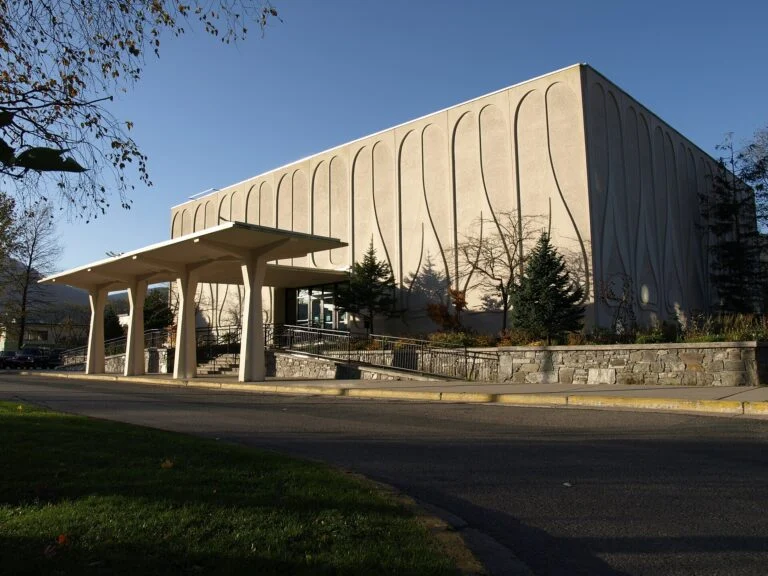
The museum’s home in Chhauni, a former military barracks set within landscaped grounds, carries a certain period grandeur but lacks the soaring or groundbreaking architecture that might elevate the visitor experience beyond the objects themselves. The building is functional rather than expressive and prioritizes preservation over presentation flair. Its multiple galleries occupy a somewhat fragmented layout, which may fragment the visitor’s sense of narrative flow. The architectural style is rooted in mid-20th century institutional design in Nepal, neither historic palace nor contemporary beacon.
Display methods tend to be straightforward and utilitarian. Objects, especially the smaller bronzes and paintings, often sit in glass cases without extensive contextual explanation or multimedia enhancement. Labelling tends toward the basic, prioritizing dates, materials, and provenance over thematic or interpretive frameworks. This limits the museum’s ability to engage those unfamiliar with Nepal’s religion or history and can make the experience feel closer to a collection of curiosities rather than a carefully argued story.
Where the museum performs better is in the spatial organisation by subject—ethnography, arms, Buddhist art—allowing specialists to focus on their interests. However, for the lay audience there is less in the way of narrative cohesion or interactive elements. Lighting and humidity control, based on available reports, meet necessary conservation standards but do not aid interpretive clarity or atmosphere. The grounds and some open courtyards provide room to pause, but don’t appear developed as visitor spaces.
For Families, Specialists, and First-Time Visitors
The museum’s detailed and object-heavy offerings make it a natural point of interest for scholars and specialists, especially those researching Himalayan art traditions, Buddhist iconography, or Nepalese history. The presence of authentic Licchavi bronzes and ritual paraphernalia offers valuable primary material unmatched elsewhere on site. Students of anthropology will find the ethnographic collections useful to understand Nepal’s ethnic diversity in tangible terms.
For family groups or first-time visitors, however, the museum might prove demanding. There is little indication that temporary spaces, children’s narratives, or hands-on experiences are central to the staffing or programming. The absence of robust interpretive aids or clear storytelling paths could leave casual visitors confused or underwhelmed. The material culture on display depends heavily on prior knowledge or interest in South Asian religious arts. Without a guided tour or comprehensive audio-visual aids, the museum risks feeling both overwhelming and opaque.
That said, the museum’s emphasis on religious art does offer a natural entry point to understanding Nepal’s cultural fabric, but it requires a willingness to engage with dense iconographic traditions and multiple layers of religious symbolism. Visitors unversed in either Hindu or Buddhist practices may find that some objects carry meanings not immediately apparent.
What Works Best
The museum’s singular focus on Nepalese material heritage is both its defining strength and its organizing principle. Its collection provides depth not often found in other institutions. The Licchavi bronze statues, the ritual masks, and the multi-century collection of bronze and wood sculptures collectively chart the narrow but deep development of Nepalese art forms.
Its concentration on tangible continuity—how objects relate to living traditions of worship and ethnicity—delivers substance. In particular, the weapons collection adds historical richness by slotting cultural products into a political and martial history often overlooked in Himalayan art. This speaks to a serious curatorial vision devoted to presenting Nepal as a historically self-contained culture shaped by its own internal logics rather than as a simple adjunct to other South Asian narratives.
The ethnographic sections and their diverse artifacts also open windows into Nepal’s complex ethnic mosaic. These paired collections encourage visitors to connect art, ritual, and everyday life in comprehensible ways. This tight correspondence between artifact and culture builds trust in the museum’s authenticity and expertise.
Practical Considerations
Information on visiting hours, ticket prices, access options, or facility offerings is not comprehensively published. People interested in seeing the museum should look up official resources for the latest facts before planning their trip. The museum sits near central Kathmandu but specific signage or visitor orientation aids in the city are not well documented. Personal travel arrangements within a bustling urban and tourist environment may require attention.
There appears to be no major language barrier for visitors familiar with English, as labelling and museum information tend to be bilingual Nepali-English. However, a full audio guide or other interpretive media seem not to be standard. Staffing in foreign language communication or visitor guidance is not well described in publicly available sources. Those with mobility impairments or other access needs should seek confirmation on the museum’s suitability as no clear information is currently documented.
Verdict
The National Museum of Nepal stands as a serious institution devoted to preserving and displaying the art and material culture of Nepal. Its clear national focus and substantial collection of religious sculptures and ethnographic objects place it in a category of museums that serve as custodians of distinct cultural identities rather than broad survey institutions. The collection’s concentration on specific artistic periods and ethnoreligious groups delivers a well-defined, if somewhat narrow, perspective. This makes the museum a valuable resource for scholars or visitors committed to understanding the specifics of Nepalese history and art.
Its limitations—in architectural expression, interpretive presentation, and visitor engagement strategies—confine its appeal mostly to those who come prepared with context or a specialist interest. General interest visitors may find the displays dense and the layout less intuitive than at museums designed around narrative clarity or interactive experiences. Still, for those seeking direct encounters with Nepal’s historical craftsmanship and religious objects, this museum provides access to some of the country’s most important artifacts housed in a place devoted to national heritage preservation.
Anyone approaching the National Museum of Nepal should keep expectations focused on its strengths: a deep dive into a country looking inward at its heritage rather than a broadly pitched or dramatically presented museum. It is a serious collection in a sober setting, compelling primarily for those with a particular interest in Himalayan art or Nepalese ethnography.