National Museum of Nepal
Tickets & Tours
Compare ticket options and guided tours from trusted booking partners.
We may earn a commission if you book through these links.
Overview
The National Museum of Nepal in Kathmandu serves as the country’s primary repository for a wide range of historical, cultural, and artistic objects spanning several centuries. Unlike museums focused exclusively on a single theme or period, this institution collects and displays materials that provide a comprehensive view of Nepal’s diverse heritage. Its core identity is tied to the preservation of artifacts connected to the nation’s royal past, religious traditions, and ethnographic diversity. This makes it a useful place not only for those interested in Nepal’s political history but also for those curious about art, ritual, and traditional craftsmanship.
Collection Highlights
This museum’s collections include a significant body of weapons, religious art, ethnographic objects, and historical artifacts which document Nepal’s ruling dynasties and cultural groups. One prominent area is the weapons gallery, where you will find swords, knives, and shields from different periods. These items often feature detailed metalwork and inscriptions, indicating their dual role as both functional and ceremonial objects. The presence of firearms and antique muskets illustrates changing military technology and Nepal’s interactions with neighboring states.
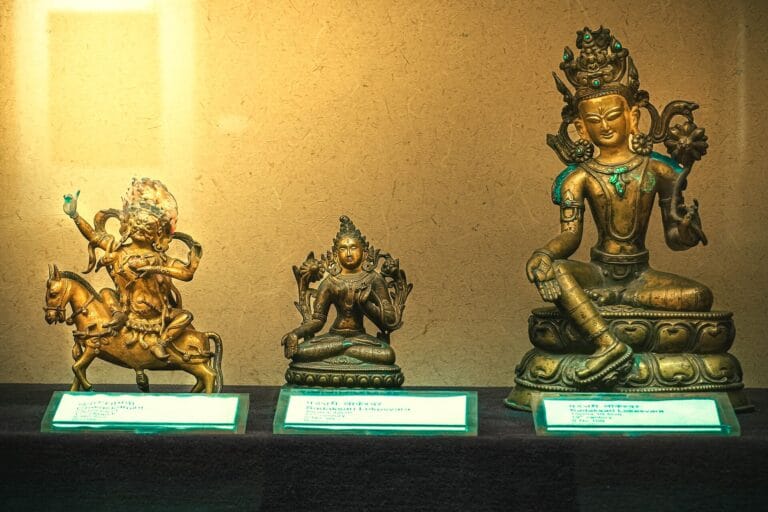
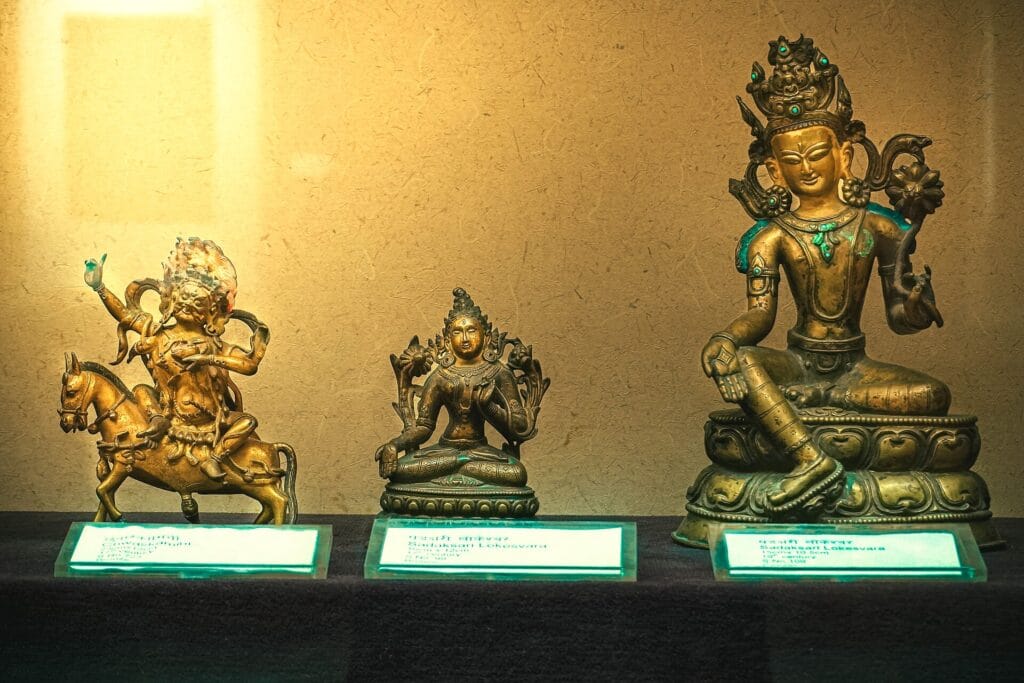
The museum holds religious sculptures and ritual objects in bronze, stone, and wood, related largely to both Hinduism and Buddhism. These include statues of deities such as Avalokiteshvara, Tara, Shiva, and Vishnu, with particular attention to stylistic variations from the Kathmandu Valley and other regions. Some sculptures date back several centuries and reflect the artistic traditions of the Malla period from the 12th to 18th centuries. These works are key to understanding Nepal’s religious art and iconography.
A major part of the ethnographic collection consists of traditional costumes, musical instruments, household items, and religious paraphernalia used by various indigenous communities. These objects provide a glimpse into daily life, ceremonial practices, and the material culture of groups like the Newar, Sherpa, and Tharu peoples. The museum also preserves manuscripts and historical documents written in the Devanagari script, which shed light on the intellectual and religious history of Nepal.
The museum does not primarily focus on contemporary art or large archaeological excavations, but its historical scope covers late medieval to early modern periods, focusing largely on the Kathmandu Valley and adjacent regions. The transitions in political regimes and the role of the monarchy are traceable through objects like royal garments, seals, and portraits.
Building and Setting
Situated near the historic area of Swayambhu in Kathmandu, the National Museum of Nepal occupies a building that was formerly a palace or part of royal grounds. The structure itself has features typical of Nepalese architecture, including traditional wooden carvings on windows and balconies. Its location close to the hilltop Buddhist stupa at Swayambhu places it within a part of the city that is rich with historical and religious landmarks. The grounds include garden spaces where some larger statues and relics are displayed, providing a modest outdoor setting for certain exhibits.
Its integration into Kathmandu’s cultural landscape means it is accessible to visitors already exploring central parts of the city that contain temples, shrines, and other heritage sites. The building’s previous role as part of Nepal’s ruling elite heritage informs how the museum organizes its narrative and exhibition spaces today.
Practical Information
Details about opening hours, admission fees, guided tours, accessibility, and any visitor services should be checked on the museum’s official website before planning a visit. National Museum of Nepal’s management information may change seasonally or for special exhibitions, so it is advisable to confirm arrangements in advance. The location is reachable within Kathmandu’s urban area, but precise directions and transportation options are best verified through local or official sources.
Visitors should prepare for a museum experience that may involve some walking on uneven surfaces or stairs due to the building’s historic features. Information about photography policies, group visits, and on-site facilities such as restrooms or refreshment areas can also be found through official communication channels.
Why Visit
The museum’s strength lies in its concentrated focus on Nepalese history from the late medieval period through the 20th century, as expressed through objects tied directly to royal and religious contexts. For those interested in traditional material culture, it offers a collection that places Nepal within regional Himalayan, South Asian, and Tibetan influences, particularly in religious and martial objects. Its holdings are particularly useful for understanding historical power structures in Nepal, such as the monarchy’s cultural presence and the religious practices that have shaped the Kathmandu Valley.
Visitors who want to see a broad but focused range of artifacts related to Nepal’s tribal and ethnic diversity will find relevant objects here, though this is not an ethnographic museum in the narrower sense. The museum’s limited engagement with contemporary art might disappoint those looking for a forward-looking or highly interactive experience. Nor does it function as a large-scale archaeological museum with extensive prehistoric exhibits or in-depth regional survey finds.
Ultimately, the National Museum of Nepal offers a clear window into the country’s historical identity through tangible objects rather than broad thematic displays or multimedia installations. Its collections anchor Nepal’s story firmly within the material record of monarchy, religion, and society in one of the region’s oldest urban centers. Visitors intrigued by the art and artifacts of South Asia’s Himalayan heartland will find well-preserved objects here that relate closely to the histories of kings, monks, and everyday life over several centuries.