National Museum of Mongolia
Ulaanbaatar, Mongolia. The National Museum of Mongolia in Ulaanbaatar is a central repository for the country’s cultural and historical artifacts. It stands as a place to learn about Mongolia’s past from prehistory through the modern era.…
Best forMuseum lovers, culture travelers, first-time visitors
Setting / nearbyUlaanbaatar, Mongolia
Overview
The National Museum of Mongolia in Ulaanbaatar is a central repository for the country’s cultural and historical artifacts. It stands as a place to learn about Mongolia’s past from prehistory through the modern era. Though primarily an archaeological and history museum, it connects the nomadic traditions of Mongolia with the broader sweep of the country’s development. The museum holds a position in Mongolia’s capital as a major center for preserving and interpreting material evidence from across the nation’s varied regions and historical periods.
Collection Highlights
A large portion of the collection focuses on Mongolia’s ancient and medieval past. Visitors encounter artifacts ranging from tools and weapons to ritual objects and clothing that illustrate the way of life on the steppe over millennia. Finds linked to the Xiongnu confederation, the Turkic Khaganate, and especially the Mongol Empire provide a tangible sense of the political and military history that shaped Asia and Europe. The museum holds items such as bronze mirrors, horse equipment, ceramics, and textiles that help piece together daily life and social structures before modern times.
Ethnographic displays provide insight into the customs and crafts of Mongolia’s diverse ethnic groups. Traditional yurts (gers) and items used in pastoral nomadism are part of the exhibit, offering concrete examples of the adaptive strategies used in the harsh climate. Additionally, the museum preserves documents, photographs, and objects from the 20th century to trace Mongolia’s transformation through the socialist period and into its current state.
Among the collections are stone sculptures, Buddhist art, and religious artifacts that reflect Mongolia’s spiritual history and links with Tibetan Buddhism. Some exhibits explore the introduction and development of Buddhism alongside older shamanistic practices.
Building and Setting
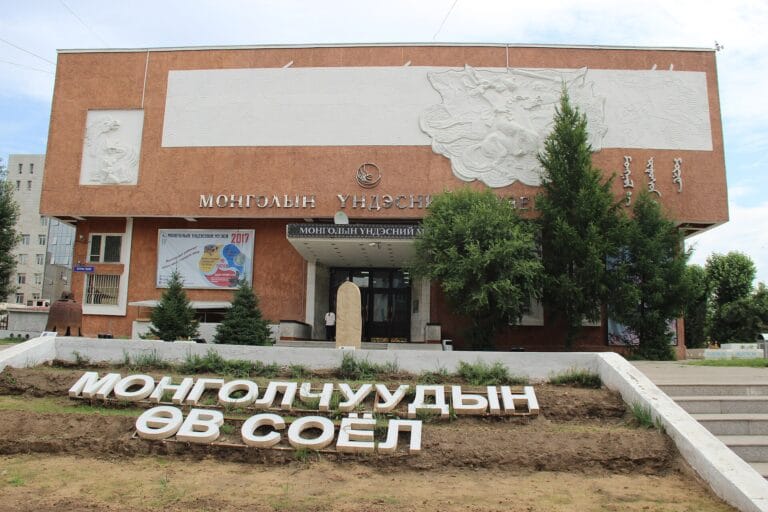
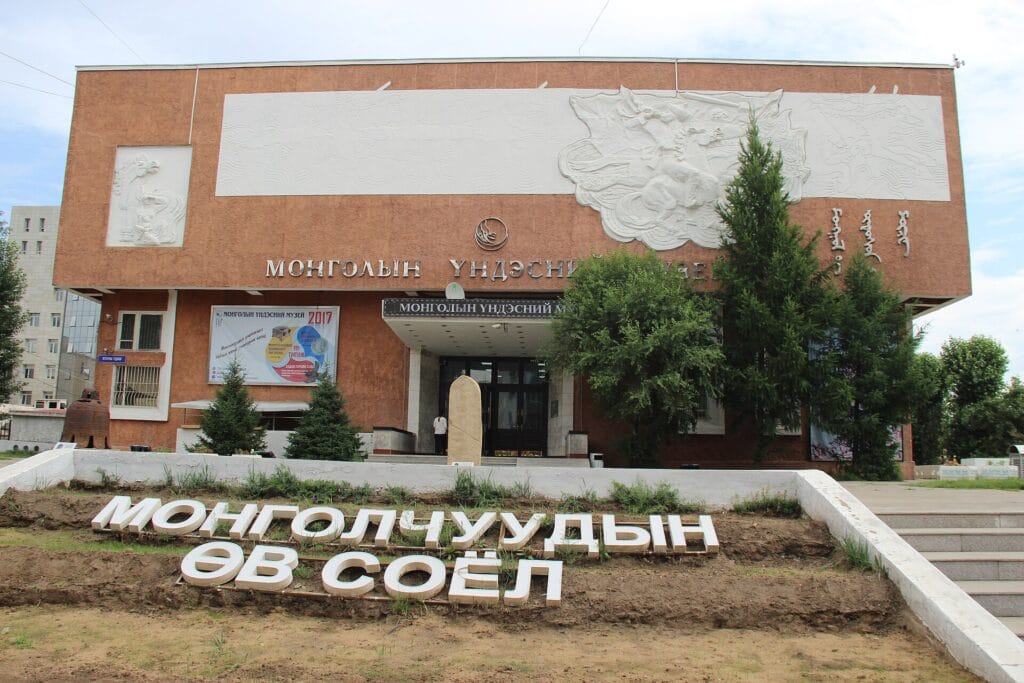
The National Museum of Mongolia occupies a purpose-built structure situated in Ulaanbaatar’s central district. The building is modern and functional, designed to accommodate a range of artifact types and display needs. It stands apart from the traditional architecture seen elsewhere in the city, reflecting the museum’s public and educational role rather than any attempt to recreate historical settings.
The museum’s location within Ulaanbaatar places it near government and cultural institutions, contributing to its accessibility for researchers and visitors. While in a busy urban area, the museum is not attached to a larger historic complex or park, so visitors should expect a standard city environment outside.
Practical Information
For those interested in visiting, checking the museum’s official website before arriving is advisable. The website can confirm current opening hours, ticketing, holiday closures, and whether tours or audio guides are offered. Given that information about admission fees or concessions is not readily available here, relying on up-to-date online sources will provide the best accuracy.
The museum is in Ulaanbaatar, which offers public transport options and various accommodations nearby. Visitors should plan accordingly, especially during winter months when the city experiences harsh weather and shorter daylight hours.
Why Visit
The National Museum of Mongolia provides a focused look at Mongolia’s past that is anchored in objects and visual materials rather than broad thematic storytelling. Its strength lies in its coverage of archaeological and ethnographic materials that may not be easily encountered elsewhere. Anyone interested in the history of the Eurasian steppe, nomadic cultures, or Mongolia’s unique position between China and Russia will find substantial content here.
Because the displays concentrate largely on historical artifacts rather than contemporary art or interactive exhibits, the museum appeals mainly to visitors who want detailed, fact-based knowledge of Mongolia’s traditional cultures and historical transitions. The symbolism and craftsmanship evident in the objects offer insight into a society shaped by environment, warfare, and trade over centuries.
One possible limitation is that the museum does not appear to focus extensively on modern Mongolian history beyond the mid-20th century or on present-day cultural developments. Those with interest in Mongolia’s current cultural scene might find other venues more suited to that aspect.
Overall, the National Museum of Mongolia stands as a practical starting point for understanding the shapes, materials, and motifs that have made Mongolian history distinctive. It offers a concrete sense of the artifacts from which histories of the steppe are often pieced together, making it a key stop for anyone serious about exploring Mongolia’s past through its material remains.