Village Museum Dar es Salaam Review
Dar es Salaam, Tanzania. Among museums in Tanzania, the Village Museum in Dar es Salaam distinguishes itself by focusing narrowly on the lived traditions of rural societies rather than broader historical, archaeological, or urban themes. It goes beyond…
Dar es Salaam, Tanzania. Among museums in Tanzania, the Village Museum in Dar es Salaam distinguishes itself by focusing narrowly on the lived traditions of rural societies rather than broader historical, archaeological, or urban themes. It goes beyond…
Best forMuseum lovers, culture travelers, first-time visitors
Review focusCollections, visitor experience, and practical planning
What Sets It Apart
Among museums in Tanzania, the Village Museum in Dar es Salaam distinguishes itself by focusing narrowly on the lived traditions of rural societies rather than broader historical, archaeological, or urban themes. It goes beyond standard ethnographic assumptions by reconstructing fully functional traditional huts from different ethnic groups across the country, assembled in one open-air setting. This approach not only offers architectural appreciation but also a material culture context rarely provided as explicitly elsewhere. By concentrating on village life, the museum sidesteps generalizations about “tribal” art or artifacts separated from their everyday uses, presenting lifestyles as intertwined systems of house-building, craft production, agricultural tools, and ritual. Unlike typical museum collections locked behind glass, the buildings themselves are exhibits, bringing an embodied presence to Tanzanian communities that shaped the country’s rural landscape through history.
The narrow focus on the village as a fundamental unit of traditional social organization and economy narrows the lens but deepens it. It reveals the degree of cultural diversity: each structure embodies specific environmental responses, construction materials, and social meanings of different ethnic groups, from the Makonde in the south to the Sukuma in the northwest. The Village Museum’s insistence on contextualized presentation helps to correct common tourist assumptions that village culture is monolithic or static. Instead, it shows adaptive, dynamic patterns rooted in particular locales. This clear framing—linking architecture, craft, and rural social structure—is where the museum finds its most meaningful distinction.
Collection Depth and Significance
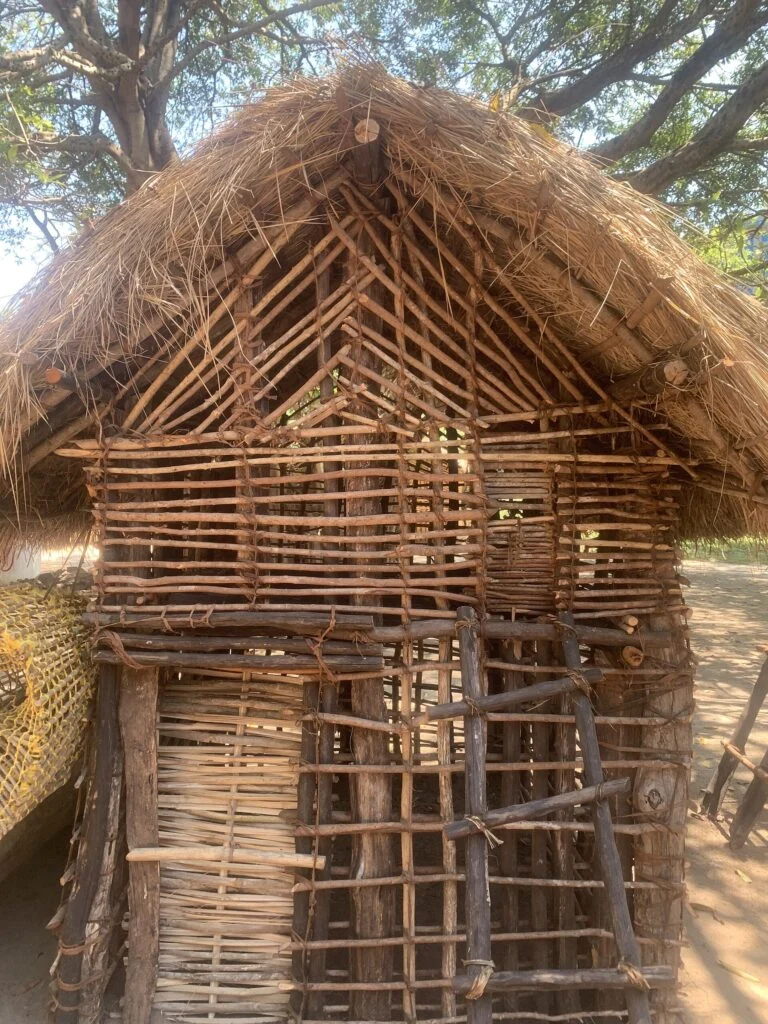
The core assets are the recreated traditional dwellings, which represent over a dozen ethnic groups. These houses are not mere replicas or architectural models, but carefully rebuilt using authentic techniques and local materials wherever possible. The museum’s ability to present full-scale, intact, vernacular architecture offers a richness rarely found in museum collections, where objects often lose much of their meaning once taken out of function and context. Compared to collections that focus only on isolated artifacts, the Village Museum preserves the spatial and functional context that imbues these buildings with cultural significance.
The collection also includes a variety of handcrafts, musical instruments, and agricultural tools displayed within or near the dwellings. While smaller in number, these material items add detail to the understanding of rural economies and social customs. The collection covers groups such as the Chaga, Hehe, and Zaramo, each represented by distinctive architectural styles and objects. This ethnographic sampling underscores Tanzania’s cultural variety but also points to shared regional adaptations, such as the use of mud plaster, thatched roofs, and communal courtyards.
Significance emerges from how the museum preserves and presents these elements as a living record of rural traditions at a time when rapid urbanization and modernization are changing Tanzania’s social landscape. The buildings provide a comparative framework for studying indigenous construction methods and social hierarchies embedded in architecture. This makes the museum relevant not just for cultural tourists but also for researchers interested in African vernacular architecture, rural history, and ethnology.
Design, Displays, and Atmosphere
The Village Museum occupies an open-air layout south of downtown Dar es Salaam, which suits the nature of the exhibits. Rather than a traditional enclosed building or gallery, the museum is arranged with wide paths weaving through clusters of buildings and displays on a green lawn. This design invites a slower, exploratory experience that emphasizes spatial relationships between structures over textual interpretation. The lack of an established internal route allows visitors to form their own impressions but might also challenge those preferring clearer guidance or thematic sequencing.
The architectural reconstructions are the main points of interest, and they stand as standalone objects in the landscape. The museum has kept signage minimal and often in Swahili, which creates some language barriers for international visitors but preserves a sense of local authenticity. Display panels that do appear tend to focus on basic identification and construction notes; more detailed ethnographic or historical background is not prominently accessible. This produces a somewhat bare interpretive framework, but arguably the material itself holds the attention.
The atmosphere is informal and tranquil, reflecting the open-air setting. The museum doubles as a cultural performance site on certain days, when traditional music and dance complement the built environment. This occasional role adds a performative dimension consonant with the village focus, where public rituals are tied to specific buildings and spaces. However, because such events happen infrequently, the museum’s usual ambiance relies on quiet observation of architecture and craftwork.
The absence of heavy museum infrastructure—galleries, climate control, elaborate interpretation—makes for an experience close to visiting a real village, rather than an art or history museum. For some, this is refreshing and immersive; for others, the lack of detailed captions and labels might leave questions about the significance of particular dwellings or objects.
A Visit for Different Audiences
Anthropologists, architects, and scholars interested in Tanzanian cultural diversity will find the Village Museum’s concentrated presentation of authentic traditional buildings particularly valuable. Its focus on material culture and vernacular environments creates raw data for comparative study or fieldwork preparation. The presence of original construction techniques also benefits those studying indigenous building knowledge and environmental adaptation.
For tourists with an interest in cultural heritage, especially those looking beyond conventional safari or wildlife attractions, the museum offers an opportunity to visualize rural ways of life that persist outside the cities. However, lack of interpretive depth and language challenges could limit the museum’s accessibility to casual or international visitors without supplementary guides or research.
Local visitors may approach the museum differently, as a site preserving and reaffirming their ethnic identities through architecture and ceremonies. The museum’s emphasis on specific ethnic groups enhances community recognition but could also create gaps regarding Tanzanian cultures not represented or underrepresented. It is not an encyclopedic institution; rather, it shapes selective narratives around certain rural traditions currently at risk.
Families and children might find the open-air setting inviting for a relaxed outing, but the lack of interactive displays or educational programming, as far as known, may reduce engagement for younger audiences used to hands-on museum experiences.
The Strongest Reasons to Go
The Village Museum’s main appeal lies in its tangible presentation of traditional Tanzanian village architecture. It provides a rare opportunity to see full-size, functioning examples of rural homes and compounds from several diverse ethnic groups gathered in a single, accessible location near Dar es Salaam. This concentration is unmatched elsewhere, where vernacular buildings are usually scattered across remote rural areas or fragmented in museum collections.
Its emphasis on authentic construction techniques offers a vital cultural repository at a moment when urbanization and globalization pressure continue to change traditional lifestyles in Tanzania. Anyone interested in how rural architecture directly expresses social organization, craft skills, and environmental knowledge should consider this aspect a key strength.
The museum’s setting as an open-air space with occasional live performances adds a cultural texture that brings the tangible dimension of village life a step closer to visitors. This connection to ceremonial traditions and musical heritage prevents the museum from being purely a static display of huts.
Planning Notes
Information on official opening days and hours or admission prices of the Village Museum is not universally clear and seems subject to local conditions. It is advisable to check the official website or local tourist information before planning a visit, especially since cultural performances occur only on specified days and might require advance notice.
Facilities appear basic due to the outdoor environment, so weather considerations, such as Tanzania’s rainy season, bear on planning. The museum’s location in Dar es Salaam is accessible, but visitors should verify transport options, as public transit or taxis may be irregular depending on time and demand.
Because much of the signage uses Swahili, foreign-language interpretative resources might be limited on-site. Prospective visitors with less familiarity in local languages could benefit from guided tours or supplementary materials available elsewhere.
Editorial Conclusion
The Village Museum in Dar es Salaam presents an uncommon perspective on Tanzanian cultural heritage through a focused display of traditional village architecture and associated crafts. Its strength lies in preserving material culture in spatial and functional context rather than dispersed objects. This approach offers particular insights for specialists and culturally engaged visitors interested in vernacular building practices and rural ethnography.
Yet the museum’s limited interpretative support and language accessibility confine its appeal for casual visitors expecting rich narratives or multilingual explanation. Its open-air structure and minimal signage invite a mode of independent exploration more suited to those willing to piece together context externally.
This is not a comprehensive museum of Tanzania’s history or peoples but a selective cultural complex centered on village life constructed elsewhere and brought into a single site. Judged by that definition, it fulfills a niche role intriguingly, shedding focused light on how Tanzanian rural societies are shaped and remembered through their dwellings. Visitors attuned to that particular angle will find in the Village Museum something neither a conventional art gallery nor archaeological display can replicate.