Busan Museum of Art Review
Art Museums · Busan, South Korea. The Busan Museum of Art is positioned as a modern institution deeply engaged with contemporary Korean art, particularly emphasizing artists and movements linked to Busan and the wider southeastern region of South Korea. Unlike…
Art Museums · Busan, South Korea. The Busan Museum of Art is positioned as a modern institution deeply engaged with contemporary Korean art, particularly emphasizing artists and movements linked to Busan and the wider southeastern region of South Korea. Unlike…
Best forArt lovers, visual culture, architecture
Review focusCollections, curatorial focus, and visitor planning
A Museum with a Clear Point of View
The Busan Museum of Art is positioned as a modern institution deeply engaged with contemporary Korean art, particularly emphasizing artists and movements linked to Busan and the wider southeastern region of South Korea. Unlike national museums in Seoul that survey Korean art across epochs and regions, this museum clearly narrows its focus: it aims to trace and present the development of modern and contemporary art from a southern perspective, highlighting how local context shapes creative output. This regional orientation sets it apart from more generalist art museums and establishes a narrative that privileges the emergence of new artistic voices outside the capital.
The museum’s stance is neither encyclopaedic nor purely commercial. It serves as a cultural resource linked to Busan’s urban identity, aligning collection choices and exhibitions with the city’s status as a major port and international hub. The institution’s gaze centers on post-20th century art, both experimental and conceptual, rather than traditional or historical art forms. By focusing on recent decades and present practices, the Busan Museum of Art stakes a claim as a showcase for Korea’s ongoing artistic innovation rather than as a repository of distant heritage.
What Defines the Collection
The permanent collection concentrates strongly on Korean contemporary art from roughly the late 20th century onward, with a deliberate concentration on artists either from Busan or closely associated with the region. This includes painting, sculpture, installation, and multimedia works. The emphasis on Busan provides depth by assembling a corpus of regional output seldom collected in national venues. It offers a measure of place-based identity, reflecting how local environment, culture, and history feed into creative practice.
While the collection embraces a variety of media and often experimental forms, it generally revolves around painting and mixed media works, with substantial holdings of work by artists such as Lee Ufan, who has roots in the region, and Kang Ik-joong. Their works exemplify broader contemporary Korean trends, including minimalism, conceptual art, and engagement with issues of memory and place. The institution also collects works that engage with social and political themes specific to Busan, such as the city’s port culture, industrial transformation, and urban development.
The collection is strong in cross-disciplinary approaches and frequently includes pieces straddling fine art and design, reflecting Busan’s dynamic role in Korea’s economic and cultural exchanges. However, it generally does not extend far into historical Korean art centuries prior; its spatial and temporal boundaries are deliberately modern and local.
Standout Galleries and Themes
Exhibition spaces emphasize thematic and chronological displays that trace shifts in artistic styles and concerns from the late 20th century forward. There is a marked attention to the region’s transformation and how artists respond to urban expansion, migration, and globalization. For example, one gallery might feature works exploring urban alienation in Busan, using mediums ranging from large-scale installations to video art, while another presents abstract painting developed through coastal and industrial landscape references.
The museum also dedicates space to younger and emerging artists linked to Busan’s contemporary scene, forming a platform where newer voices can be understood in dialogue with established figures. This layered encounter offers valuable insight into the trajectories of Korean contemporary art beyond Seoul’s dominant narratives.
One distinctive thematic thread is the focus on the relationship between human presence and environment—both natural and industrial. This manifests in artworks that invoke the sea, the port, and the city’s unique coastal topography. A not insignificant number of pieces engage with Korean identity in the context of rapid modernization and the tensions it generates locally.
Pacing, Interpretation, and Atmosphere
The museum’s layout is functional and intentional, with galleries arranged to invite reflection on thematic clusters rather than chronological rigidity. Pacing tends to be moderate, encouraging visitors to linger on the dialogues between pieces rather than rush through. This suits the intellectual demands of contemporary art, which often requires some engagement to unpack.
Interpretive materials are present but tactical—labels and wall texts balance clear factual information about artists, techniques, and contexts without overwhelming with jargon or abstract theory. This approach respects visitors’ intelligence while providing the key background to orient their understanding.
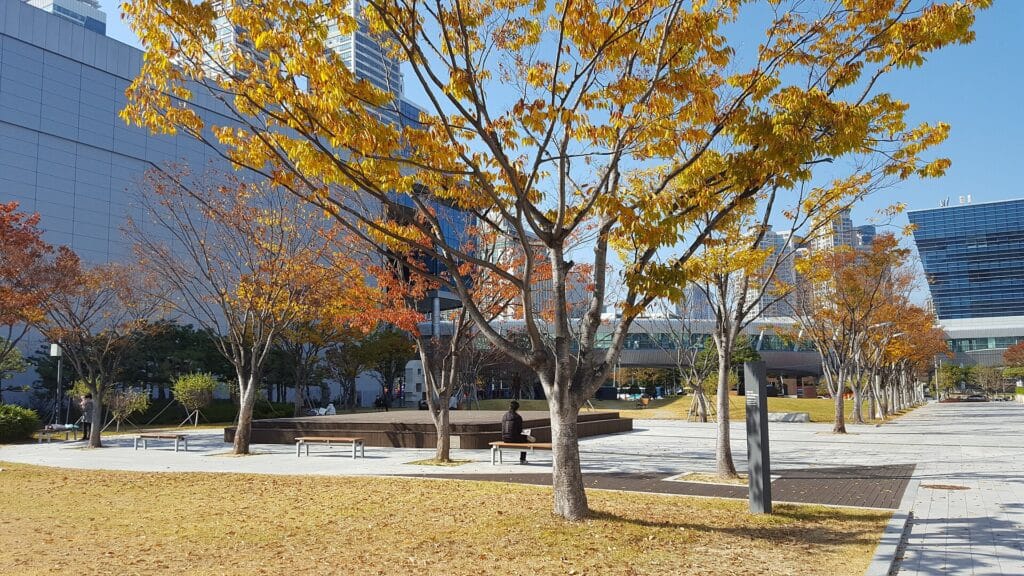
Atmospherically, the setting is modern and relatively minimal, aligning with the aesthetic of the art itself. The building’s architecture, while not widely renowned as a landmark, supports the display needs well and creates a neutral backdrop where artworks can have full impact. The museum’s position in Busan contributes some ambient energy linked to a growing global city, but the institution itself remains quietly focused on art rather than spectacle.
Strengths and Limitations
The museum’s strength is its clear, regional focus on contemporary Korean art from Busan and its environs. This provides depth and specificity lacking in many broader institutions and offers valuable perspective on an area often eclipsed by Seoul in cultural narratives. Its collection balances established masters with emergent artists, which contributes to a dynamic, living archive of the area’s artistic ecosystem.
It also succeeds in engaging with real social and environmental questions through the lens of art, providing some substantive cultural commentary beyond aesthetic display. This grants the museum a contemporary relevance connected to local identity and urban transformation.
However, this clear specialization also limits the museum’s appeal to those primarily interested in historical Korean art or internationally canonical modern movements unrelated to Korea. The absence of older or classical works means it cannot serve as a comprehensive overview of Korean art history. Visitors seeking internationally recognized Old Masters or traditional arts will need to look elsewhere.
The museum’s architecture, though serviceable, does not stand out in itself and may leave visitors less impressed compared to other Asian contemporary art museums housed in architecturally signature buildings. In terms of visitor amenities or digital engagement, there is limited publicly available information to assess these factors reliably.
Before You Go
Practical details about opening hours, admission costs, guided tours, or accessibility options are not comprehensively documented in widely available sources. Prospective visitors should consult the museum’s official website or contact the institution directly for up-to-date information. Busan itself is well connected by public transport, so reaching the museum is feasible for those within the city or arriving via Korea’s extensive rail and bus networks.
Language accessibility could be a consideration—while some interpretation may be provided in English, the extent is unclear, so non-Korean speakers should be prepared for some language limitations. This is an important factor given the museum’s regional focus and potential interest to international visitors.
Final Assessment
The Busan Museum of Art serves a distinct and meaningful role by concentrating on contemporary creative production rooted in a major Korean city outside the national capital. It is a crucial institution for understanding how local environment, history, and societal change shape current art practices in South Korea’s southeast. Its collection and exhibitions speak directly to Busan’s identity and the evolution of Korean art since the modern era, offering insight that is not easily found in larger, more general museums.
As a resource, it is particularly strong for those focused on recent Korean art, regional dynamics, and the intersections of urban development and artistic expression. The quality and coherence of the collection validate its mission, even if it will not satisfy those seeking a broader or historical survey of Korean visual culture.
In short, the Busan Museum of Art is a specialized venue with real depth in its chosen field. It makes a solid contribution to the understanding of Korea’s complex artistic geography and should be noted by anyone engaged with Korean contemporary art, regional cultural studies, or the changing artistic responses to urban life in Asia.