Museo de Metales Preciosos Precolombinos Review
La Paz, Bolivia. The Museo de Metales Preciosos Precolombinos in La Paz establishes itself as a focused institution dedicated exclusively to precious metals from the pre-Columbian Americas. Rather than presenting a broader sweep of Indigenous art or…
La Paz, Bolivia. The Museo de Metales Preciosos Precolombinos in La Paz establishes itself as a focused institution dedicated exclusively to precious metals from the pre-Columbian Americas. Rather than presenting a broader sweep of Indigenous art or…
Best forMuseum lovers, culture travelers, first-time visitors
Review focusCollections, visitor experience, and practical planning
Context and Identity
The Museo de Metales Preciosos Precolombinos in La Paz establishes itself as a focused institution dedicated exclusively to precious metals from the pre-Columbian Americas. Rather than presenting a broader sweep of Indigenous art or Andean archaeology, its domain is sharply defined by the material and the technologies linked to it—mainly gold, silver, and copper—crafted by societies that predated European contact. This tight focus allows the museum to delve more deeply into metallurgical techniques, symbolic uses, and the evolving status of metals in Andean cultures.
Situated in Bolivia’s administrative capital, the museum reflects the region’s historical prominence in precious metal extraction and production. Bolivia was, after all, part of the Inca Empire and linked to earlier complex societies such as Tiwanaku. Focusing on metals brings to light an aspect of cultural expression often overshadowed by ceramics or textiles in Andean archaeology. It articulates a strong cultural and historical identity tethered to the silver mines of Potosí and to ritual economies where metals were not simply wealth but mediums of power, cosmology, and social order.
This defined identity comes with clear advantages. By concentrating on these materials and their pre-Columbian contexts, the museum positions itself as a niche specialist rather than a generalist institution. It appeals particularly to those interested in metallurgy, trade networks, and the cultural meaning of precious metals in Indigenous American societies. However, this attention also narrows the museum's scope for visitors less familiar with Andean prehistory or less interested in metals specifically.
Inside the Collection
The collection’s core lies in a selection of metal artifacts—ornaments, ritual objects, and tools—spanning numerous cultures, including Tiwanaku, Wari, and Inca. These pieces illustrate both the technical skill and symbolic depth that metallurgists and artisans achieved centuries before European intrusion. For example, thin gold sheets and fine filigree demonstrate advanced hammering and soldering methods, while intricate figurines suggest elaborate cosmological narratives encoded in their designs.
One strength is the variety of object types which extend beyond the predictable gold jewelry to include ceremonial axes, pectorals, masks, and tunics with embedded metal disks. This broad typology helps viewers appreciate the diverse functions metals had: from status markers and religious paraphernalia to everyday items imbued with social meaning. Some objects show a high degree of state control, particularly from the Inca period, linking metalwork to political power.
While the collection covers multiple cultures, its chronological and geographical range can lead to a somewhat uneven narrative. Tiwanaku pieces from the Lake Titicaca region appear alongside later Inca objects from the highlands, but the museum does not always provide a strong thread connecting these disparate contexts beyond the shared use of metals. Without detailed interpretation, visitors might miss important shifts in technique and symbolism over time.
The emphasis on precious metals also means other materials—ceramics, textiles, stone—are largely absent, which narrows the cultural context. This may limit understanding of how metals integrated with other artisanal practices or how they functioned within daily life’s broader materiality. Still, those interested in the technical aspects of Andean metallurgy will find a concentrated and instructive selection.
Architecture and Display
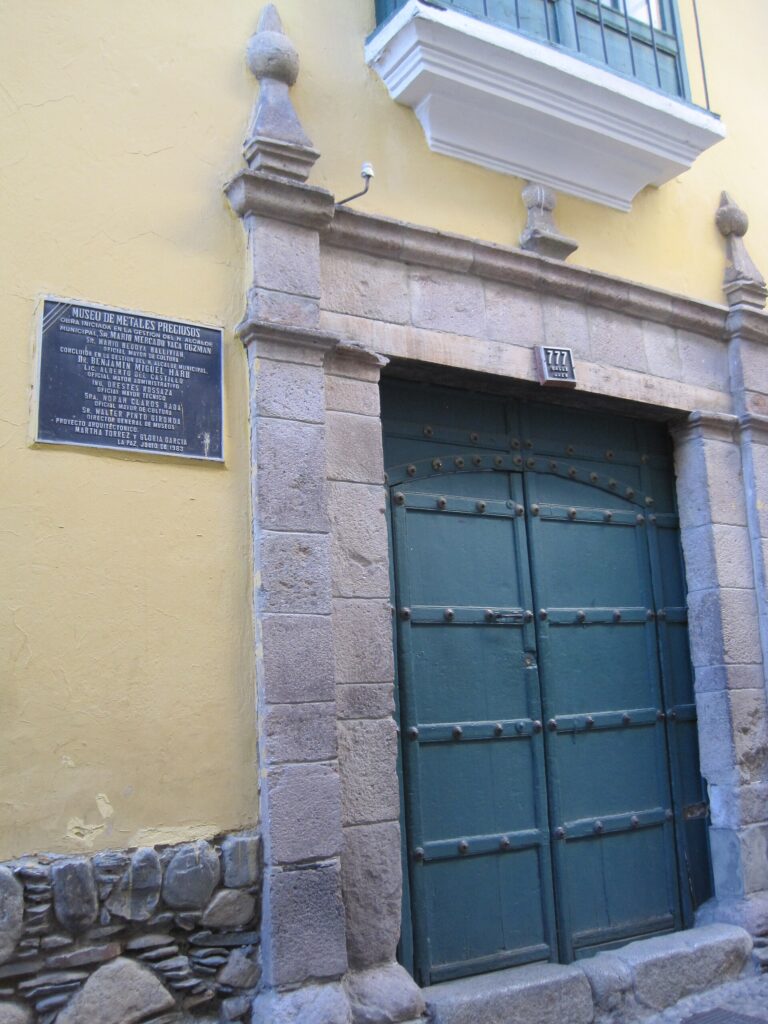
The building housing this museum situates the collection within a compact, functional space in La Paz. The architecture is unobtrusive, more institutional than monumental, which directs focus toward the objects rather than the surrounding environment. The exhibition rooms are arranged to follow a roughly chronological order, beginning with early metalworking experiments and ending with late pre-Columbian imperial pieces.
Display cases use well-lit glass vitrines, allowing close inspection of the fine details in metalwork, which is crucial for appreciating techniques like repoussé and overlay. The lighting is sensitive to the reflective qualities of the metals and avoids glare that could distract from the craftsmanship. However, judging by available images and reports, the museum relies heavily on standard glass cases with limited interactive or multimedia elements.
Labels provide identification and some contextual information, including the culture, date, and presumed function of objects. However, the depth of interpretation appears variable. The museum favors object captions over thematic wall texts that would situate the pieces within broader social, cosmological, or economic frameworks. This approach suits visitors already somewhat informed about Andean archaeology or metallurgy but may leave newcomers wanting more narrative guidance.
The compact scale of the building makes for a focused, uncluttered visit. Yet, it leaves little room for expanding the collection or staging temporary exhibitions that could broaden the museum’s scope or update its narrative. The small footprint underscores the institution’s specialised nature but also limits visitor facilities.
For Families, Specialists, and First-Time Visitors
The museum’s primary audience seems centered on specialists and enthusiasts interested in Indigenous metalsmithing. Its concentration on precious metals and technical artisanal methods means it does not cater heavily to casual visitors or families. The lack of interactive elements or simpler thematic zones probably reduces its accessibility for children or people without prior background.
For archaeologists, historians of metallurgy, and students of Andean cultures, the museum offers close encounters with high-quality artifacts that are rarely the sole focus in larger, more general museums. It can contribute to understanding the social life of metals and the symbolic economies of pre-Columbian Bolivia. Researchers might appreciate the specificity even if the interpretive apparatus is not exhaustive.
Newcomers to the subject may find the museum’s density demanding. Without extensive narrative introductions, wall texts, or multimedia devices translating technical details into broader human stories, the museum risks feeling like a collection of attractive objects rather than a coherent history. This limits the appeal beyond those with a clear prior interest or some knowledge of the region’s past.
Families with children might find little to engage younger audiences beyond the visual allure of shining gold and silver. The museum could gain from incorporating child-friendly resources or interactive displays to make pre-Columbian metalworking and its cultural contexts more accessible.
What Works Best
The museum’s greatest strength lies in the clarity and consistency of its theme. By dedicating itself fully to pre-Columbian precious metals, it can showcase technical traditions and symbolic meanings in sharper detail than institutions with broader archaeological mandates. This makes it a valuable resource for understanding metalwork as a distinct form of cultural expression in ancient Bolivia.
Its collections illuminate the continuity and change from formative societies like Tiwanaku to the Inca Empire, revealing metallurgy’s evolving role—from early experimentation to highly controlled imperial production. The objects are carefully chosen and conserved, enabling rich study of styles, techniques, and cultural functions that might be lost in more generalized presentations.
The decision to present the metals somewhat independently from other cultural materials ensures a tight focus. It foregrounds the materiality of metals themselves and the skill invested in transforming raw ore into objects of power and prestige. This focus compensates for the smaller size and less elaborate setting compared to bigger regional museums.
On the other hand, the limited interpretative framing is a missed opportunity. Questions around metal sourcing, trade, ritual use, and colonial impact could be more actively explored. More comprehensive context would help to position the collection within larger Andean histories and connect it to contemporary cultural identities in Bolivia.
Practical Considerations
The Museo de Metales Preciosos Precolombinos occupies a central location in La Paz, making it accessible to those already navigating the city’s cultural circuit. The compact building means visits are unlikely to require large time commitments, which suits travelers with limited schedules.
Since detailed information about opening hours, ticketing, accessibility, and visitor services is not widely documented, potential visitors should consult official sources before planning their visit. Specifics such as whether tours, audio guides, or facilities for people with disabilities are available remain unclear.
The museum does not appear to include amenities such as cafés or extensive shops, which aligns with its modest size. Visitors should plan accordingly for refreshments and other needs. The absence of interactive exhibits or multimedia might disappoint those expecting digital engagement but fits with the museum’s emphasis on direct artifact viewing.
Verdict
By narrowing its lens to pre-Columbian precious metals, this museum fills a specialized niche in La Paz’s cultural landscape. Its collection offers a concentrated and revealing look at metallurgy’s role in ancient Andean societies, focused sharply on skill, symbolism, and material presence. This focus provides valuable insights that would likely be marginalized or diluted in more general archaeological museums.
While the depth of the collection is an asset, the museum’s limited interpretive layers and small scale restrict its appeal. Specialists and informed enthusiasts will find its consistent theme rewarding, yet casual visitors, families, and newcomers may struggle to connect with the objects without richer narrative support or more engaging presentation methods.
The building and display approach prioritize the objects themselves, which suits the technical nature of metal artifacts, but leaves little room for expansion or interactive learning. Practical details around visitor services await clarification, making advance planning advisable.
In sum, the Museo de Metales Preciosos Precolombinos stands out for its uncommon dedication to pre-Columbian metalworking traditions but remains a highly specialized institution with a narrowly defined audience. This makes it an important destination within its area of expertise, though less so for those seeking a broader survey of Andean history or a more accessible museum experience.