Museo de Arte Miguel Urrutia Review
Art Museums · Bogotá, Colombia. The Museo de Arte Miguel Urrutia (MAMU) in Bogotá stands out primarily through its function as the flagship venue of the Banco de la República’s art collection, which is among the most significant in…
Art Museums · Bogotá, Colombia. The Museo de Arte Miguel Urrutia (MAMU) in Bogotá stands out primarily through its function as the flagship venue of the Banco de la República’s art collection, which is among the most significant in…
Best forArt lovers, visual culture, architecture
Review focusCollections, curatorial focus, and visitor planning
What Sets It Apart
The Museo de Arte Miguel Urrutia (MAMU) in Bogotá stands out primarily through its function as the flagship venue of the Banco de la República’s art collection, which is among the most significant in Colombia. This affiliation places the museum at the intersection of financial institutional patronage and cultural stewardship, a distinctive dynamic that shapes its identity. Unlike general contemporary art galleries scattered around the city, MAMU’s mission centers on maintaining, interpreting, and exhibiting a curated selection of Colombian and Latin American art that spans from pre-Hispanic times to the present.
What fundamentally defines MAMU is its position as a repository and exhibitor of the Banco de la República’s vast and historically layered holdings. It is not only a museum of Colombian art but also a critical institution that connects the country’s cultural past to its modern artistic expressions. The collection reflects a more focused curatorial ambition than a broad-spectrum national or international museum. It works as a platform for both historical depth and contemporary relevance, which is relatively rare in Bogotá’s museum landscape. This focused stewardship enables a strong, coherent narrative about Colombian and Latin American visual arts.
Collection Depth and Significance
MAMU’s collection is particularly valued for its breadth across periods and media but most notably for its strength in 20th-century and contemporary Colombian art. Its holdings include foundational figures such as Fernando Botero, whose works illustrate a distinctive style widely associated with Colombia internationally. Besides Botero, the collection features important modernists like Alejandro Obregón and Enrique Grau, whose paintings and sculptures capture shifting political and cultural tensions in 20th-century Colombia.
The museum also encompasses pre-Columbian objects, colonial curiosities, and ethnographic artifacts, contributing to a layered understanding of Colombia’s artistic legacies and indigenous roots. The inclusion of these earlier periods situates the more recent artworks within a broader historical and cultural framework, something missing from institutions focused solely on modern or contemporary art.
Despite this range, the museum’s collection is not encyclopedic. Its concentration remains predominantly on Colombian artists, with some representation from neighboring Latin American countries. This regional emphasis enriches the narrative of national identity while occasionally risking a narrower perspective that may overlook broader Latin American dialogues. Still, the museum’s intentional focus allows careful conservation and scholarly attention to Colombian art movements, positioning that aspect of the collection as one of the most authoritative in the country.
Design, Displays, and Atmosphere
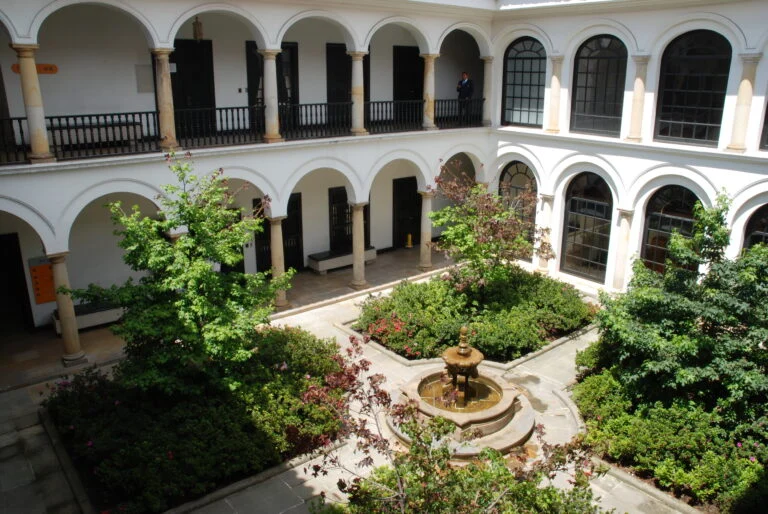
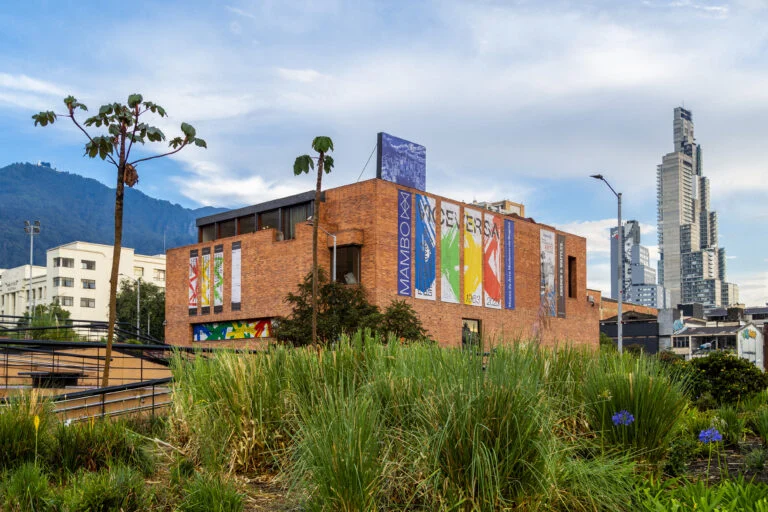
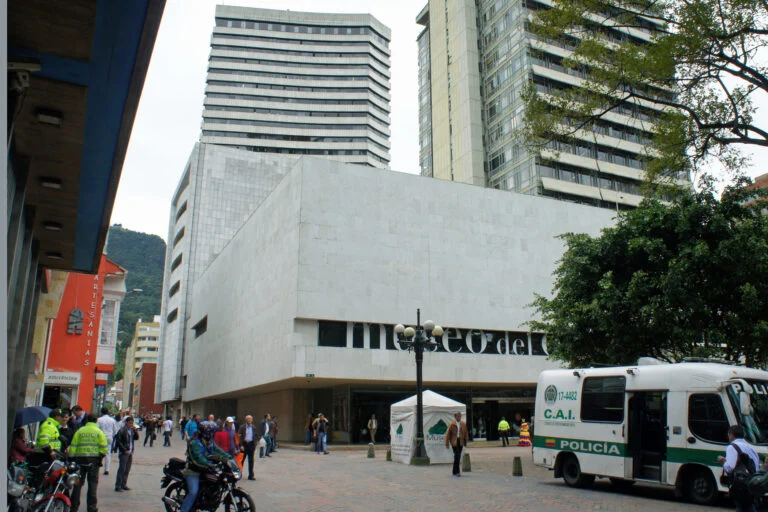
MAMU inhabits an architectural complex known as the Banco de la República Cultural Center in Bogotá’s historic district. The building design, often credited to Rogelio Salmona, a seminal Colombian architect, is characterized by its use of red brick, spacious galleries, and integration with the urban landscape. Salmona’s emphasis on light, space, and courtyards gives the museum a distinctive character that supports a contemplative engagement with the artworks rather than a commercial or blockbuster exhibition feel.
The galleries tend to prioritize clarity and openness over dense displays. This approach accommodates large-scale works by artists like Botero, allowing them to be seen without visual competition or claustrophobic spacing. The museum’s lighting and color schemes reportedly complement the artworks with minimal distractions, although some critiques suggest that lighting conditions in certain rooms could be improved for fragile early works or smaller pieces.
Interpretation and labelling appear designed to inform without overwhelming, often providing contextual information that connects works to broader Colombian cultural or historical themes. This balance between scholarly background and accessibility serves varied visitor interests while maintaining academic rigour.
The atmosphere can be described as calm and deliberately paced, eschewing the noisy or heavily trafficked vibe of larger museums. This suits visitors interested in thoughtful examination rather than rapid overview. The design’s relationship to the surrounding city also encourages consideration of Bogotá’s evolving cultural fabric as viewers move through the galleries.
A Visit for Different Audiences
The museum’s strong suit is its appeal to those who have some familiarity with art history but also to enthusiasts looking to deepen their understanding of Colombian and Latin American art. Specialists in modern and contemporary art will find particularly valuable material on mid-20th-century artistic debates and styles, while students and researchers benefit from MAMU’s well-curated archives and exhibitions that document Colombia’s visual culture in detail.
For the casual visitor with limited prior knowledge or time, the museum might seem specialized or less accessible, since it is not structured around blockbuster exhibitions or popular international names beyond Botero. Its exhibitions require patience and a willingness to engage with Colombia’s cultural history on its own terms rather than through global art market frameworks.
Education programs and workshops, as known from the Banco de la República’s cultural initiatives, suggest outreach efforts toward younger audiences and schools, although exact details of these initiatives at MAMU are not broadly published. This points to the museum’s dual role as both a public educational resource and a storehouse of national artistic heritage.
The Strongest Reasons to Go
A visit to MAMU offers one of the most concentrated experiences of Colombian modern and contemporary art available publicly. The chance to see Botero alongside his contemporaries and predecessors within the same institution enables a layered appreciation of how artistic style and subject matter evolved in response to Colombia’s social and political changes.
The architecture is also a compelling reason to visit. Rogelio Salmona’s building is itself an important work of Colombian cultural history, embracing local materials and spatial concepts. This setting amplifies the art without overshadowing it, making the relationship between artwork, space, and light integral to the visitor’s experience.
Finally, the museum’s role as part of the Banco de la República situates it within one of the country’s key cultural networks, allowing visitors access not just to art but to accompanying resources such as library collections and related cultural programs.
Planning Notes
While details about practical visitor services are limited, it is advisable to consult the official website of the Banco de la República or MAMU itself for current information about opening hours, ticketing, accessibility, and guided tours before planning a visit. Since the museum is located in Bogotá’s historic center, considerations related to city traffic and security should be factored into travel plans.
The museum’s adherence to safety and preservation protocols might mean restrictions on photography or handling of exhibits; confirming these guidelines ahead of time can prevent surprises. The proximity to other Banco de la República institutions means visitors may want to allocate additional time to explore neighboring cultural offerings.
Visitors unfamiliar with Colombian history or art might benefit from a preliminary overview to fully appreciate the context of the works on display, which could be found in companion books or articles.
Editorial Conclusion
The Museo de Arte Miguel Urrutia represents a focused and serious institutional commitment to Colombian and Latin American art, with an emphasis on quality and depth over breadth or international spectacle. Its collection, anchored by significant 20th-century artists, and its setting in a thoughtfully designed building provide a substantive experience for those seeking to engage with the nation’s artistic evolution in detail.
Its restrained scale and regional focus limit its appeal to audiences looking for blockbuster shows or broader pan-American art narratives but serve the museum’s mission to provide a stable, coherent perspective on Colombia’s artistic identity. As an embodiment of cultural patronage tied to one of the country’s key national institutions, MAMU exemplifies how focused collections and dedicated stewardship can create a meaningful platform for understanding local art history.