Musée Soulages
Tickets & Tours
Compare ticket options and guided tours from trusted booking partners.
We may earn a commission if you book through these links.
Overview
The Musée Soulages is an art museum dedicated to the work of Pierre Soulages, a French painter and engraver known primarily for his exploration of black as a color and texture. Situated in the city of Rodez, in southern France, this museum offers a focused look at the artist’s career and contributions to contemporary art. Opened to encourage a deeper understanding of Soulages’s approach and artistic philosophy, the museum serves both as a repository of his work and as an educational resource about his innovations within abstract painting.
Soulages’s work is often associated with the mid-20th century developments in abstraction and monochrome painting. His special interest in the effects of light on black surfaces—sometimes referred to as “Outrenoir” or “beyond black”—defines much of the collection here. The museum is unique in its exclusive concentration on one artist, providing a thorough presentation of his evolving techniques and artistic periods. This specificity means the museum appeals particularly to visitors already interested in modern and contemporary art, as well as those curious about the physicality of paint and surface.
Collection Highlights
At the heart of the Musée Soulages lies an extensive selection of paintings spanning various phases of the artist’s long career. His large-scale canvases, some created specifically for the site, demonstrate his signature method of manipulating black pigment to produce varied textures and reflective qualities. These works are not black in the conventional sense but reveal subtle undulations and depth when viewed in different light conditions.
In addition to paintings, the museum’s holdings include prints, engravings, and related graphic works that reflect Soulages’s practices in other media. These smaller-scale pieces provide insight into how his exploration of light and color carried across formats. Occasionally, the collection exhibits preparatory studies and sketches, allowing visitors to trace the development of particular ideas before their completion on canvas.
While the focus remains tightly fixed on Soulages, the museum aims to contextualize his work through carefully curated displays, sometimes juxtaposing his pieces with historical timelines or thematic references. However, this is not a museum of comparison; rather, it prioritizes deep exposure to one artist’s distinctive vision.
Building and Setting
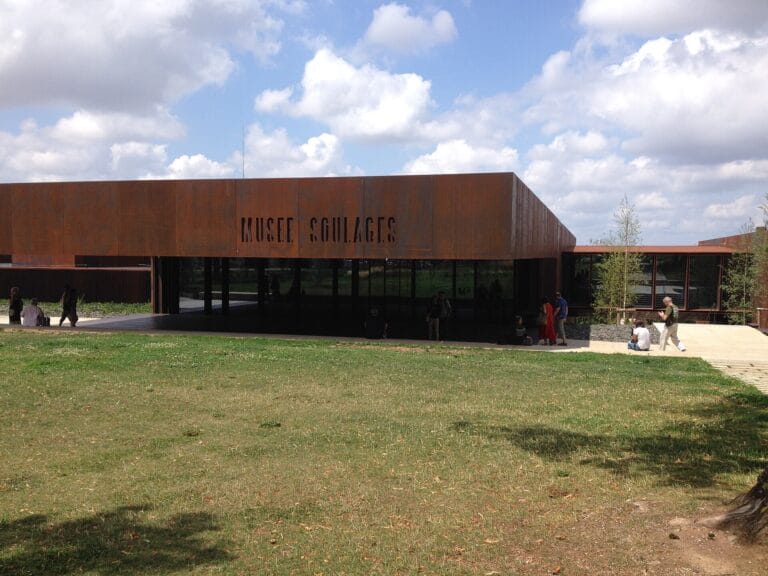
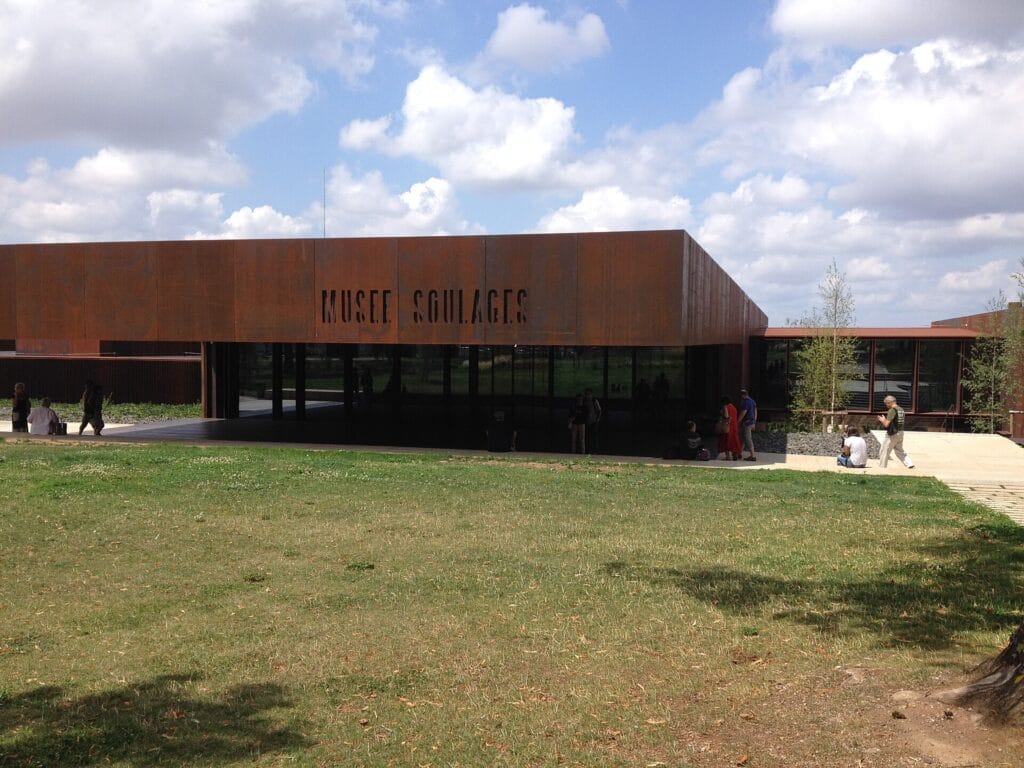
The museum building itself is a significant part of the experience. Designed by the architect RCR Arquitectes, who won the Pritzker Prize, the physical structure integrates aspects that resonate with Soulages’s aesthetic sensibility. The use of concrete and natural light, alongside expansive open spaces, means the architecture does not compete with but complements the artworks. Large windows and controlled lighting conditions play a practical role in revealing the nuances of Soulages’s black textures.
Located in Rodez, the museum is positioned near the city’s historic center but offers a contemporary architectural presence distinct from surrounding older buildings. The site has outdoor areas that contribute to the overall visit, though the primary focus remains on the indoor galleries. The setting is quiet and reflective, suitably encouraging visitors to spend time with the often demanding abstract paintings.
Practical Information
Visitors planning to see the Musée Soulages should consult the museum’s official website for up-to-date information on opening hours, ticketing, and any special arrangements or events. These details can change seasonally or due to local health guidelines. No broad assumptions should be made about admission policies or tour availability without referencing official sources.
The museum’s layout favors a linear progression through successive galleries, allowing the visitor to follow Soulages’s artistic evolution chronologically or thematically. The expansive spaces make it generally comfortable throughout the year, though weather can influence the experience in outdoor areas. Documentation in French is standard, so non-French speakers might want to check for availability of multilingual material if that is important.
Accessibility conditions and parking options are best verified directly through the museum before arrival. Similar caution applies to on-site facilities such as cafés and shops, which may vary in service or availability. For anyone with mobility considerations or specific needs, advance inquiry is advisable.
Why Visit
The Musée Soulages stands as a singular institution in its exclusive dedication to Pierre Soulages’s work. For those interested in understanding the possibilities of abstraction and the manipulation of a single color, it offers a rare and concentrated exposure. The museum’s focus on materiality—how paint can interact with light and surface—sets it apart from broader contemporary art museums that spread attention across various artists and styles.
Art enthusiasts who appreciate the nuances of texture, technique, and scale will find value in examining Soulages’s work up close, especially since his pieces often lose their impact in reproduction. The spatial arrangement and architectural setting also encourage a contemplative viewing pace, which can be rewarding for visitors willing to engage thoughtfully with the paintings.
At the same time, the museum’s tight focus means it is less suitable for those seeking a broad survey of art history or for visitors hoping for a wide variety of styles and periods. Some may find the emphasis on one artist’s abstract work limiting, especially if they prefer figurative or narrative art. Additionally, the subtleties of Soulages’s black surfaces might be challenging for casual visitors who do not have some familiarity with abstract art or contemporary painting concepts.
In summary, the Musée Soulages will interest those drawn to the exploration of color, form, and light within modern art, and it situates this exploration in a setting that respects and enhances the work on display. As an expression of one artist’s mastery over decades of production, it provides an in-depth artistic encounter that is unlikely to be found elsewhere.
Readers are encouraged to verify current visitor information on the museum’s official website before planning a visit to ensure the best possible experience.