History Museum of Armenia Review
History Museums · Yerevan, Armenia. The History Museum of Armenia, situated in the nation's capital, Yerevan, stands as a key repository of the country’s extensive and complex past. Armenia’s history spans multiple millennia, encompassing ancient civilizations, medieval kingdoms…
History Museums · Yerevan, Armenia. The History Museum of Armenia, situated in the nation's capital, Yerevan, stands as a key repository of the country’s extensive and complex past. Armenia’s history spans multiple millennia, encompassing ancient civilizations, medieval kingdoms…
Best forHistory lovers, cultural travelers, local heritage
Review focusHistorical collections, local context, and visitor planning
Context and Identity
The History Museum of Armenia, situated in the nation's capital, Yerevan, stands as a key repository of the country’s extensive and complex past. Armenia’s history spans multiple millennia, encompassing ancient civilizations, medieval kingdoms, periods under Persian, Ottoman, and Russian influence, and modern independence. This museum’s role is to present that breadth of history through an established collection that spans prehistory, classical Armenia, and the later national story. Its creation dates back to Soviet-era initiatives to centralize the preservation and study of Armenian heritage, but its ongoing mission reflects the efforts of independent Armenia to assert a coherent narrative about its origins and development.
The museum is fundamentally a national institution, intended to emphasize Armenia’s cultural distinctiveness as well as its interactions with neighboring peoples and empires. While its scope is wide, its focus remains movingly local—a concentrated effort to trace the evolution of Armenian identity through artifacts, documents, and works of art. In this sense, it is as much a place of memory and national pride as it is an academic and public resource. Visitors with an interest in Caucasian history, archaeology, and ethnography will find the museum a significant point of reference. However, those expecting solely familiar, broad overviews might be surprised by the deep detail and heavy chronological span handled here.
Inside the Collection
The museum’s holdings include over 400,000 items, a figure that illustrates just how exhaustive the collection has become. A substantial portion consists of archaeological finds such as tools, ceramics, coins, and inscriptions that date back to prehistoric and Urartian times, offering a material glimpse into the earliest settled communities in the Armenian Highlands. Sections devoted to the medieval period include manuscripts, ecclesiastical objects, and jewelry that help chart the development of Christianity and Armenian cultural production. The holdings extend into ethnographic collections that highlight everyday life, traditional crafts, and regional costumes, introducing elements of intangible heritage connected to the historical narrative.
The coins and numismatic collections serve as an important backbone for understanding shifts in political authority and trade relations through the ages. Similarly, fragments of ancient cuneiform tablets and manuscripts are key documents for researchers but are also a challenge for visitors without background knowledge, since interpretation depends heavily on supplementary explanation. The fine arts collections include not only Armenian artistic traditions but also instances of cross-cultural exchange, reflecting Yerevan’s historic role as a cultural crossroads. Although the museum does not focus on temporary exhibitions in the public records available, permanent displays are regularly curated with careful attention to historical progression.
Architecture and Display
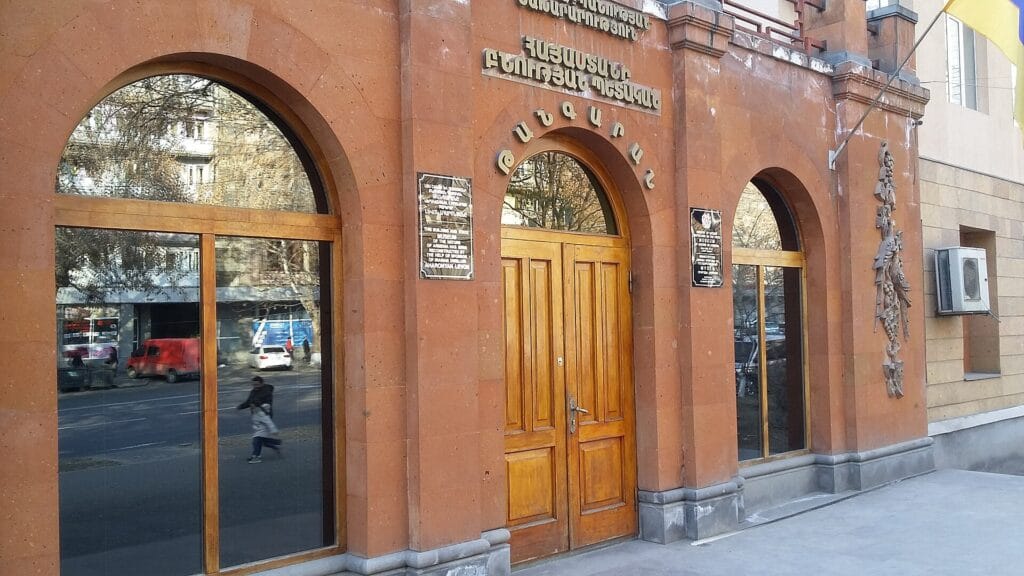
The museum building, located near Republic Square in downtown Yerevan, is notable for its Soviet-era architectural style combined with elements combining Armenian traditional motifs. While not a landmark of avant-garde design, the structure commands a solid, imposing presence suitable for an institution centered on heritage and scholarship. The interior layout is logical though somewhat formal, arranged to facilitate a generally linear flow through Armenian history. Exhibition space enjoys ample natural light supplemented with targeted artificial lighting designed to highlight key objects.
Display cases are generally well-maintained, though the sheer quantity of artifacts means that some galleries feel densely packed. Wall texts and labels tend to prioritize factual precision, with chronological markers and cultural context clearly indicated. The museum employs a traditional approach to display, relying on case objects and written interpretation rather than interactive or multimedia presentations. This may influence the pacing of a visit, as some sections require more sustained attention, particularly those dense with archaeological material or where linguistic or historical complexity is greater.
For Families, Specialists, and First-Time Visitors
For families with children, the museum offers a substantial educational opportunity but may present challenges. The interpretive style leans toward academic rigor over entertainment or simplification, so younger children may find some material difficult if not accompanied by a guide or explanatory session tailored to their level. Families willing to invest time in pausing and discussing exhibits may find rewards as children encounter tangible connections to history. Specialists in archaeology, anthropology, or Caucasian studies will recognize the museum’s critical collections as invaluable, particularly the Urartian artifacts and medieval manuscripts. These scholars may also encounter extensive archives and reference materials accessible through the institution.
First-time visitors from abroad, particularly those without prior knowledge of Armenian history, should be prepared for a thorough, detail-oriented experience. Since the museum's strengths lie in the authenticity and range of its collection rather than flashy presentation or universally accessible interpretation, some prior reading or a guided introduction could enhance understanding. The museum’s multilingual labels, usually including Armenian, Russian, and English, help bridge language gaps but expect careful reading and reflection rather than fast browsing. In this way, the museum is better suited to visitors with patience and curiosity beyond a superficial acquaintance with the region.
What Works Best
The museum’s strengths are firmly anchored in its comprehensive coverage of Armenian heritage through material culture. It excels at tracing the continuity of Armenian civilization from its earliest roots to the recent past, making it invaluable for those interested in the deep historical layers of the Caucasus. Its archaeological and numismatic collections are particularly well-assembled, offering insights not only into Armenia’s internal development but also its external relations with neighbouring empires and trade networks. The ability to view original cuneiform inscriptions and medieval manuscripts in situ provides a sense of connection to the past that reproductions or secondary explanations cannot match.
Displays related to national identity and the formation of the Armenian state under Russian imperial and Soviet rule articulate a nuanced political history. This historical spectrum allows the viewer to contextualize contemporary Armenia within a long trajectory of survival, adaptation, and cultural flourishing. The museum’s regional artifacts and ethnographic panels also help break down any abstract concept of history into concrete, localized experience. This makes it a solid resource for visitors seeking depth rather than a surface overview.
Practical Considerations
While planning a visit to the History Museum of Armenia, potential visitors should consult the official website for up-to-date information about opening hours, ticketing procedures, and any special requirements or restrictions. As a national institution with extensive collections, visitor flow can sometimes be significant, especially during peak tourist seasons or public holidays, which may affect the quiet contemplation some exhibits demand. The museum’s considerable size suggests that a focused approach to viewing—selecting preferred sections or themes—may prevent fatigue.
The museum’s location near central Yerevan makes it accessible by a range of public transportation options, though transit details are not detailed in general sources and should be verified in advance. For travelers with limited time, the museum’s traditional exhibition style and concentration on detailed histories mean it is better suited to those who appreciate deliberate pacing rather than quick walkthroughs. Visitors should also check whether facilities such as amenities for visitors with mobility issues are available, as such details are not definitively published. Overall, the museum requires a visitor willing to engage actively with history and objects, rather than passively consume entertainment.
Verdict
The History Museum of Armenia in Yerevan is a substantial institution whose true value lies in the depth and scope of its collections rather than the gloss of presentation or visitor frills. It serves as a comprehensive archive of Armenian and regional history, with particular strengths in archaeology, numismatics, manuscripts, and ethnographic objects. This breadth is accompanied by a firm scholarly foundation, giving visitors access to authentic and often rare materials that trace Armenia’s multiple historical layers.
Its display approach, oriented toward conventional case-based exhibitions with textual interpretation, expects visitors to bring a degree of patience and interest to engage fully. The museum may be less comfortable for casual tourists looking for rapid or easily digestible overviews, but it rewards those seeking substance and chronological coherence. Families, specialists, and committed history enthusiasts will all find worthwhile experiences here, though the museum may best serve those prepared for a focused and sometimes dense exploration.
Ultimately, the History Museum of Armenia stands as more than a collection of objects; it is a reflection of a nation’s attempt to present its own story in a manner grounded in tangible evidence. Its limitations in interactivity and accessibility should be weighed against the richness of its content. Visitors intending to make the most of their time will do well to prepare in advance, remain open to detailed historical narratives, and focus on the museum’s unique regional perspective and artifacts. For those interested in understanding how Armenia frames its past through material culture, this museum remains a fundamental point of reference in Yerevan’s cultural landscape.