Jordan Archaeological Museum
Archaeology Museums · Amman, Jordan. The Jordan Archaeological Museum is an archaeological museum located in Amman, the capital city of Jordan. It serves as a repository for many of the country’s archaeological finds, presenting a chronological narrative that spans…
Best forAncient history, artefacts, cultural heritage
Setting / nearbyAmman, Jordan
Overview
The Jordan Archaeological Museum is an archaeological museum located in Amman, the capital city of Jordan. It serves as a repository for many of the country’s archaeological finds, presenting a chronological narrative that spans the prehistory of the region to the early Islamic period. The museum’s focus is on illustrating the deep historical and cultural layers that have shaped Jordan, an area often described as a crossroads of civilizations.
The institution aims to showcase the archaeological heritage of Jordan through objects recovered from various excavation sites across the country. This makes it a point of interest for those looking to better understand the material culture and historical development of Jordan and the broader Near East region. While it is a significant national museum, its scale and presentation are modest compared to some larger international archaeological museums, which may influence the visitor experience accordingly.
Collection Highlights
The museum’s collection is notable for its breadth, covering multiple eras of Jordan’s long history. Among its most prominent offerings are artifacts from the Neolithic period, reflecting the region’s early human settlements and innovation in tool-making and agriculture. Pottery shards, stone tools, and early figurines are some of the types of objects on display.
A particularly noteworthy section is dedicated to items from the Bronze and Iron Ages, including funerary objects, weapons, and jewelry, which illustrate the region’s involvement in early urbanism and state formation. Some objects come from famous archaeological sites such as Jericho and Petra, though the more extensive finds are often housed elsewhere in Jordan.
The museum also includes displays of Nabataean artifacts, which relate to the civilization known for building Petra. This part of the collection offers insight into Nabataean art, trade, and religious practices. Sculptural fragments, inscriptions, and ceramics help visitors piece together the cultural complexity of this period.
In addition, the collection holds artifacts from the Roman and Byzantine periods, including mosaics, coins, statues, and glassware. These objects emphasize Jordan’s integration into the broader Roman world and later Christian traditions that took root there.
While the museum cannot match the extensive holdings of larger institutions found in neighboring countries, it does provide a useful overview and tangible connection to Jordanian prehistory and history. The displays are generally arranged in roughly chronological order, which aids in following the development of the region through successive ages.
Building and Setting
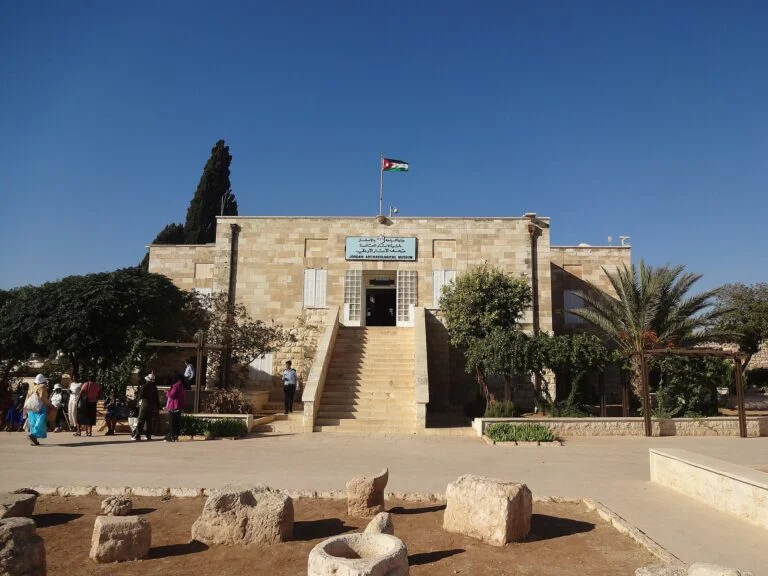
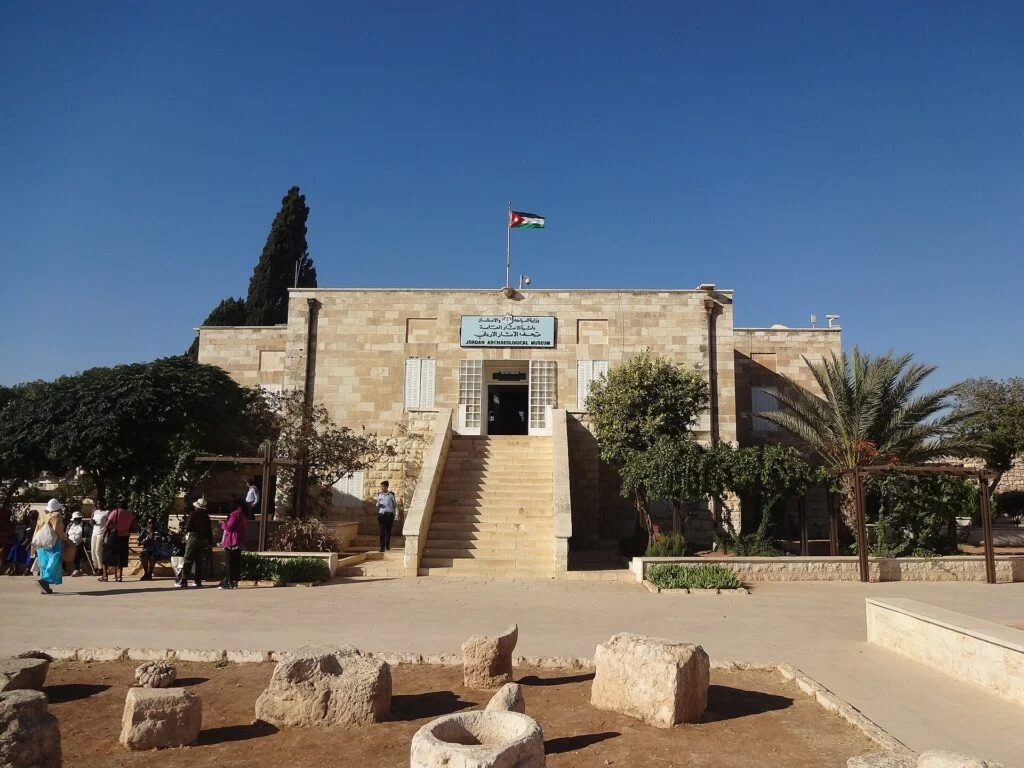
The Jordan Archaeological Museum is situated within the Amman Citadel, a historic site that itself forms one of Amman’s most important archaeological areas. Being positioned in this ancient fortified hilltop provides visitors with a tangible link between the past artifacts inside and the historic landscape outside. The Citadel location offers panoramic views over Amman but also involves walking on uneven surfaces and open-air areas.
The building housing the museum is functional rather than architecturally notable. It is designed primarily to preserve and present archaeological finds rather than to impress with its appearance. The galleries are compact, which can sometimes cause visitor congestion, especially during peak times. The layout, while straightforward, encourages a linear route through the displays.
The surrounding Citadel site contains additional archaeological features that are part of the museum experience but are accessed separately and might require additional time to explore fully. The combination of indoor and outdoor elements here reflects the practical challenges of presenting a region’s layered history in a single location.
Practical Information
Visitors interested in the Jordan Archaeological Museum should consult official sources before planning a trip. Details such as opening hours, admission fees, accessibility options, guided tours, and availability of audio guides may change and are best checked on the museum’s website or through local tourist information channels.
Due to its location within the Citadel, access can involve some degree of walking uphill and on uneven ground, which may not be suitable for all visitors. The museum space itself is modest in size, so those seeking a comprehensive archaeological experience might consider combining their visit here with other sites or museums in Jordan.
The museum is not extensively commercialized; visitor facilities such as cafés or shops are limited or unavailable on-site, so planning for refreshments or souvenirs elsewhere in Amman is advisable.
Why Visit
The Jordan Archaeological Museum offers a direct window into the material history of Jordan and the broader Near Eastern region. For travelers interested in archaeology, history, or anthropology, it presents an organized introduction to the region’s past through a diverse array of artifacts recovered from across the country.
Its location inside the Amman Citadel adds contextual value, allowing visitors to connect the objects inside with the historical landscape that surrounded the ancient communities whose artifacts are exhibited. This setting also places the museum in the heart of one of Amman’s most historically significant areas.
However, the experience here is best appreciated by visitors with an interest in the historical and archaeological narrative of Jordan rather than those looking for high-tech or large-scale exhibition spaces. The museum offers a focused, content-driven environment without extensive interpretation or digital enhancement.
In balance, the Jordan Archaeological Museum is a worthwhile stop for those wanting to ground their understanding of Jordan’s archaeological heritage. It is particularly suitable for students, researchers, or well-informed travelers who value original artifacts and a chronological survey of the country’s past cultures. Those with only casual interest in archaeology or limited time in Amman may find their expectations better matched elsewhere, possibly at larger institutions with broader displays or in combination with outdoor archaeological sites.
In summary, this museum complements a broader exploration of Jordan’s historical landscape. It anchors archaeological objects within the capital city and provides an accessible introduction for anyone seeking to engage seriously with the story of Jordan’s ancient inhabitants. Checking current visitor information ahead of a trip will help ensure a smooth visit and make the most of the museum’s offerings.