National Museum of Montenegro Review
Cetinje, Montenegro. The National Museum of Montenegro serves as the country’s principal institution for the preservation, study, and display of Montenegrin cultural heritage. Located in Cetinje, Montenegro’s historic capital, the museum is embedded in a city…
Cetinje, Montenegro. The National Museum of Montenegro serves as the country’s principal institution for the preservation, study, and display of Montenegrin cultural heritage. Located in Cetinje, Montenegro’s historic capital, the museum is embedded in a city…
Best forMuseum lovers, culture travelers, first-time visitors
Review focusCollections, visitor experience, and practical planning
Context and Identity
The National Museum of Montenegro serves as the country’s principal institution for the preservation, study, and display of Montenegrin cultural heritage. Located in Cetinje, Montenegro’s historic capital, the museum is embedded in a city that has long played a pivotal role in shaping the nation’s identity. Its establishment aligns with Montenegro’s broader effort to underscore its own distinct cultural trajectory within the Balkans.
As a national institution, the museum functions as a central repository for objects spanning a wide historical and thematic range. It aims to contextualize Montenegro’s past both through local artifacts and by situating them within regional and European patterns. The museum’s narrative reflects Montenegro's evolution from a small principality with medieval roots to its modern statehood. This framing makes it more than a collection: it is a venue where nationhood and cultural continuity intersect.
Inside the Collection
The core strength of the National Museum of Montenegro lies in its diverse and substantial collection that covers archaeology, ethnography, history, and fine arts. The archaeological holdings contain artifacts from prehistoric times through classical antiquity and the medieval period, offering insight into the numerous peoples and cultures that inhabited the region. Objects such as ancient pottery, tools, jewelry, and burial goods provide tangible links to Montenegro’s ancient heritage.
The ethnographic section documents traditional life and craftsmanship. Items like folk clothing, household implements, and musical instruments illustrate Montenegro’s rural and mountainous communities, their customs, and artisanal skills. This part of the collection allows visitors to trace the persistence of cultural practices amid political transformations.
Historical exhibitions foreground Montenegrin statehood and national movements from the early modern era onward. Materials include archival documents, weapons, coins, and personal effects of key historical figures. These displays seek to present Montenegro’s path through Ottoman influence, independence struggles, and 20th century shifts.
Complementing these is a fine art collection featuring paintings, sculptures, and graphic works by Montenegrin and regional artists. The art reflects a dialogue between local traditions and wider European art currents. While not large compared to dedicated art museums, this section rounds out the museum’s narrative by integrating cultural expression with history.
Architecture and Display
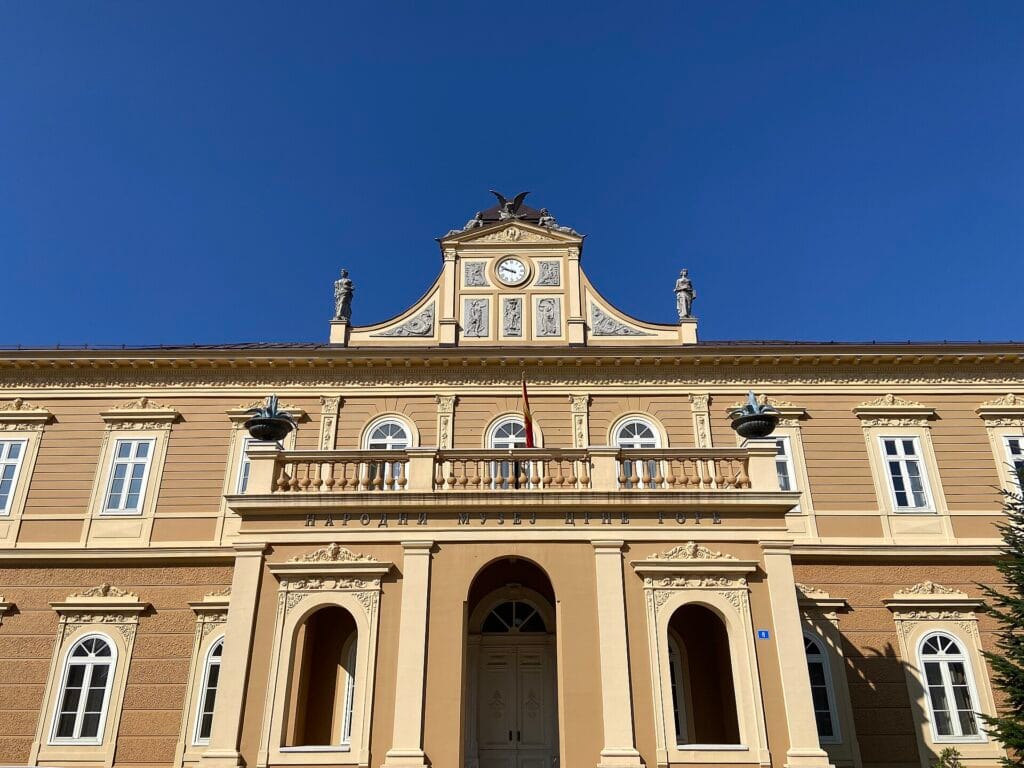
The museum is housed in several prominent buildings in Cetinje, with the main building itself possessing architectural and symbolic significance. The classical style aligns with the palace-like structures of the city, underscoring its historic role as the royal and cultural capital. The setting reinforces the experience of entering a space dedicated to national heritage.
The display style throughout the museum tends toward a conventional museum approach, with clear labels, artifact groupings by period or theme, and a linear flow designed to guide visitors through Montenegro’s history sequentially. Exhibits focus strongly on the objects themselves with explanatory panels providing historical context.
The lighting and case design generally prioritize preservation and clarity. However, some visitors may find that the density of display and reliance on textual information results in a more formal, less narrative-driven experience than contemporary museum trends emphasize. The museum opts for thoroughness over theatrical presentation.
For Families, Specialists, and First-Time Visitors
Families looking to visit the National Museum of Montenegro should note that while the exhibits are informative, the museum is not specifically tailored for younger children in terms of interactive elements or playful displays. Children with interest in history will find plenty of material to engage with, but younger family members may need guidance through the more text-heavy sections.
For specialists in Balkan history, archaeology, or ethnography, the museum’s holdings constitute a valuable resource. The provenance of several important artifacts and archival items supports research into the wider region’s complex history. While not a large research institution, the museum’s collection is significant enough to warrant attention from scholarly visitors.
First-time visitors or tourists unfamiliar with Montenegro’s history can use the museum as a solid introduction to the country’s cultural landscape. The chronological arrangement helps orient those new to the subject, though some prior knowledge of the Balkans may be needed to grasp the full historical nuances. Interpretive materials provide a starting point, but occasional deeper explanation or multimedia might help engage a broader audience.
What Works Best
The museum excels most clearly when it presents tangible, well-preserved artifacts that convey Montenegro’s layered past. Its archaeological and ethnographic objects stand out for their authenticity and variety. The historical displays are strong in highlighting Montenegro’s sovereignty and the continuity of its communities, fulfilling the institution’s core mission.
The art collection offers a restrained but worthwhile counterpoint to the historical narrative, reminding visitors of cultural vitality beyond political events. The architecture and setting enhance the overall sense of place, making the visit more than a simple museum walk-through.
Practical Considerations
Given that operational details can change, prospective visitors should consult the museum’s official website before planning a visit, checking for up-to-date information about opening times, admission, tours, and accessibility. The museum’s physical layout involves multiple buildings, which could require some walking outdoors depending on how the itinerary is organized.
Those who prefer more interactive or multimedia-rich experiences may find the museum’s approach comparatively traditional. Visitors interested primarily in contemporary museum technologies or having a very casual visit might consider supplementing their visit with other local cultural sites or guided tours covering Montenegro’s history.
The museum’s scope and depth mean that a visit can be paced to one’s interest level; those keen on detailed study may spend several hours, while others can follow the main displays within a shorter visit.
Verdict
The National Museum of Montenegro offers a substantial and thoughtfully assembled overview of the country’s history and culture. It fulfills its role as a national institution by presenting an extensive material record of Montenegro’s development from ancient times to modernity. The collection’s breadth across archaeology, ethnography, history, and art provides a multi-dimensional approach that serves both scholarly audiences and general visitors with an interest in the region.
On balance, the museum’s strengths lie in the quality and significance of its collections and its rootedness in Cetinje’s historic environment. Its conventional display methods and emphasis on detailed information may not align with all modern museum expectations, especially regarding visitor engagement and interactive interpretation. Nonetheless, those seeking a serious, object-based journey through Montenegro’s past will find the museum an informative and reliable venue.
For first-time visitors without prior background, the museum offers a useful foundation but might require some effort to fully appreciate the wider historical and cultural context. Scholars and history enthusiasts will likely appreciate the depth and provenance of key artifacts. Families with young children should prepare for a more traditional museum atmosphere rather than a play-oriented experience.
In summary, the National Museum of Montenegro stands as a central cultural institution that responsibly curates and presents a nation’s layered heritage. Visitors intending to engage with Montenegro’s history through physical artifacts and straightforward interpretation will benefit from its offerings, provided that practical considerations around planning and visitor needs are taken into account.