Kuwait National Museum Review
Kuwait City, Kuwait. The Kuwait National Museum stands as a primary institution for preserving and presenting Kuwait’s cultural and historical heritage. Established in the early 1980s, the museum holds a significant place within Kuwait City, embodying efforts…
Kuwait City, Kuwait. The Kuwait National Museum stands as a primary institution for preserving and presenting Kuwait’s cultural and historical heritage. Established in the early 1980s, the museum holds a significant place within Kuwait City, embodying efforts…
Best forMuseum lovers, culture travelers, first-time visitors
Review focusCollections, visitor experience, and practical planning
Historical Context
The Kuwait National Museum stands as a primary institution for preserving and presenting Kuwait’s cultural and historical heritage. Established in the early 1980s, the museum holds a significant place within Kuwait City, embodying efforts to document the nation’s rapid transformations from a pearl diving and trading society to a modern state impacted by oil wealth and geopolitical currents. The museum’s development is closely tied to Kuwait’s broader cultural investments during a period of substantial urban and economic growth. It emerged at a time when safeguarding the tangible and intangible heritage of Kuwait became a priority in response to modernization pressures and regional conflicts.
The museum’s founding coincided with a regional emphasis on heritage preservation, often motivated by emerging national identities and the desire to create cultural repositories that could narrate local histories amid significant political changes in the Gulf. It also functions as part of a wider government effort to anchor cultural education alongside Kuwait’s economic achievements. While the institution’s approach reflects a Kuwait-centered narrative, it also gestures toward the country’s connections with wider Arab and Islamic histories, maritime trade routes, and archaeological traditions. The result is a focused but layered historical framing, where Kuwait’s local history intersects with extensive cultural networks.
What You See on Arrival
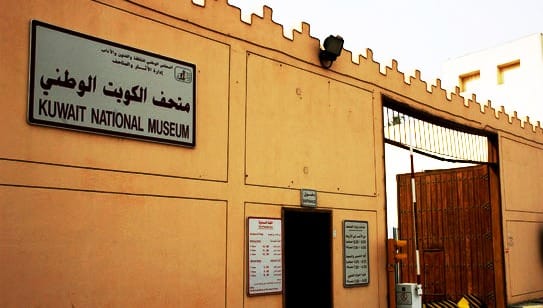
Approaching the Kuwait National Museum, visitors encounter an architectural complex designed to provide an orderly introduction to the country’s heritage under one roof. The museum’s external presentation is functional and unostentatious, situated within an urban setting where cultural institutions and public spaces cluster. The building itself offers a clear, institutional presence rather than an architecturally striking landmark. A visitor arriving on site is likely to perceive the museum as a formal cultural resource dedicated to national history and identity, reinforced by visible museum signage and an institutional tone.
The entrance area typically functions as a threshold between the city’s contemporary pulse and the heritage narratives housed inside. Visitor orientation spaces like lobbies or introductory galleries may establish thematic pointers toward Kuwait’s maritime past, Bedouin traditions, and early economic activities. The spatial layout suggests a structured visitor flow designed to guide exploration rather than a free-roam, experiential environment. This framing sets expectations for a museum focused on curation and education rather than entertainment or spectacle.
Highlights and Key Exhibitions
The core strength of the Kuwait National Museum lies in its dedicated display of Kuwaiti heritage spanning archaeological, ethnographic, and historical domains. Its permanent collections primarily navigate the story of Kuwait from pre-oil times to the present, combining archaeological finds, traditional crafts, and contemporary objects.
Archaeological artifacts form a crucial part of the galleries, illustrating Kuwait’s role within Gulf and Arabian Peninsula history. Finds from local sites show the existence of ancient settlements, trade relations, and material cultures tied to maritime trade and desert habitation. Pottery shards, stone tools, and small-scale sculptural elements offer glimpses into early human activity in the region, supporting narratives about pre-Islamic and Islamic period developments. Collectively, these artifacts highlight Kuwait’s position as a crossroads between Mesopotamian, Arabian, and Persian influences.
Ethnographic collections capture the social and economic life of Kuwait’s earlier communities. Exhibits include traditional clothing, household items, pearl diving equipment, and representations of tribal customs and crafts. These presentations provide insight into the daily lives and social structures before the oil boom reshaped society. Of particular note are displays reflecting the pearl industry, which was central to Kuwait’s economy and culture prior to oil discovery. The tools, pearl diving suits, and navigational instruments attest to a maritime heritage that defined local identity.
Another section addresses Kuwait’s more recent history, including the impact of oil exploitation, urban development, and geopolitical events in the 20th century. Photographs, documents, and media materials trace the country’s transformation and challenges, including the Gulf War period. While not exhaustive in contemporary history, these displays add a necessary continuum to the story.
Complementary to these themes, the museum contains collections highlighting Islamic art and calligraphy, extending the scope beyond local history toward shared cultural traditions in the wider Islamic world. These sections balance local specificity with regional artistic currents, although the focus remains primarily on Kuwaiti relevance.
Overall, the museum balances archaeological, ethnographic, and historical materials with objects that have strong cultural resonance. The chronological flow taken by the exhibits aids understanding of Kuwait’s changing landscape, while thematic groupings allow visitors to grasp significant aspects of life across time.
Visitor Experience
The Kuwait National Museum is designed principally for an audience interested in cultural history and heritage preservation. Given its comprehensive chronological approach, it appeals to those seeking a structured overview of Kuwait from multiple angles—archaeology, ethnography, and modern history. The museum’s presentation style is largely straightforward, favoring text panels, object displays, and photographs to contextualize items. This approach is suited to visitors who appreciate detailed explanations and factual narrative but may offer less engagement for those expecting interactive or experimental exhibition techniques.
Pacing through the museum tends to be linear, following a roughly chronological path that moves from Kuwait’s earliest archaeological findings toward contemporary developments. This allows a clear sense of historical progression, but could be seen as somewhat conventional when compared to more thematic or experiential museums. The collection’s scope means that some visitors might find certain sections denser or more specialized, especially the archaeological material, which can require close reading to fully grasp the significance.
Interpretation throughout the museum is respectful and informative but generally measured and cautious with controversial or sensitive subjects. For example, discussions of the Gulf War are present but are not exhaustively detailed or politically charged. Instead, the museum maintains a balanced tone appropriate to a national institution concerned with cultural heritage.
The museum’s strengths lie in providing a solid foundation in Kuwait’s cultural identity, especially for those less familiar with the region’s history. It offers clear, accessible narratives supported by authentic objects and archival media. However, the experience may not fully satisfy visitors seeking more contemporary art, cutting-edge museology, or a deeply critical reassessment of history. The lack of widely publicized temporary exhibitions focused on current themes may also limit repeat visits.
Tickets, Access, and Planning
Practical information about visiting the Kuwait National Museum should be verified via the museum’s official channels. This is recommended since opening hours, ticketing policies, and visitor services can change. The museum, situated in Kuwait City, is generally accessible by public transport or private car, reflecting its location within the city’s cultural district. Prospective visitors should confirm accessibility accommodations and facilities in advance if required.
The museum’s layout and content suggest that visitors allocate an hour or more to engage meaningfully with the displays, depending on interest level. While seating areas and resting points are common, the building’s size supports moderate visitor flow without significant crowding. The educational tone and presentation style make it suitable for school groups and those interested in cultural history.
As with many national museums, it is advisable for visitors to prepare by reviewing the museum’s website for any updates about special events, temporary closures, or COVID-related measures that could affect access.
Final Verdict
The Kuwait National Museum stands as a significant cultural institution dedicated to preserving and presenting the country’s heritage through a traditional museum model. Its focused scope embraces Kuwaiti archaeological finds, ethnographic material, and historical documentation, providing a comprehensive overview from ancient times to the modern state. This makes it a useful resource for those seeking a broad but concrete understanding of Kuwait’s past and identity.
While the museum does not emphasize flashy or experimental display methods, it offers carefully curated content with detailed interpretation that anchors objects within their cultural and historical contexts. This approach serves the educational mission well and suits visitors interested primarily in history, culture, and heritage rather than entertainment or avant-garde museology.
However, the museum’s omissions of extensive contemporary art, limited coverage of recent social and political complexities, and absence of widely known temporary exhibitions may moderate its appeal for audiences desiring a more dynamic or critical cultural experience. Furthermore, for international visitors, some sections might feel more specialist and require patience with detailed textual information.
In sum, the Kuwait National Museum is best approached as a formal institution committed to cultural preservation and education. It plays an important role in documenting and sharing Kuwait’s story, especially within the Gulf region’s cultural landscape. Visitors interested in archaeological or ethnographic history will find relevant material here, alongside a sober historical narrative. Prospective attendees should consult the official website for current visitor information and be prepared for a museum experience anchored in tradition and cultural continuity rather than innovation or spectacle.