Palace of the Grand Dukes of Lithuania Review
Vilnius, Lithuania. The Palace of the Grand Dukes of Lithuania sits in Vilnius, the capital of Lithuania, and occupies a significant place in the country’s historical and cultural landscape. Originally constructed in the late Middle Ages,…
Vilnius, Lithuania. The Palace of the Grand Dukes of Lithuania sits in Vilnius, the capital of Lithuania, and occupies a significant place in the country’s historical and cultural landscape. Originally constructed in the late Middle Ages,…
Best forMuseum lovers, culture travelers, first-time visitors
Review focusCollections, visitor experience, and practical planning
Historical Context
The Palace of the Grand Dukes of Lithuania sits in Vilnius, the capital of Lithuania, and occupies a significant place in the country’s historical and cultural landscape. Originally constructed in the late Middle Ages, the palace served as the main residence of the Grand Dukes of Lithuania during the 15th and 16th centuries. This era marked Lithuania’s rise as a powerful state in Eastern Europe, notably through its involvement in the Polish-Lithuanian Commonwealth. The palace was not only the political hub but also the symbol of Lithuanian statehood and identity. It hosted important diplomatic gatherings, court ceremonies, and functions linked to the governance of the vast territory.
After centuries of decline, destruction, and transformation during various conflicts and occupations, the palace was reconstructed in the early 21st century to reflect its Renaissance and Baroque phases. The current museum aims to restore and interpret the legacy of the palace within the broader narrative of Lithuanian history. While the reconstruction is relatively recent, it is grounded in archaeological research and historical records. The project reflects a national effort to reclaim a key monument that was lost or significantly altered over time. This historical context is crucial to understanding both the significance of the site and the nature of the collections housed within the museum.
What You See on Arrival
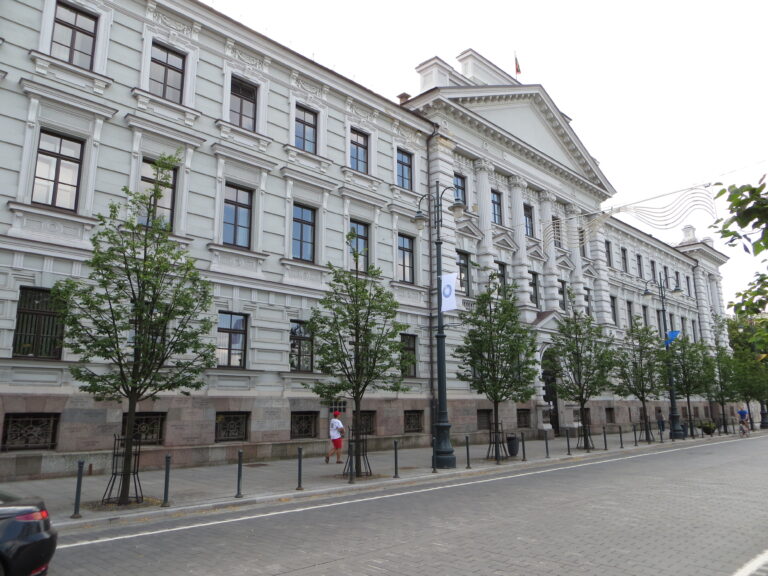
Visitors approaching the Palace of the Grand Dukes are met with an architectural ensemble that consciously evokes a blend of Renaissance and Baroque styles, aiming to recreate the grandeur of the former royal residence. The palace is situated prominently in Vilnius Old Town, an area known for its historic buildings and cobblestone streets. The modern reconstruction appears with clean facades and sculptural detail that attempt to mirror the original palace, set within public space that integrates historic monuments and open squares.
Upon arrival, the palace presents itself as a relatively compact but imposing structure, with several entrances and a courtyard designed to suggest the atmosphere of a former royal residence. The approach helps visitors frame the palace as a key cultural landmark within European heritage, specifically tied to Lithuanian national identity. The use of large windows, classical pilasters, and decorative elements signals that this is a museum space as well as a reconstructed historic building.
Inside the immediate perimeter, visitors will notice interpretative signage and information points designed to orient them toward the collections and exhibitions within. The museum’s identity here is clear: it is a place focused on recovering and showcasing Lithuania’s grand ducal past, alongside cultural and political history from the late medieval through early modern periods. On arrival, many visitors will get an early sense of the building’s historic layers and its role as a visual and interpretative anchor in Vilnius.
Highlights and Key Exhibitions
The core of the museum’s appeal lies in its collection and exhibitions relating to the Lithuanian Grand Duchy and the political and cultural dynamics of the era. The exhibitions cover the period roughly from the late 14th century, during the height of the Grand Duchy’s influence, through its union with Poland and the subsequent centuries up to the dissolution of the Commonwealth.
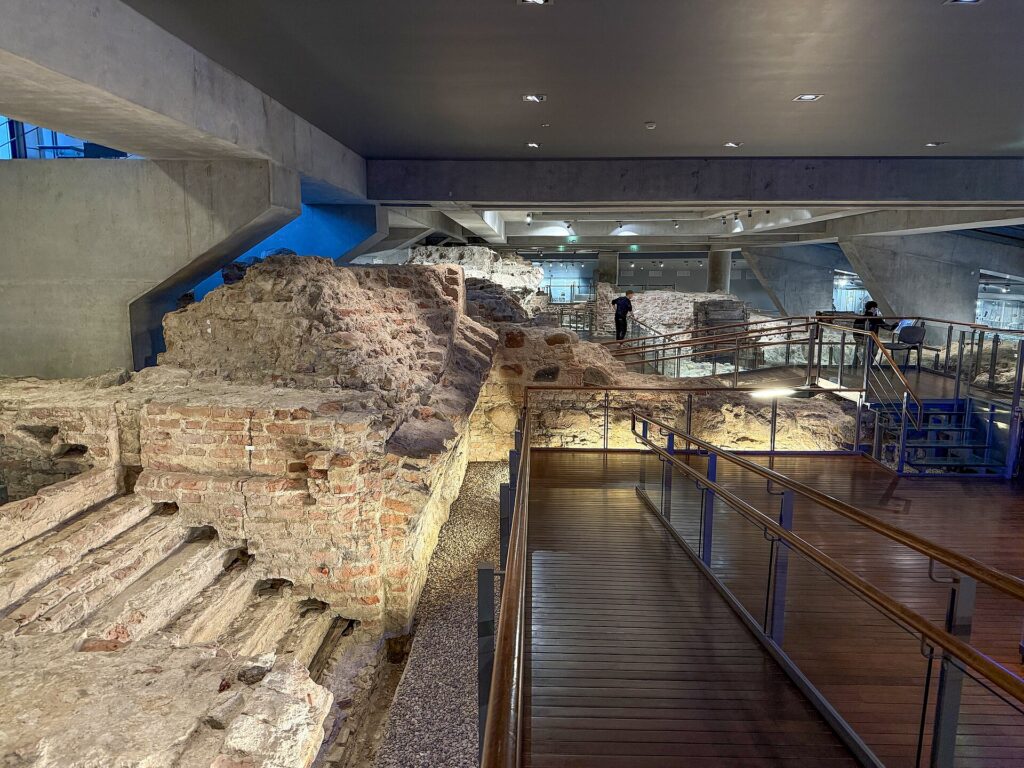
A key theme throughout the displays is the role of the palace itself as a seat of power and residence for the ruling dynasty. This is explored through archaeological artifacts uncovered on the site, including architectural fragments, decorative elements, and everyday objects that help reconstruct the environment of the court. The museum presents large-scale reconstructions and models of the original palace layout, enabling visitors to understand its structure and functions.
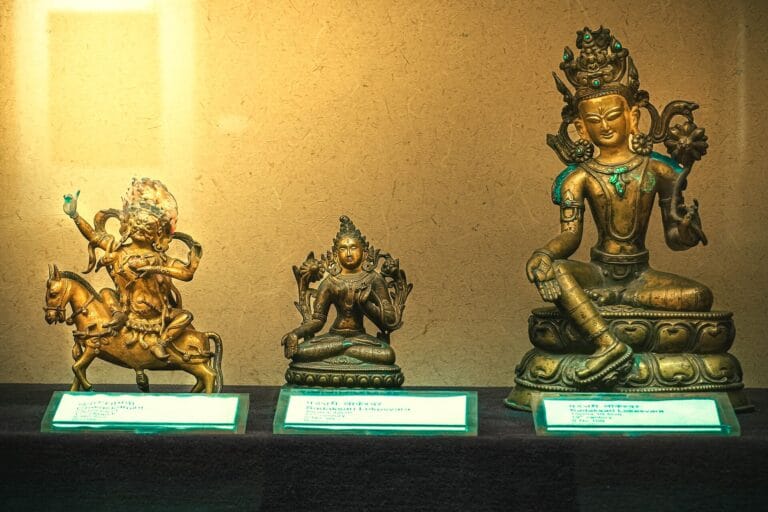
Among the most notable exhibits are collections of heraldry, and military artifacts such as armor and weapons that illuminate the martial traditions of the Lithuanian state. These items contextualize Lithuania’s role in regional conflicts and alliances during a turbulent period in Eastern Europe. Additionally, exhibits display religious art and manuscript fragments that underscore the coexistence and interaction of various cultural influences in the Grand Duchy, including Orthodox, Catholic, and pagan traditions.
Portraits and ceremonial objects also form a substantial part of the collection, helping visitors visualize the individuals who shaped Lithuanian history. Historical documents and diplomatic correspondence further gather attention by illustrating the complex political negotiations and alliances, notably the union with Poland and relations with neighboring powers.
While the palace’s reconstruction limits exhibition space compared to larger institutions, the museum focuses on depth within its chosen historical frame. The narrative is strong on Lithuania’s national history but can feel somewhat narrowly centered on elite history and political power, with less attention to social or economic history of the period. Visitor interest in broader cultural or artistic trends outside the palace’s immediate context may find the scope somewhat limited.
Visitor Experience
The visitor experience at the Palace of the Grand Dukes of Lithuania is shaped by the combination of its role as a historic site and a contemporary exhibition space. The museum encourages a moderately paced, contemplative visit where audiences can absorb detailed historical information alongside visual and material culture displays.
The layout supports a roughly chronological or thematic flow, with exhibition halls guiding visitors through the grand ducal period, the political union, and the eventual decline of the Commonwealth. The artifacts are presented with clear explanatory panels, and the exhibition design prioritizes clarity and accessibility over theatrical effects or extensive multimedia. This makes the experience straightforward for a broad range of visitors, including families, students, and history enthusiasts.
Interpretative materials lean heavily on historical texts and descriptive labels. While this provides a solid factual foundation, some visitors might find the exhibition less engaging if they prefer immersive or interactive presentation styles. The inclusion of architectural models, artifact reconstructions, and scale maps, however, aids spatial understanding and gives context to the complex political history.
The museum suits visitors with a focused interest in Lithuanian history, Renaissance and Baroque architecture, and early modern European political structures. Its emphasis on the palace as a site of power may appeal particularly to those fascinated by court life and statecraft. On the other hand, visitors looking for a broader cultural panorama, including folk history or the experiences of common people during this time, might find the scope somewhat narrow.
In terms of visitor flow, the relatively small footprint of the museum means that busy periods might result in some crowding, particularly around the more popular exhibits and viewing points in the reconstructed interiors. The museum’s integration with Vilnius’s wider historic urban fabric offers the opportunity for visitors to combine the visit with a walk through surrounding landmarks, enhancing context and variety.
Tickets, Access, and Planning
Information on tickets, opening hours, guided tours, and other practical details can change, so prospective visitors should consult the official Palace of the Grand Dukes of Lithuania website for up-to-date guidance before planning their visit. This is particularly important for visitors arriving from abroad or at peak tourist seasons.
The museum is located in Vilnius’s Old Town, easily accessible on foot from many central points in the city. Public transport connections and proximity to other cultural sites make it feasible to include the palace visit in a broader excursion through the city’s heritage district. Details on accessibility for visitors with mobility challenges should be verified in advance, as historic areas and reconstructed interiors may pose difficulties.
Given the museum’s focus and size, visitors may wish to allocate a minimum of an hour to an hour and a half to engage fully with the exhibitions. Those seeking deeper engagement with the history or wishing to explore the surrounding urban sites might plan for additional time.
Final Verdict
The Palace of the Grand Dukes of Lithuania serves an important role in reclaiming and presenting a pivotal chapter of Lithuanian history. As a reconstructed historic site combined with a focused museum, it offers clear insights into the origins and development of Lithuanian statehood and its connections to broader European political currents from the late Middle Ages to the early modern period.
Its strengths lie in the careful selection of artifacts related to Lithuania’s political elite, the archaeological foundations underpinning the reconstruction, and the coherent narrative connecting the physical space to its historical function. The exhibitions succeed in illustrating the palace’s role as a hub of power, diplomacy, and culture. For visitors with a particular interest in this slice of history, the museum provides an informative and tangible experience not easily replaced by textual study alone.
However, the site’s recent reconstruction and relatively contained spatial scale inherently limit some aspects. The museum’s concentration on elite history and political narratives means there is less coverage of everyday life and broader social contexts during the palace’s peak periods. The exhibition design remains traditional and may not appeal to visitors seeking more interactive or multimedia-rich museum formats.
In short, the Palace of the Grand Dukes of Lithuania is best approached as a focused, documentary museum that emphasizes historical authenticity and political history through its collection and setting. It complements visits to Vilnius’s historic center and contributes to an understanding of Lithuania’s national heritage. Potential visitors should prepare by reviewing current visitor information and consider pairing the visit with other nearby sites to achieve a more varied historical and cultural experience.