Fur Museum Review
Nederby, Denmark. The Fur Museum, located on the island of Fur in Denmark’s Limfjord, situates itself uniquely at the intersection of natural history and regional cultural heritage. Established in 1954, the museum arose from local efforts…
Nederby, Denmark. The Fur Museum, located on the island of Fur in Denmark’s Limfjord, situates itself uniquely at the intersection of natural history and regional cultural heritage. Established in 1954, the museum arose from local efforts…
Best forMuseum lovers, culture travelers, first-time visitors
Review focusCollections, visitor experience, and practical planning
Historical Context
The Fur Museum, located on the island of Fur in Denmark’s Limfjord, situates itself uniquely at the intersection of natural history and regional cultural heritage. Established in 1954, the museum arose from local efforts to highlight and preserve the rich fossil beds abundant in the area, particularly those dating to the Eocene Epoch around 55 million years ago. Fur Island itself is well-known among geologists and paleontologists for its well-preserved fossil record, yielding fish, insects, birds, and plants from a period of rapid climatic and environmental change.
Beyond paleontology, the museum embodies the island’s broader cultural narrative, engaging with the history of local life, fishing traditions, and island geology. Its foundation reflects a mid-20th-century focus on scientific discovery mediated by community involvement. While it operates on a relatively modest scale compared to Denmark’s larger state-funded institutions, the Fur Museum plays an important role in disseminating specialized knowledge about the island’s natural and cultural evolution.
Over the decades, the museum has expanded its collection and educational remit, striving to balance rigorous scientific content with accessibility for visitors largely drawn from outside the specialist paleontological community. The emphasis remains on showcasing the exceptional fossil finds that have made Fur notable internationally among geosciences. This regional focus also allows the museum to contribute insight into how Denmark’s specific landscape and history connect to broader biological and geological developments.
What You See on Arrival
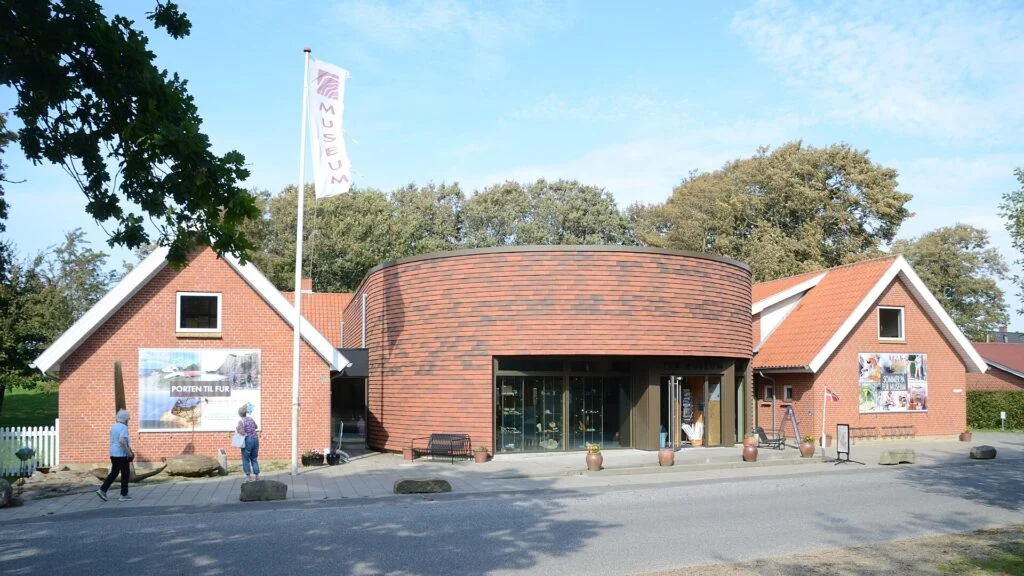
Approaching the Fur Museum gives a clear sense of its dual focus on nature and local culture. The museum stands within a rural setting on the island, surrounded by landscape that itself hints at geological significance. Visitors are met with a small, low-profile complex designed to integrate with the environment while clearly marking a dedicated space for learning and exhibition.
The exterior architecture is functional and unpretentious, reflecting the museum’s focus on substance over spectacle. While not designed as an architectural landmark, the entrance area is arranged to provide practical orientation for visitors, with signage and displays that introduce the visitor to Fur’s geological importance even before entering. The impression is of a place oriented to serious learning rather than tourist entertainment, and this positioning affects expectations: this is not a broad heritage showcase but a focused natural science venue with a regional cultural dimension.
Inside, the initial galleries immediately establish the museum’s identity as both a repository for fossil material and a cultural institution dedicated to Fur island life. The transition from the outdoors to the interpretive space is straightforward, with an emphasis on clear communication of scientific facts within a narrative framed by place. The visitor is invited to consider Fur’s geological past as foundational to its current environment and community.
Highlights and Key Exhibitions
The core of the Fur Museum’s collection lies in its impressive array of fossils from the moler formation, a notable deposit that has yielded one of the most comprehensive windows into early Eocene ecosystems in Europe. This formation is characterized by its diatomaceous earth layers interspersed with volcanic ash. This unique geological makeup has preserved not only skeletal remains but delicate impressions of soft tissues, which are rare in the fossil record.
Among the most significant specimens on display are detailed fossils of fish, ranging from predatory species to smaller schooling fish, which illuminate aspects of ancient marine food webs. The museum also features fossil insects, some exquisitely preserved with wings and body structures intact, shedding light on insect evolution and ecology during this period. Bird fossils from this era, though less numerous, contribute to understanding avian lineage diversification following the dinosaur extinction event.
Plant fossils play a complementary role in the exhibitions by contextualizing the ancient climate and terrestrial environments. Visitors can observe leaf imprints and seeds, which provide essential data on vegetation types and the climatic conditions of the Eocene in Northern Europe. The museum’s integration of fossils with sedimentary context, including visible stratigraphy and ash layers, underlines ongoing geological processes at work during fossil formation.
Beyond natural history, the Fur Museum devotes space to the human story of the island. Exhibits document traditional fishing methods, the island’s rural economy, and community living, which developed in tandem with the underlying geology that shaped island terrain and resources. Objects related to livelihoods, local crafts, and social history are presented alongside interpretative materials explaining how these practices arose from and adapted to the natural environment.
The design of the exhibits often juxtaposes scientific detail with accessible interpretative texts, diagrams, and photographs. This layered approach enables visitors with varying levels of interest to engage, whether they are specialists wanting detailed fossil descriptions or general audiences seeking broader contextual understanding. Models and reconstructions, sometimes available digitally or in physical form, help visualize prehistoric life forms, though the museum generally favors original specimens.
The museum does not appear to host large-scale international art or history exhibitions but remains consistent in its dedication to Fur’s unique geological and cultural narratives, which grounds the visitor experience in place-specific knowledge rather than grand thematic generalizations.
Visitor Experience
The Fur Museum caters primarily to visitors interested in natural history, geology, and regional culture. Its interpretation strikes a balance between scientific rigor and public accessibility but tilts towards audiences who possess some prior curiosity or background in paleontology, biology, or environmental science. Casual visitors to the Limfjord region might find the museum more specialized than other local attractions.
The layout tends towards a linear flow, guiding visitors through the geological timeline and cultural developments in sequence. This approach supports comprehension but may feel structured for those looking for a more exploratory or thematic experience. The galleries are generally compact, reflecting the museum’s scale, which means that the whole visit might be concise but densely packed with information.
Interpretative texts are clear and informative, though they demand attention from the reader, as the content involves technical terminology and scientific concepts. Labeling and signage are well designed to assist understanding, but those without interest in fossils or natural science may find the depth challenging. Conversely, educators or families with older children interested in earth sciences will likely find the displays stimulating.
Visitor flow is usually calm due to the museum’s location and specialized appeal. The relatively small crowds typical for this island setting contribute to an atmosphere conducive to focused learning and quiet reflection on fossil specimens and island history. The museum also serves an educational function locally, providing resources and events that engage school groups and researchers.
While the museum offers a meaningful experience for those drawn to the subject matter, it may be less engaging for those seeking interactive or multimedia-heavy exhibitions. The emphasis lies on authentic artifacts and straightforward explanation rather than entertainment technology or large immersive environments.
Tickets, Access, and Planning
As a regional museum on a small Danish island, the Fur Museum operates on a scale appropriate to its audience. While specific operational details such as opening hours, ticket pricing, discounts, guided tours, and audio guide availability can vary and should be confirmed through the museum’s official website, it is reasonable to expect that the institution follows seasonal patterns typical for smaller cultural sites in the region.
Given the island location, prospective visitors should consider transport logistics carefully. Fur is accessible by ferry, and access to the museum will depend on ferry schedules and local transport options. This may affect the ease of visiting, especially for those relying on public transport or arriving outside peak tourist months.
The museum’s facilities accommodate standard visitor needs, but those planning a visit should verify accessibility arrangements, especially if mobility needs require additional support. Any planned educational visits or group visits should also consult the museum in advance for the latest information on bookings and special programming.
While the museum’s compact size makes it manageable to explore without extensive time commitment, visitors looking for a deeper dive into Denmark’s broader geological or cultural history will need to supplement their visit here with trips to larger institutions elsewhere.
Final Verdict
The Fur Museum presents a concentrated and well-curated window into one of Northern Europe’s most intriguing fossil sites, paired with insight into the local cultural adaptations shaped by that environment. It succeeds in conveying the scientific significance of the Eocene fossils found on Fur Island while grounding these ancient natural histories in the ongoing human story of the community.
The museum's strength lies in its clear focus, accessible yet detailed presentation, and integration of geology, paleontology, and regional heritage. It is an especially valuable destination for visitors with a genuine interest in natural sciences or those looking to understand how local culture intersects with geology. Educators, students, and researchers with specialized interests will find its collections substantial and thoughtfully interpreted.
On the other hand, the museum’s specialized nature, modest scale, and relatively straightforward presentation may not satisfy visitors seeking more extensive cultural programming, diverse artifact collections beyond natural history, or cutting-edge exhibit technologies. Its island location also imposes some practical constraints on arrival and access that should be weighed when planning a visit.
In conclusion, the Fur Museum occupies a well-defined niche within Denmark’s museum landscape. It offers a focused, informative, and carefully managed experience suited to audiences drawn to earth sciences and local history. For those aligned with its thematic scope and prepared for its modest scale, it adds valuable depth to understanding both a unique geological site and the community shaped by it. Prospective visitors should consult the museum’s official channels for current details and consider how this specialized site fits into their broader travel or educational plans.