The Courtauld Gallery Review
Tickets & Tours
Compare ticket options and guided tours from trusted booking partners.
We may earn a commission if you book through these links.
Historical Context
The Courtauld Gallery in London stands as a significant institution within the British art landscape, especially recognized for its compact yet powerful collection of Impressionist and Post-Impressionist paintings. Its origins trace back to the vision of Samuel Courtauld, an industrialist and collector whose keen interest in art shaped the gallery’s initial holdings. The collection was initially housed in the Courtauld Institute of Art, founded in 1932 as an academic center dedicated to the study of art history. Over the decades, the gallery has evolved into a pivotal resource for both scholars and the public, balancing its role as a teaching collection with the desire to reach a wider audience.
Since reopening in 2021 after an extensive refurbishment and relocation to Somerset House, the Courtauld Gallery aims to reframe and expand the visitor experience with improved gallery spaces and a refreshed presentation of its collections. The institution is not just a repository of works but a reflection of early twentieth-century collecting practices, marked by significant loans and donations that have enriched its holdings. The gallery’s focus on French Impressionism and Post-Impressionism distinguishes it from larger, more encyclopedic museums, situating it as a specialty venue where key developments in modern art are distilled into a series of concentrated displays. This history provides a foundation for understanding the gallery’s curatorial priorities and visitor appeal.
What You See on Arrival
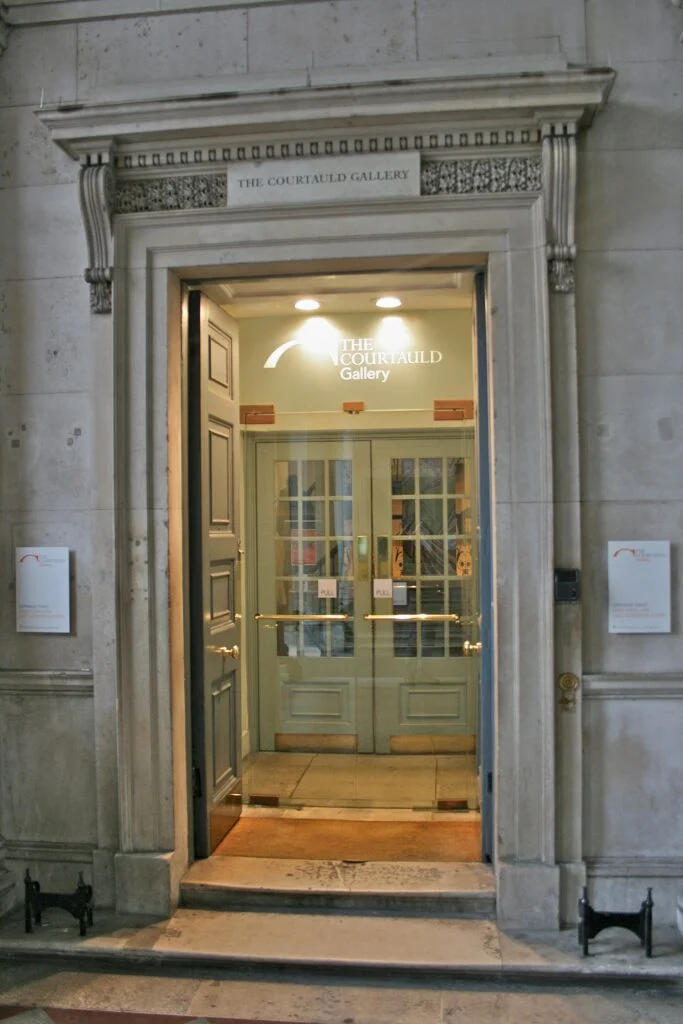
Visitors approaching the Courtauld Gallery encounter Somerset House, an imposing neoclassical landmark on London’s Strand, itself a major cultural hub with a variety of artistic institutions. The gallery occupies the North Wing, a wing that has been substantially renovated to accommodate its dual roles as an educational institution and exhibition space. The entrance to the gallery is architecturally integrated but discreet, fitting the building's classical weight while hinting at the contemporary nature of its contents.
Upon entering, visitors are likely guided into a modest but elegantly designed lobby punctuated by clear signage directing them toward the main galleries and ancillary spaces. The museum identity comes across through a careful branding that prioritizes clarity and a quiet modernity rather than opulence or spectacle. Visitors can expect a layout that reflects the Courtauld’s status as a specialist institution—spaces are not overwhelming in scale but deliberately shaped to encourage close visual engagement with the artworks.
The visual framing here is deliberate: the galleries combine natural and controlled lighting that balances the need to preserve delicate paintings with the desire to highlight color and detail, particularly crucial for the Impressionist and Post-Impressionist works on display. The setting itself—within a historical building that is newly adapted for art exhibition—creates a tension between old and new that is subtle but palpable from the outset.
Highlights and Key Exhibitions
The Courtauld Gallery’s collection is defined by its exceptional array of French Impressionist and Post-Impressionist paintings, providing a focused narrative on the progression of modern art between the late 19th and early 20th centuries. Among the most celebrated works are paintings by Claude Monet, Pierre-Auguste Renoir, Édouard Manet, and Paul Cézanne. Monet’s deft explorations of light and landscape emphasize the transitions from natural representation to impressionistic technique, while Renoir’s portraiture and scenes of everyday life reveal the movement’s social dimension. Manet’s work bridges Realism and Impressionism, embodying the tensions and innovations of his period.
Paul Cézanne’s contributions stand out for their structural approach, conveying a rigorous geometricity that influenced the evolution toward Cubism. The Courtauld’s Cézannes include landscapes and still lifes, allowing viewers to trace the artist’s persistent experimentation with form and perspective. These paintings provide a clear contrast to the looser, more spontaneous brushwork of his Impressionist contemporaries, emphasizing the variety of responses to modernity within this circle of artists.
Post-Impressionist highlights extend beyond Cézanne to include work by Vincent van Gogh, Paul Gauguin, and Georges Seurat. Van Gogh’s expressive brushwork and saturated palette are represented by notable canvases, placing visitors in intimate contact with the emotional intensity characteristic of the artist’s approach. Gauguin’s work contributes an important counterpoint, linking the formal concerns of Western art to broader cultural encounters through his paintings inspired by his time in Tahiti. Seurat’s pointillism advances another scientific and methodical turn in painting visible within the collection.
In addition to paintings, the Courtauld Gallery features an important small but distinguished collection of drawings, prints, and decorative arts. These include works from the Renaissance through the early 20th century, providing important context and a fuller understanding of the visual culture that framed its core collection. While the gallery’s focus is on painting, these complementary holdings can be particularly appreciated by visitors with specialized interests or an art historical grounding.
It is important to note that the gallery operates within spatial constraints that necessarily limit the size and scope of its displays. The Courtauld does not attempt to present a survey of art history but rather offers depth over breadth in its chosen specialism. Visitors looking for wide-ranging periods or large collections of British, Asian, or ancient art will not find those here in abundance. Instead, the emphasis remains firmly European and centered on a critical artistic moment around the turn of the 20th century.
Visitor Experience
The visitor experience at the Courtauld Gallery is best suited to those with an existing interest in art history or a serious desire to engage with a select group of canonical modernist painters. The layout encourages measured movement through the collection, with many paintings displayed at eye level and given room to breathe, which aids in focused contemplation. Smaller gallery spaces can foster an intimate atmosphere but might become congested during peak hours or special occasions, given the gallery’s popularity and limited physical footprint.
Information panels and labels offer detailed descriptions and contextual insights that support deeper understanding without overwhelming the visitor. The gallery’s academic affiliation ensures that the interpretive content tends toward the scholarly but remains accessible to a motivated general audience. There is a balance between technical explanation and narrative description, suitable for visitors who want more than just cursory information yet are not professional art historians.
Audience fit is strongest with students, art lovers, and those who appreciate quiet, reflective exploration over interactive or high-tech engagement. The Courtauld does not prioritize multimedia supplements or elaborate visitor entertainment, which some visitors may find a limitation if they expect a more digitized experience. On the other hand, this traditional approach respects the artworks and supports the contemplative nature of the collection.
Crowd management and flow within the newly refurbished Somerset House environment are enhanced but can still pose challenges during busy weekends or school holidays. To avoid the busiest periods, potential visitors might consider weekday or off-peak timings. The relatively small size of the gallery means a complete visit is manageable within a few hours, although those wishing to study individual works or read extensively may require more time.
Tickets, Access, and Planning
The Courtauld Gallery is housed within Somerset House, located in central London, which is well served by public transport including several nearby Underground stations and bus routes. Its central location makes it accessible for both city residents and tourists. Visitors should check the official Courtauld Gallery website before planning a visit to confirm the latest information on opening hours, ticketing policies, admission charges, discounts, accessibility services, guided tour availability, and any requirements such as timed entry or pre-booking.
Regarding access, while Somerset House and the gallery have undergone improvements to widen accessibility, it is advisable for visitors with mobility considerations to verify current provisions such as step-free access or facilities for visitors with disabilities. The scale of the building and the historic nature of parts of the property might present some physical challenges, despite contemporary modifications.
The gallery’s ticketing structure and policies may vary with temporary measures, for special exhibitions, or changing public health guidelines. It is worth consulting official sources for up-to-date details, especially if visiting in a group or with children. There is no single fixed visit duration recommended; pacing depends on individual interests and familiarity with the material.
Final Verdict
The Courtauld Gallery occupies a distinct and influential niche within London’s art museum scene. Its concentrated collection, centered on Impressionism and Post-Impressionism, offers a focused educational and aesthetic experience that is both distinctive and scholarly. The institution’s history as part of a research institute contributes to its strengths in display and interpretation, delivering an experience that is rewarding for those who value deep engagement with modern art’s key moments.
Its physical space, while recently enhanced, imposes natural limits on the scale and diversity of the collection on view. Those seeking a comprehensive survey of art history or a broad range of artistic cultures will find the Courtauld’s remit deliberately narrow. However, for visitors interested in the evolution of late 19th- and early 20th-century French painting, the gallery is uniquely rich.
Interpretive content is thoughtfully presented, striking a balance between scholarly detail and accessible explanation. Visitor flow is manageable but should be considered when planning a visit during busy times. The institution does not cater extensively to family groups expecting interactive experiences or casual visitors looking for broad entertainment.
In summary, the Courtauld Gallery is a resource that rewards informed visitors, students, and art historians with its focused and well-curated holdings. It is less suited to those expecting a traditional large-scale museum or a highly commercial visitor environment. For those who fit its profile, the Courtauld remains one of the most concentrated and significant displays of modern French art in London, making an important contribution to the capital’s cultural offerings. Prospective visitors are encouraged to consult the official website for practical details before planning their trip to ensure their visit meets expectations and logistical needs.