Museo Popol Vuh Review
Guatemala City, Guatemala. The Museo Popol Vuh in Guatemala City is dedicated to the preservation and presentation of the indigenous cultural heritage of Guatemala, with a particular emphasis on the Mayan civilization. Established at the Universidad Francisco…
Guatemala City, Guatemala. The Museo Popol Vuh in Guatemala City is dedicated to the preservation and presentation of the indigenous cultural heritage of Guatemala, with a particular emphasis on the Mayan civilization. Established at the Universidad Francisco…
Best forMuseum lovers, culture travelers, first-time visitors
Review focusCollections, visitor experience, and practical planning
Historical Context
The Museo Popol Vuh in Guatemala City is dedicated to the preservation and presentation of the indigenous cultural heritage of Guatemala, with a particular emphasis on the Mayan civilization. Established at the Universidad Francisco Marroquín, the museum takes its name from the Popol Vuh, a foundational sacred narrative of the K'iche' Maya people that chronicles creation myths, ancestral tales, and cosmological insights. Founded in 1979, the Museo Popol Vuh emerged during a period marked by increasing recognition of Guatemala’s pre-Columbian history amid a complex political backdrop. Its establishment reflected a growing scholarly and public interest in native cultures that long endured marginalization, especially relevant given the country’s turbulent 20th-century history involving ethnic conflicts and efforts toward cultural reaffirmation.
The museum functions not only as a repository of artifacts but as an educational hub that aims to reinterpret indigenous history through archaeological, ethnographic, and artistic materials. It offers a window into the rich cultural patterns spanning millennia, focusing on pre-Hispanic objects alongside colonial and contemporary indigenous art. The Museo Popol Vuh positions itself as a key institution for understanding Guatemala’s indigenous heritage while highlighting the continuity and transformations that have occurred across centuries. It notably serves an academic audience, local communities, and international visitors interested in Mesoamerican archaeology and ethnology.
What You See on Arrival
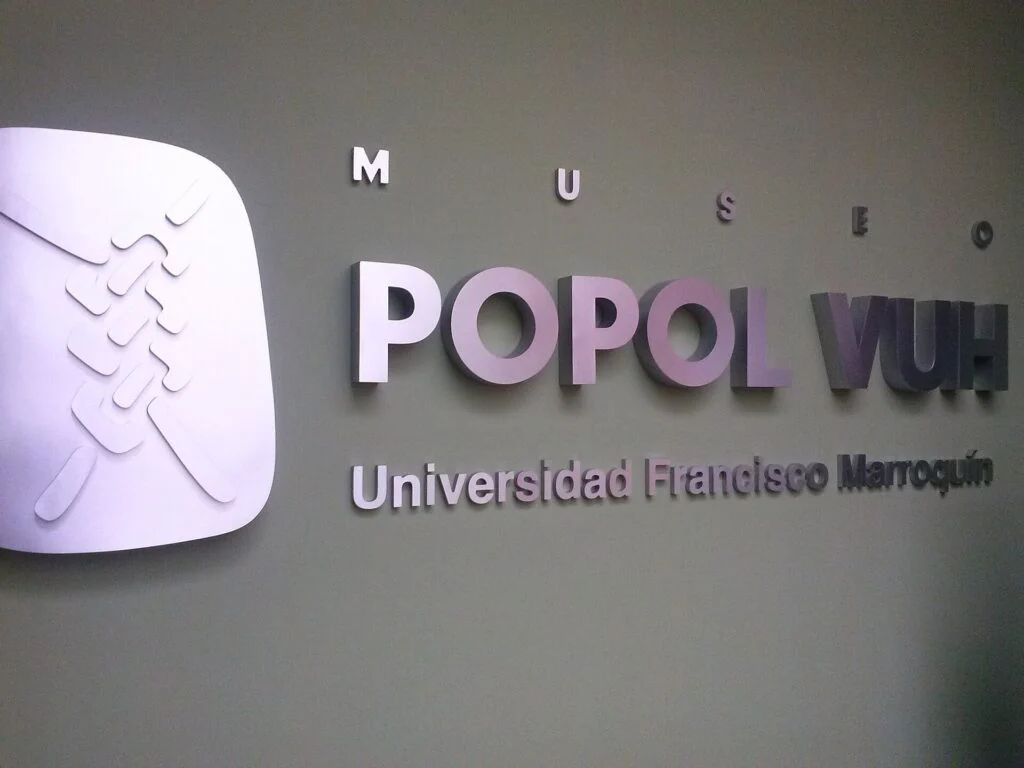
Approaching the Museo Popol Vuh, visitors encounter a modern museum building located within the grounds of Universidad Francisco Marroquín. The architectural style is functional and straightforward, avoiding grandiose statements; this sets a subdued but respectful tone before entry. Signage prominently identifies the institution by its evocative name but does not overstate its function, allowing the museum’s internal content to define its identity.
The entrance and lobby are likely arranged to orient first-time visitors with museum layout and thematic directions. Given its university affiliation, the space may feel somewhat institutional and academic rather than tourist-oriented, which aligns with its mission to emphasize research and serious scholarship. Information desks or introductory panels may situate the visitor with contextual background about the Maya and other indigenous groups featured within.
The museum’s external ambience, framed by the university campus, is calm and organized but does not necessarily prepare the visitor for an extensive cultural journey. It lacks grand entrance displays or monumental sculpture typical of larger national museums but communicates through quiet dignity the importance of the collections inside. This setting might appeal more naturally to those already interested in history or anthropology rather than casual visitors seeking entertainment.
Highlights and Key Exhibitions
The Museo Popol Vuh houses an extensive collection of artifacts drawn primarily from Maya archaeology but also encompassing other indigenous Guatemalan cultures and later colonial periods. Central to its holdings are ceramics, stone sculptures, hieroglyphic inscriptions, jade and obsidian objects, textiles, and ritual paraphernalia. The breadth and depth of these materials provide a detailed picture of life, belief, and artistry in ancient Mesoamerica.
Of particular note are the pre-Columbian items which document sacred traditions and social structures of the Maya. Visitors can expect to find examples of stelae and altars carved with mythological and calendrical motifs, alongside pottery illustrating everyday and ceremonial uses. These objects eloquently narrate themes of cosmology, kingship, and ancestral lineage referenced in the Popol Vuh text itself. The collection is valuable for illustrating the diverse artistic techniques and symbolic language characteristic of Maya culture.
The museum is also known for its ethnographic collections that shed light on contemporary indigenous communities in Guatemala. These exhibits often include textiles and traditional costumes, which allow visitors to appreciate the survival and evolution of ethnic identity over centuries. The juxtaposition of ancient artifacts with modern cultural expressions reflects a dynamic continuity rather than a frozen past.
The Museo Popol Vuh’s archaeological displays occasionally integrate findings from major regional sites like Kaminaljuyu—one of the most important ancient urban centers in Guatemala—connecting the broader narrative of Maya development with tangible locale-specific evidence. Such context enriches the visitor’s understanding of the geographical and historical landscape surrounding the artifacts.
The museum deliberately balances artistic appreciation with educational content, providing detailed labels, maps, and timelines. While focused on Maya culture, it does not exclude the histories of other groups within the region, making its scope well-rounded in terms of representing Guatemala’s ethnohistorical complexity.
Visitor Experience
As a venue primarily intended for education and cultural preservation, the Museo Popol Vuh offers visitors an experience that leans more toward thoughtful reflection than spectacle. The galleries are arranged to allow a logical progression through thematic and chronological sections, useful for audiences looking to deepen understanding over cursory viewing.
Language is a consideration. Much of the interpretive material is in Spanish, which suits local and regional visitors, but it may limit accessibility for monolingual tourists lacking Spanish proficiency. Some English descriptions may be present given the museum’s outreach, but this is not guaranteed, so international visitors should prepare accordingly.
The institutional atmosphere means visitor flow is likely calm, without the crowds or distractions found in larger metropolitan museums. This can benefit those wanting to study individual objects carefully or engage with the narratives on display without pressure. However, visitors accustomed to more interactive or multimedia-heavy presentations may find the museum’s offerings somewhat restrained.
The museum’s location within a university campus can also shape the visit. It may attract scholars, students, and researchers, creating a quiet environment conducive to study and inquiry. However, this setting might feel less inviting or accessible to families or casual visitors who prefer more entertainment-focused environments.
The interpretation style throughout the museum prioritizes clarity and historical context. Nonetheless, the focus on academic accuracy and indigenous perspectives means that some displays assume a degree of prior knowledge or interest in Mesoamerican cultures. Visitors completely new to Maya civilization might want supplemental reading to fully appreciate certain exhibits.
In summary, the Museo Popol Vuh suits those with a genuine interest in Central American archaeology, indigenous studies, and cultural history. It offers depth and authenticity rather than broad appeal or surface-level storytelling. While it does not heavily utilize modern museum technologies or sensory experiences, it compensates with the strength and rarity of its collections.
Tickets, Access, and Planning
Visitors interested in the Museo Popol Vuh should seek up-to-date practical information directly from the museum’s official channels. Hours of operation, admission fees, concessions, and special visitor provisions can vary and are subject to change, especially in light of broader public health or institutional policies.
As the museum is located inside a university campus, prospective visitors should check security and entry requirements to the Universidad Francisco Marroquín grounds. The area itself is generally considered safe and central within Guatemala City but standard travel precautions apply.
Given the museum’s orientation toward study and education, it may have limited amenities typical of larger city museums, such as cafés, parking, or extensive retail shops. Accessibility features should be confirmed beforehand for visitors with mobility impairments.
The museum’s size and layout suggest that a visit can be managed within a few hours, allowing time for a deliberate pace without rush. Strategic planning, particularly for non-Spanish speakers, may involve researching additional guidebooks or preparing language aids to enhance understanding.
Final Verdict
The Museo Popol Vuh fulfills an important role in Guatemala’s cultural landscape by focusing on the indigenous heritage that continues to shape the nation’s identity. Its collections stand out for their breadth and scholarly value, particularly for visitors seriously interested in Maya archaeology and ethnography. The institution maintains a clear educational purpose, reflected in the sober presentation style and academic atmosphere. This makes it a fitting place for those who appreciate museums as spaces of cultural learning rather than entertainment.
Where the Museo Popol Vuh might fall short is in its limited appeal for casual tourists or those expecting multifaceted visitor services and interactive exhibitions. Its focus on artifact preservation and historical narrative requires a more patient and engaged approach. Language barriers may present another hurdle for international visitors, though the core displays offer a substantial and insightful introduction to Guatemala’s indigenous past.
Ultimately, the museum’s strength lies in its integrity and depth. It is less a polished tourist destination and more a research-informed cultural repository. Visitors who align with this orientation will find the Museo Popol Vuh a valuable and enriching experience. Those seeking a broader, more multimedia-driven or accessible museum environment might consider complementing their visit with other cultural institutions in Guatemala City that offer different interpretive styles.
In conclusion, the Museo Popol Vuh deserves recognition for its critical role in preserving and interpreting the cultural legacies of Guatemala’s indigenous peoples. It offers a substantial resource for understanding Maya civilization beyond the surface level and presents an important counterbalance to dominant historical narratives. Its thoughtful curation and focused scope position it as a serious museum institution, best suited for those who value depth and cultural authenticity over spectacle.