Casa Buonarroti
Florence, Italy. Casa Buonarroti is a house museum in Florence, dedicated primarily to the early career and legacy of Michelangelo Buonarroti, one of the foremost figures of the Renaissance. It is not a large institution by…

Best forMuseum lovers, culture travelers, first-time visitors
Setting / nearbyFlorence, Italy
Overview
Casa Buonarroti is a house museum in Florence, dedicated primarily to the early career and legacy of Michelangelo Buonarroti, one of the foremost figures of the Renaissance. It is not a large institution by any means, but rather a focused cultural site that preserves a portion of Michelangelo’s family home and curates a selection of artworks and documents linked to the artist and his circle. The museum offers insight into the formative period of Michelangelo’s life, as well as how his reputation was shaped and maintained by his heirs.
Unlike the large state museums in Florence that hold extensive Renaissance art collections from multiple artists and patrons, Casa Buonarroti is more specialized. It concentrates on a narrower narrative centered around Michelangelo’s personal history, heritage, and artistic development. In this sense, it serves both as a historic house museum and an artist-focused collection, offering an intimate look at one of the towering figures of Western art through the prism of his early works and family context.
Collection Highlights
The collection at Casa Buonarroti is anchored by a number of Michelangelo’s earliest known works, including sculptures that show his youthful skill and ambitions before he achieved international fame. Among these are two small marble reliefs, the “Madonna of the Stairs” and the “Battle of the Centaurs,” which are often cited as fine examples of his early mastery of carving and composition. These pieces shed light on Michelangelo’s evolving style and his experimentation with classical themes and forms.
Aside from these sculptures, the museum holds some of Michelangelo’s sketches and drawings, which are valuable for understanding his creative process and approach to anatomy and movement. These works are not as frequently exhibited elsewhere and contribute to the museum’s unique appeal for visitors interested in the artist’s technical development.
Additionally, Casa Buonarroti maintains a collection of portraits, documents, and memorabilia related to Michelangelo and his family. Some paintings and items were collected by later generations who aimed to preserve and promote Michelangelo’s legacy. These materials contribute to the narrative of Michelangelo not only as an artist but as a figure whose family sought to frame his importance for posterity. The presence of period furniture and decorative elements within the house also provides a sense of how the museum’s setting was used throughout centuries.
Building and Setting
Located in central Florence, the museum occupies what was once the Buonarroti family residence. The building itself dates from the late Renaissance period, with architectural and interior features that reflect the aristocratic status of the family in Michelangelo’s time and afterwards. Visitors exploring the house get a view of both the intimate domestic spaces and rooms adapted for displaying artworks and documents.
The museum is arranged to offer a chronological and thematic experience, guiding visitors through the house’s rooms which contain sculptures, paintings, and archival materials. The way the collection is integrated into the building’s historic fabric adds to the overall atmosphere but also means that the museum is relatively constrained in size. As a result, it is a quieter venue compared with Florence’s larger museums, which may appeal to certain visitors but might feel somewhat limited to those expecting extensive exhibitions.
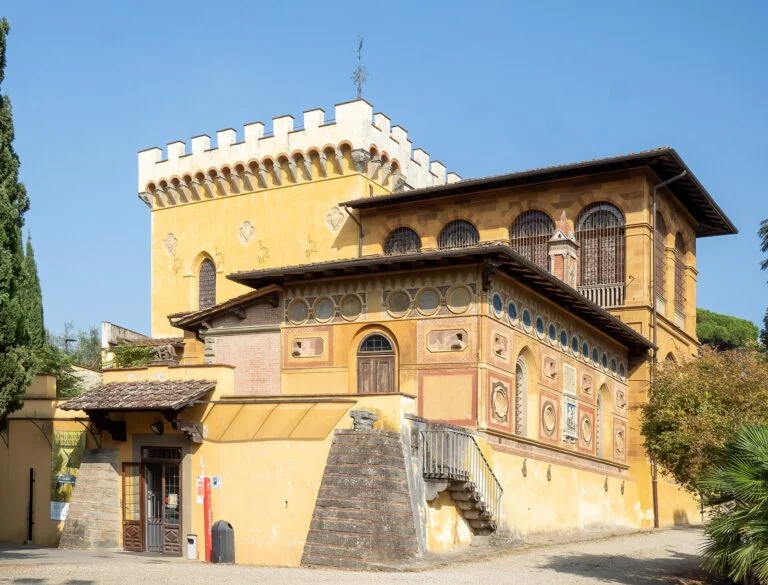
Its location within Florence’s historic center makes Casa Buonarroti accessible to those already exploring Renaissance art and architecture in the city. While the exterior does not have the scale or grandeur of Florence’s major palazzi or civic buildings, it offers an authentic sense of the private spaces associated with one of Italy’s most influential artists.
Practical Information
For anyone planning to visit Casa Buonarroti, it is prudent to check the museum’s official website for up-to-date details. Information such as opening hours, ticketing, reservations, visitor access, and potential guided services can vary, and it is best to consult the source directly before making travel arrangements.
The museum’s size and focused collection suggest that visits are likely to be on the shorter side compared to larger institutions. This can be beneficial for those seeking a concise experience without the crowds sometimes found in Florence’s more prominent art venues. However, the museum’s emphasis on Michelangelo’s early works and family heritage may be less appealing for visitors primarily interested in the broader range of Renaissance art.
Accessibility conditions, including provisions for visitors with mobility challenges, should also be verified in advance, as historic buildings can sometimes have limitations on wheelchair access or facilities. The museum’s location in the central part of Florence generally means that it is reachable on foot or by public transport from other key cultural sites.
Why Visit
Casa Buonarroti offers a distinctive opportunity to engage with Michelangelo’s formative years in a setting tied closely to his personal and family life. For visitors with a particular interest in Michelangelo himself — beyond the monumental sculptures and paintings he later produced — this museum provides context and detail not always available elsewhere. The early sculptures on display allow a more nuanced understanding of his artistic beginnings, while the family documents and preserved rooms illustrate how his legacy was curated by descendants.
However, this museum is not intended as a comprehensive art gallery or a general Renaissance overview. Its more specialized focus means that it suits visitors who already have some background or strong interest in Michelangelo or are looking for a quieter, more intimate cultural encounter. The museum’s smaller scale and limited collection size might make it feel modest compared to Florence’s larger institutions like the Uffizi or the Accademia, where Michelangelo’s most famous statue, David, is exhibited.
Ultimately, Casa Buonarroti’s value lies in its concentrated look at one aspect of Renaissance art history—the life and early work of Michelangelo as preserved by his family. For those interested in artist biographies, the history of artistic heritage, and Renaissance Florence’s domestic architecture, this museum has a clear role to play in understanding the period’s cultural complexity. It adds a personal dimension to the city’s many public collections and offers a place for reflection on the relationship between creativity, family, and memory.
In conclusion, Casa Buonarroti is a specialized museum with a clear identity and a focused collection that reveals earlier and lesser-known sides of Michelangelo. While it cannot compete with larger Florentine institutions in scale or scope, it provides a valuable complement for visitors seeking to deepen their understanding of this artist’s early achievements and family legacy in a quiet and distinctive Florentine setting.