The Sixth Floor Museum at Dealey Plaza Review
Dallas, United States. The Sixth Floor Museum at Dealey Plaza, situated in Dallas, Texas, offers a focused examination of one of the twentieth century’s most scrutinized moments: the assassination of President John F. Kennedy. Located in the…
Dallas, United States. The Sixth Floor Museum at Dealey Plaza, situated in Dallas, Texas, offers a focused examination of one of the twentieth century’s most scrutinized moments: the assassination of President John F. Kennedy. Located in the…
Best forMuseum lovers, culture travelers, first-time visitors
Review focusCollections, visitor experience, and practical planning
Historical Context
The Sixth Floor Museum at Dealey Plaza, situated in Dallas, Texas, offers a focused examination of one of the twentieth century’s most scrutinized moments: the assassination of President John F. Kennedy. Located in the former Texas School Book Depository building, the museum anchors itself to November 22, 1963, when Kennedy was fatally shot as his motorcade passed through Dealey Plaza. The building’s vantage point and historical role are central to the museum’s narrative, providing an uncommon opportunity to consider the event from a site intimately connected to the tragedy. This particular location has long been a focal point for researchers, journalists, and historians due to its direct line of sight and relation to the known events of that day.
The museum opened to the public in 1989 and has since maintained a research-centered approach to documenting the assassination and the extensive cultural and political fallout that followed. It seeks to present a detailed timeline, an accumulation of eyewitness accounts, photographic evidence, and official investigations, including the work of the Warren Commission and other federal inquiries. The significance of the museum lies not only in commemorating Kennedy’s life or the circumstances of his death but also in addressing the persistence of public interest, conspiracy theories, and unresolved questions. In this manner, the museum situates the assassination in its Cold War-era context while also touching on its lasting imprint on American society.
What You See on Arrival
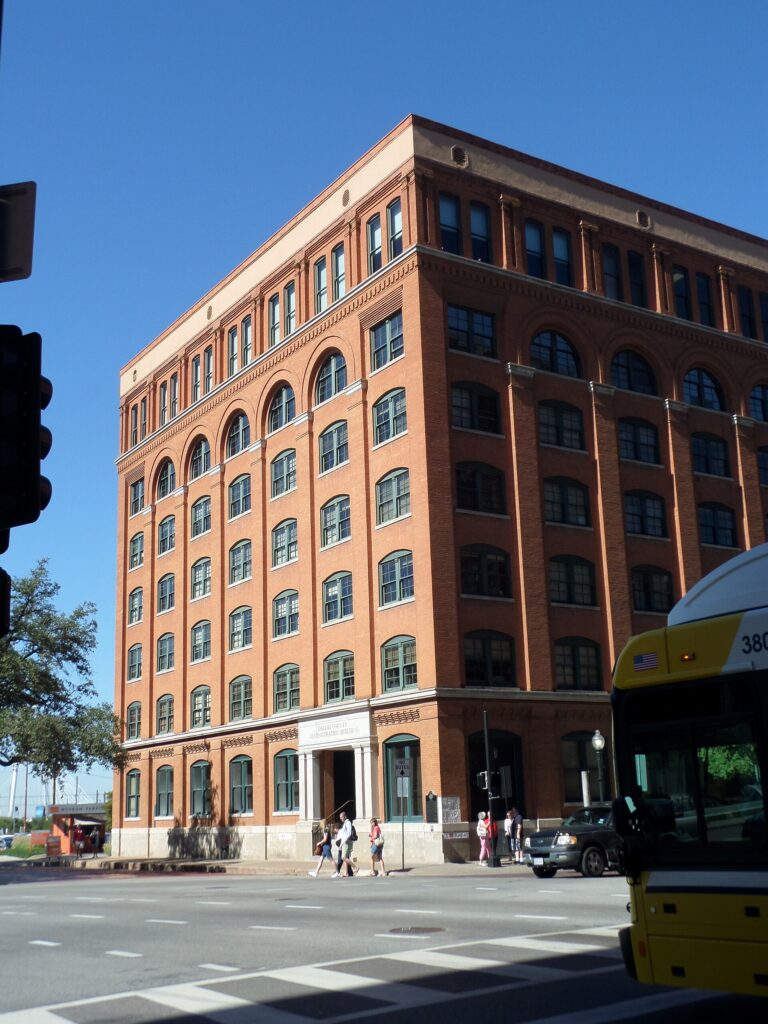
Approaching the Sixth Floor Museum, visitors encounter the historic depository building itself, a mid-century industrial structure whose outward appearance remains largely unchanged since 1963. The building’s relative plainness contrasts with the emotional weight it carries for many. The entrance leads into a well-marked lobby and orientation area where the museum’s identity is established through signage and introductory materials framing the site’s historical importance.
This first contact sets visitor expectations. The museum is clearly positioned as a place of historical inquiry and remembrance rather than a site for speculative or sensational storytelling. The external surroundings of Dealey Plaza also serve to remind visitors that the museum is part of a larger historic district, integrating urban setting and event geography. The plaza, grassy knolls, and nearby streets can be seen, underscoring the real-world dimensions of the assassination’s setting.
Inside, the museum emphasizes a chronological journey, with clear guidance that directs visitors through a sequence of displays and exhibits designed to build a multipart historical narrative. The design accomplishes a balance between documentary rigor and accessible visitor orientation, helping those unfamiliar with the details of November 1963 follow the evolving story.
Highlights and Key Exhibitions
The central focus of the museum’s exhibitions is the detailed reconstruction and interpretation of the assassination events. The Sixth Floor itself, from which the fatal shots were reportedly fired, houses one of the main interpretative displays. This space is arranged to offer a spatial understanding of how the shots might have been taken, along with exhibits that cover the physical environment, potential vantage points, and forensic conclusions. Geographic and photographic evidence are juxtaposed with archival film and audio recordings, creating a layered account of the timeline.
Elsewhere in the museum, exhibitions explore the political climate preceding Kennedy’s presidency and assassination. The cultural tensions of early 1960s America, the Cold War context marked by espionage and ideological conflict, and Kennedy’s policy positions on civil rights and foreign affairs are presented in concise panels and multimedia displays. This backdrop frames the assassination as a crucial moment within broader historical currents, highlighting why it resonated deeply within the national consciousness.
The museum also showcases extensive documentation from government investigations into the assassination, including the Warren Commission report, the House Select Committee on Assassinations findings, and more recent archival releases. Visitors can examine reproductions of photographs, declassified documents, weaponry analysis, and forensic reports. These materials convey the complexity and controversy surrounding official explanations while acknowledging gaps and conflicting interpretations.
Another significant aspect of the museum’s holdings involves personal effects and memorabilia connected to Kennedy and other key figures. While the collection does not attempt to be a memorial in the sentimental sense, these items add tangible connections to the individuals involved, from political allies to eyewitnesses. Radio broadcasts and newsreels also provide a sense of public reaction as news unfolded.
The curatorial choices underpin the museum’s educational mission. It balances empathy and factual detail, limiting speculative content but recognizing the persistent debates among historians and the public. The emphasis remains on primary source evidence presented with historical rigor rather than dramatization or conspiracy theory endorsement.
Visitor Experience
The visitor experience at the Sixth Floor Museum is structured and contemplative, suited mainly for those with interest in modern American history, political assassinations, and forensic inquiry. The linear layout encourages engagement with the narrative in successive stages — from Kennedy’s rise and presidency through to the detailed events of the assassination and the investigations that followed.
The pace suggested by the exhibition design discourages hasty movement, allowing time for visitors to absorb dense documentary materials and multimedia presentations. For some, particularly those less familiar with the era’s political background, the abundance of detail and official documents may require focused attention to fully appreciate the material. The museum’s tone is sober and measured; it neither sensationalizes nor trivializes the subject matter.
Interpretation employs a range of media, including archival film footage, photographs, audio recordings of news broadcasts and witness testimony, textual panels, interactive maps of the assassination site, and artifacts. While the exhibits are informative, the experience may be less engaging for visitors seeking a more interactive or dynamic display style. Those with a preference for traditional museological approaches or who value documentary sources will find the museum’s method effective.
Some visitors may find the emotional gravity of the museum’s subject matter intense. The careful presentation and respect for the facts help to moderate this, but the underlying tragedy remains unavoidable. The museum does not seek to turn the assassination into spectacle; the aim is to provide space for reflection, understanding, and inquiry.
The museum’s position within the urban fabric of Dallas also shapes visitor flow and experience. The combination of site-based interpretation and broader historical content offers something valuable for both history specialists and general audiences, although those without prior knowledge might face a learning curve.
Tickets, Access, and Planning
Details regarding tickets, hours, booking policies, and accessibility should be confirmed via the official website before planning a visit, as these aspects may vary seasonally or due to special circumstances. The museum is located several blocks from the downtown core with access to public transit options common in Dallas; however, potential visitors should check transportation and parking arrangements independently.
Because of the seriousness of the topic and the focus on historical documentation, the museum may not be suited for young children or visitors seeking casual entertainment. A visit is likely to require a moderate degree of physical stamina owing to the museum’s multi-floor layout and the density of material to be covered.
The Sixth Floor Museum usually allows for self-guided visits with informational signage and some multimedia stations. Confirming whether guided tours or audio guides are regularly offered requires direct inquiry with the institution. Due to the nature of the building and its historical features, accessibility might have limitations; it is advisable to verify the most current information if mobility constraints exist.
Final Verdict
The Sixth Floor Museum at Dealey Plaza stands as a considered and detailed repository concerning the assassination of John F. Kennedy, distinguished by its setting in the actual site of the event. It offers a methodical documentary approach that appeals particularly to visitors interested in a factual, evidence-based perspective on a complex historical event. The museum’s reliance on primary sources, official records, and archival footage provides a solid foundation for understanding both the assassination itself and its aftermath in American political history.
While the museum succeeds in maintaining a respectful tone and a focused narrative, its dense content and restricted interactivity might limit its appeal for those seeking a more varied or experiential museum visit. It does not shy away from the difficult questions but also avoids endorsing any specific conspiracy theories, maintaining a balanced stance that values documented investigation above speculation.
Visitors should prepare for a measured, sometimes somber engagement with the material, appreciating that the museum’s value lies in its role as a site of investigation and remembrance rather than entertainment. For historians, students, or those with an interest in mid-twentieth-century American politics, the museum offers a concentrated and thoughtfully curated experience.
Planning a visit requires attention to practical details found on the official site, as the museum’s subject matter and presentation style mean it demands time and focused attention. In sum, the Sixth Floor Museum at Dealey Plaza remains a significant resource for understanding an event that continues to provoke reflection and debate across generations.