Musée Zadkine Review
Art Museums · Paris, France. Musée Zadkine in Paris is dedicated to the work of Ossip Zadkine (1890–1967), a Russian-born sculptor who became a central figure in the Parisian avant-garde during the early to mid-20th century. Zadkine, who lived…
Art Museums · Paris, France. Musée Zadkine in Paris is dedicated to the work of Ossip Zadkine (1890–1967), a Russian-born sculptor who became a central figure in the Parisian avant-garde during the early to mid-20th century. Zadkine, who lived…
Best forMuseum lovers, culture travelers, first-time visitors
Review focusCollections, visitor experience, and practical planning
Historical Context
Musée Zadkine in Paris is dedicated to the work of Ossip Zadkine (1890–1967), a Russian-born sculptor who became a central figure in the Parisian avant-garde during the early to mid-20th century. Zadkine, who lived and worked in France for most of his career, is best known for his innovative explorations of cubism and expressionism in sculpture. His pieces often combine a fragmented geometric approach with a strong emotional undercurrent, blending influences from African art and European modernism. The museum itself occupies Zadkine’s former residence and studio near the Luxembourg Gardens, a location that reflects the artist’s long-standing ties to the Parisian art scene.
Established in the 1980s, Musée Zadkine arose from a bequest made by the artist’s wife, Valentine Prax, who sought to preserve and present Zadkine’s artistic legacy within the city that shaped his work. Over time, the museum has grown from a private collection into a public institution that holds a substantial range of his sculptures, drawings, and prints. While not a large museum by Paris standards, it has garnered respect for its specific focus and the intimate setting it offers visitors wanting to understand Zadkine’s contribution to 20th-century sculpture.
What You See on Arrival
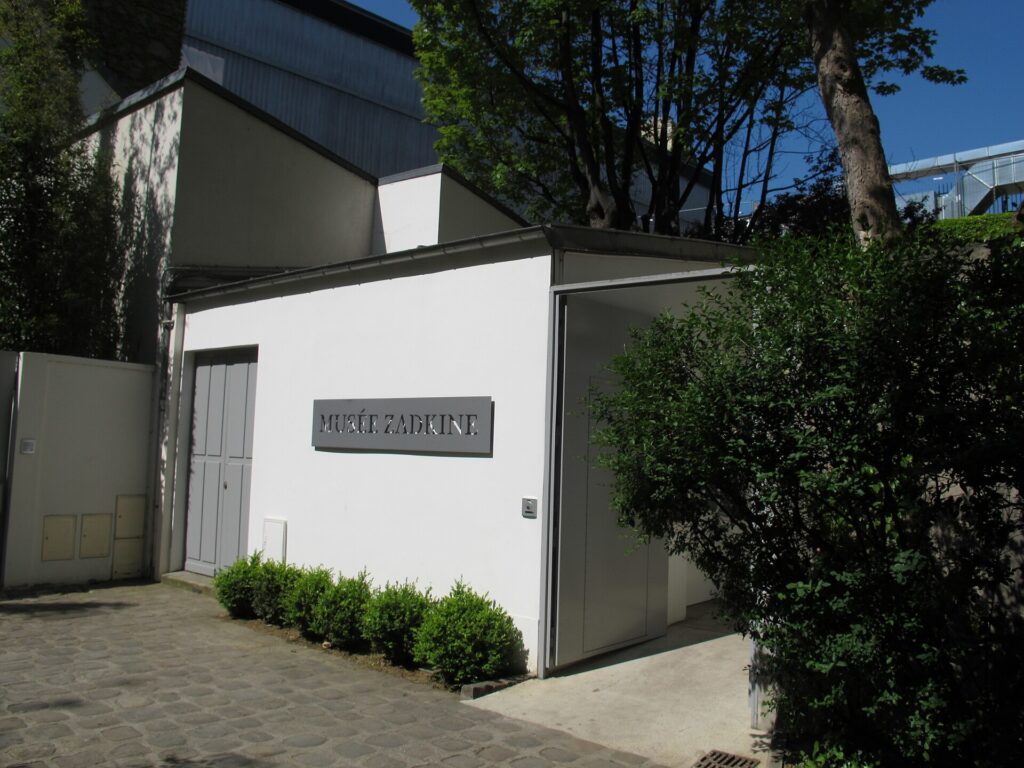
Located off a quiet street near the Latin Quarter, Musée Zadkine is housed in a modest villa with a small garden where some sculptures are displayed outdoors. The approach to the museum sets a tone that is both domestic and artistic rather than monumental or imposing. Visitors encounter a contrasting experience to the grand museums of Paris: here, the environment feels more like stepping into an artist’s personal world rather than entering a formal institution.
From outside, the building gives an impression of simplicity, reflecting the intimate scale of the collection and the personal nature of the museum’s origins. Its garden acts as a preliminary exhibit space, allowing visitors to engage with Zadkine’s work in natural light and with a sense of freedom. The limited size means there is no disorienting largeness or overwhelming expanses of galleries, which can be a relief for those interested in concentrated and focused viewing rather than a marathon cultural experience.
Highlights and Key Exhibitions
The museum specializes exclusively in Ossip Zadkine, thus offering a thorough presentation of his career without dispersing focus among other artists or unrelated periods. This concentrated collection allows for a detailed understanding of his development from early works influenced by cubism and African art to later, more expressive and monumental sculptures.
Among the highlights are many of Zadkine’s key sculptural forms, often carved in wood or modeled in bronze. His “The Destroyed City,” a famous sculpture commemorating the destruction of Rotterdam in World War II, typifies his ability to combine abstraction with emotional resonance, though the original is not housed here but referenced through smaller works and preparatory pieces. Within the museum, visitors encounter multiple busts, torsos, and fragmented figures that explore themes of fragmentation and reconstruction—hallmarks of Zadkine’s oeuvre.
Drawings and sketches are also well represented, expanding the visitor’s view of the artist beyond sculpture alone. These works on paper reveal the preparatory stages of his process and provide a closer appreciation of his compositional concerns. The presence of these drawings contextualizes the sculptures, illustrating the interplay between two and three dimensions in his practice.
Another significant element is the collection of photographs and archival materials related to Zadkine’s life and artistic circle. This documentation helps situate his career within the broader artistic milieu of 20th-century Paris, highlighting his connections with contemporaries such as Modigliani, Lipchitz, and others in Montparnasse. However, the archival content is supplementary rather than a core focus of the museum.
Careful curation arranges the works chronologically and thematically, making the museum a useful place for those interested in tracing the evolution of early modern sculpture through one artist’s lens. Yet, owing to its specialized nature, it does not cover the broader art historical movements in detail; visitors seeking comprehensive narrative on cubism or modernism as a whole will need to supplement their visit with other Paris institutions such as the Centre Pompidou or Musée d’Orsay.
Visitor Experience
For visitors with an interest in sculpture and 20th-century modernism, Musée Zadkine offers a quiet and concentrated environment. The museum’s compact scale means it can be explored at a measured pace, encouraging reflection rather than rapid circulation. The garden space complements the interior galleries by providing a different atmosphere where sculptures interact with natural surroundings, offering a change in perception as visitors move between indoor and outdoor settings.
Interpretive materials tend to focus on the artist’s biography, influences, and individual works, which supports an understanding of Zadkine’s formal experiments and thematic interests. Labels and text panels generally provide adequate context, though visitors without prior background in modern art might find some concepts lacking in depth or engagement. The museum’s focus on a single artist limits the narrative scope but deepens the encounter with Zadkine’s artistic process and output.
The museum’s atmosphere is likely to appeal most to those already somewhat familiar with modern art or those seeking a calm, contemplative experience rather than a broad survey or a highly interactive visit. It is not designed to absorb large crowds, and its size naturally governs the flow of visitors, which can be an advantage for those wanting a more intimate cultural experience within a major city like Paris.
Limitations include the relative narrowness of the collection’s focus and scale, which may not satisfy visitors expecting a comprehensive modern art museum experience. The museum does not extend significantly into interactive or multimedia presentations, which might limit appeal for groups with young children or visitors expecting digital engagement.
Tickets, Access, and Planning
The Musée Zadkine operates within the complex environment of Paris’s museum offerings, so planning a visit requires attention to practical details. Because it is a smaller institution, potential visitors should check the official website for up-to-date information on opening hours, admission policies, and available services before arranging their visit.
As with many specialized museums in Paris, ticketing policies might vary seasonally or due to special events, and accessibility accommodations should be confirmed in advance if relevant. The location close to central Paris and public transit options generally means access is straightforward, but since the museum is housed in a traditional villa with garden spaces, considerations regarding mobility and weather conditions apply.
The museum’s limited size means that visit duration is shorter compared to larger museums, but the visit should not be rushed to allow time for absorbing details in the sculptures, drawings, and archival materials. Group visit policies or guided tours, if offered, would further enhance understanding but require verification from official sources.
Final Verdict
Musée Zadkine occupies a distinctive place in Paris’s artistic landscape. It presents a focused and intimate portrait of one sculptor’s practice, offering a window into the evolution of modern sculpture through a singular, consistent artistic vision. The museum’s scale and setting encourage deliberate engagement and reflection rather than extensive survey, making it attractive to visitors with a specific interest in Zadkine or in sculpture of this era.
Its strength lies in providing a well-curated, authentic space that preserves the artist’s legacy with clarity. However, the limited scope and relatively small scale require potential visitors to temper expectations and consider Musée Zadkine as one element within a broader Paris art itinerary rather than a stand-alone comprehensive experience. Those seeking a concentrated look at an important figure in modern French sculpture will find value here, but those expecting a wider modern art overview or highly interactive features may find the museum’s offerings somewhat restrained.
In summary, Musée Zadkine works best as a focused cultural visit, suitable for art enthusiasts who appreciate close encounters with sculpture and are comfortable supplementing their experience with larger institutions elsewhere in the city. Its quiet charm and concentration provide insight into an artist whose work can easily be overshadowed in the crowded modern art scene, but the museum’s layout and resources reflect its specialized mission rather than a broader institutional ambition. Interested readers should consult the museum’s official channels for the latest information before planning a visit.