Musée des Beaux-Arts de Lyon Review
Art Museums · Lyon, France. The Musée des Beaux-Arts de Lyon stands as one of France’s most significant fine arts museums, both in terms of its collection size and historical roots. Established in 1803, the institution emerged during the…

Art Museums · Lyon, France. The Musée des Beaux-Arts de Lyon stands as one of France’s most significant fine arts museums, both in terms of its collection size and historical roots. Established in 1803, the institution emerged during the…
Best forArt lovers, visual culture, architecture
Review focusCollections, curatorial focus, and visitor planning
Historical Context
The Musée des Beaux-Arts de Lyon stands as one of France’s most significant fine arts museums, both in terms of its collection size and historical roots. Established in 1803, the institution emerged during the period of the Napoleonic reorganization of museum collections across France. Its foundation was part of a wider cultural effort to consolidate artworks confiscated from the Church and aristocracy during the French Revolution, alongside acquisitions from across Europe. The museum’s location in the former 17th-century Benedictine convent of Saint-Pierre situates it in the heart of Lyon’s historic center, providing a distinctive architectural setting that bears witness to its layered history.
Over the centuries, the museum expanded its holdings through purchases and donations, broadening its scope from its original focus on French and Italian Old Masters to include a more comprehensive array of European art. The collection reflects the tastes of different eras while also preserving a regional connection to Lyon’s artistic heritage. Its development parallels Lyon’s historical importance as a center of commerce and culture in France, factoring in both local and international influences. The Musée des Beaux-Arts thus functions not only as a repository of fine arts but also as a cultural institution deeply embedded in the city’s evolving identity.
What You See on Arrival
Approaching the museum, visitors are met with the striking façade of the former Benedictine convent, an imposing structure from the early 1600s, whose robustness contrasts with the delicacy of the art inside. Though the building underwent major renovations to accommodate museum functions, much of its original character remains, offering a blend of monastic austerity and refined classical architecture. The location, between the Place des Terreaux and the Rhône, marks it as a central cultural landmark.
Inside, the initial impression is one of spacious galleries connected by corridors that preserve the convent’s original layout. The architecture creates a steady progression through exhibition rooms that vary in scale and lighting, hinting at the diversity of the collection within. The museum identity is clearly conveyed through signposting and displays that emphasize the historical and artistic importance of the repertoire, from ancient Egyptian artifacts to modern paintings. Visitors should be prepared for a building where navigating the transition between different periods and artistic media is part of the experience, rather than a layout designed for rapid transit.
Highlights and Key Exhibitions
The core strength of the Musée des Beaux-Arts de Lyon lies in its dense, well-curated permanent collection spanning several millennia. It presents fine arts through a wide historical and geographic range, including paintings, sculptures, antiquities, and decorative arts, with particular emphasis on European works from the Middle Ages through to the 20th century.
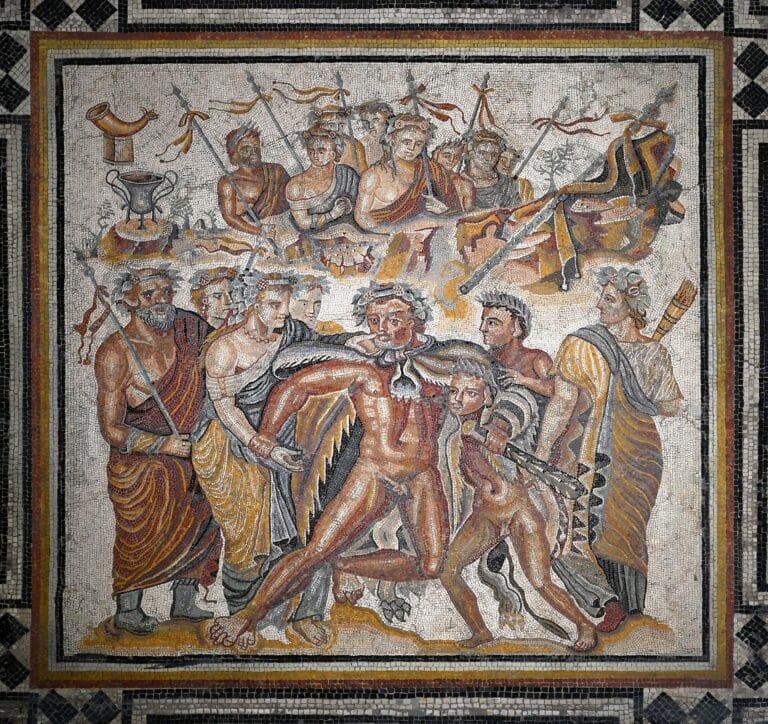
Paintings are a major component, with an extensive selection of works by French and Italian masters. Visitors can expect to find pieces by Rubens, Tintoretto, Georges de La Tour, and Delacroix, illustrating key styles such as Baroque, Renaissance, and Romanticism. The museum holds notable collections of Flemish and Dutch paintings, including representations by Brueghel and Van Dyck, allowing comparisons across schools and periods. The quality of these works supports close study of artistic techniques and thematic developments over centuries.
Sculpture also features prominently, with examples ranging from classical Roman statuary to modernist works. The proximity of sculptures to paintings within gallery spaces encourages examination of different mediums’ responses to similar artistic challenges. In turn, this cross-disciplinary display mode helps contextualize artistic production more fully.
The Musée des Beaux-Arts is also known for its substantial holdings of decorative arts and antiquities. Visitors encounter Egyptian artifacts—such as sarcophagi and funerary items—that open windows to non-European civilizations. The collection extends to Greek, Etruscan, and Roman relics, reflecting an interest in ancient art forms and their influence on later periods.
A noteworthy venue within the museum is the Cabinet des Arts Graphiques, dedicated to drawings and prints. This area allows for a closer, often more intimate interaction with works on paper, valued for their immediacy and insight into artists’ creative processes. The collection includes highlighted prints and drawings by artists like Piranesi and Rembrandt.
While the museum does not typically center its programming on temporary exhibitions, the permanent collection alone offers sufficient diversity and depth to merit significant engagement. Its layout encourages a chronological as well as thematic understanding, though comprehensive coverage of all art historical periods is understandably limited by spatial constraints.
Visitor Experience
The Musée des Beaux-Arts de Lyon offers a mostly contemplative museum experience aimed at audiences with an interest in traditional art history and museum-going. The building’s heritage character shapes a slow-moving visit, with moderate crowding due to its popularity but a sense of measured calm in the galleries. This makes it suitable for visitors who appreciate careful study of artworks in surroundings that visually echo the artworks’ historical periods.
Interpretation and labeling are generally thorough and accessible, addressing both art historical and technical details. While predominantly in French, signage often provides English translations. This dual-language approach supports international audiences but may require a basic level of patience with terminology and style more typical of museum scholarship than casual interpretation.
The museum’s layout encourages a paced progression, which serves educational purposes well but might frustrate visitors with limited time or those seeking a more dynamic or thematic route. The absence of permanent multimedia or extensive interactive elements means that the experience remains grounded in direct visual engagement with objects rather than digital augmentation. For those particularly interested in deep art historical knowledge or research, the museum’s holdings and reference spaces are beneficial. However, family visits with young children or casual passersby may find limited engagement options beyond the core artworks.
Limitations do arise from the architectural complexity of the site. Some rooms can feel cramped or less well-lit, and moving between floors occasionally involves a degree of physical effort, which may not suit all visitors. Given the convent origins, modern visitor flow and accessibility have certain constraints that might affect those with mobility challenges. Visitors should consult official sources to verify current provisions.
Tickets, Access, and Planning
For those planning a visit, the Musée des Beaux-Arts de Lyon is centrally located on Place des Terreaux, easily reachable by public transport options within Lyon’s network. Details regarding admission fees, discounts, guided tours, audio guides, and accessibility features are subject to change and should be checked directly via the museum’s official website or trusted local sources before visiting.
Visitors expecting to spend several hours will find enough in the permanent exhibitions to justify a thorough exploration. Planning to arrive when the museum is less busy can enhance the experience, though exact visitor numbers vary seasonally and with special events in the city.
While the museum does not typically host large-scale temporary exhibitions that require separate tickets, any special events or newly announced shows should be verified ahead of time. Additionally, given the historical nature of the building, accessibility for all visitors is improving but may still involve practical limitations; confirming up-to-date accessibility information is advisable.
Final Verdict
The Musée des Beaux-Arts de Lyon offers a substantial, well-ordered collection situated in an architecturally and historically interesting setting. Its strengths lie in the breadth and quality of the fine arts collection, particularly for visitors attuned to European painting and sculpture from late Antiquity through early Modern periods. The incorporation of non-European antiquities and decorative arts adds valuable context, broadening the museum beyond a purely Western canon.
The museum’s building shapes the visit in ways that are both enriching and limiting. The convent’s original structure provides atmosphere and historical resonance, yet also poses challenges in terms of visitor circulation and modern amenities. Its interpretive style favors thoroughness and scholarship, making it well suited for dedicated art enthusiasts, researchers, or those with a serious interest in art history. Conversely, it may feel static or less immediately engaging for casual visitors, families, or younger audiences seeking interactive elements.
Practical planning is important, as nuances about access, ticketing, and opening hours are subject to change. Those with mobility concerns or specific needs should conduct due diligence regarding accessibility before arriving. The museum’s location at a central Lyon cultural hub, close to other civic landmarks, offers the opportunity to combine a visit with a broader exploration of the city’s heritage.
Overall, the Musée des Beaux-Arts de Lyon holds a respected place in France’s museum landscape, providing an extensive survey of art history in a uniquely historic environment. Its collection merits attention for quality, range, and scholarly presentation, although prospective visitors should prepare for a calm, deliberate pace and a traditional museum atmosphere rather than one geared toward entertainment or rapid engagement.