California Automobile Museum Review
Automobile Museums · Sacramento, United States. The California Automobile Museum in Sacramento captures a significant chapter of American automotive history, focusing on the role of the automobile in California’s economic, social, and cultural development. Founded in 1987, the m…
Automobile Museums · Sacramento, United States. The California Automobile Museum in Sacramento captures a significant chapter of American automotive history, focusing on the role of the automobile in California’s economic, social, and cultural development. Founded in 1987, the m…
Best forClassic cars, automotive design, motoring heritage
Review focusVehicle collections, design history, and visitor planning
Historical Context
The California Automobile Museum in Sacramento captures a significant chapter of American automotive history, focusing on the role of the automobile in California’s economic, social, and cultural development. Founded in 1987, the museum has grown to represent a broad cross-section of automotive milestones, reflecting Sacramento’s position as a crossroads for various American industries and a hub of west-coast innovation. Its collection spans more than a century of automobile production, giving visitors a nuanced sense of how vehicles evolved not only as technological objects but also as cultural icons adapted to the needs of different eras.
This museum is distinctive for its regional emphasis combined with a national scope, illustrating California’s unique contributions to automotive design, manufacturing, and use. It marks the transition from early horseless carriages to the mass-produced vehicles that shaped modern life in the United States and beyond. Additionally, the collection sheds light on aspects of mobility that intersect with environmental changes, urban growth, and the rise of car culture, themes particularly relevant to the state’s sprawling geography and diverse population. The California Automobile Museum thus situates itself as more than a repository of vintage cars; it offers an archival narrative about the automobile’s impact on daily life in the American West.
What You See on Arrival
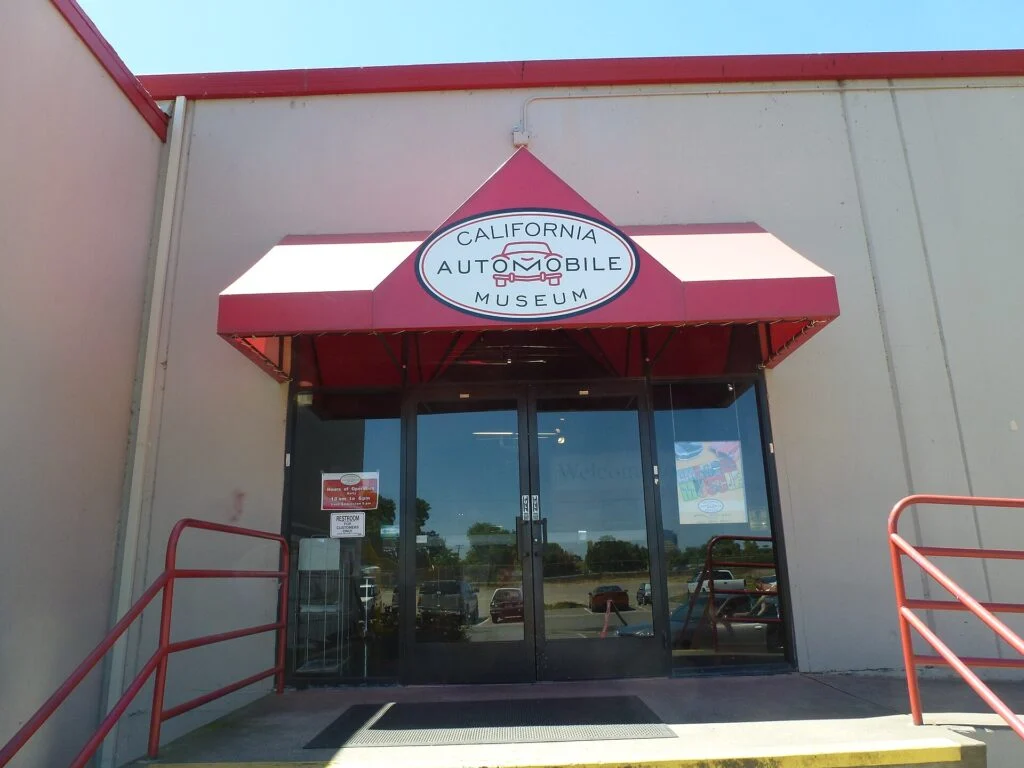
Upon approaching the California Automobile Museum, visitors are introduced to a functional, warehouse-style building that prioritizes space and accessibility for its collection. The exterior is straightforward, with signage that clearly identifies its purpose but does not lean into thematic storytelling or architectural flourish. This no-frills entrance aligns with the museum’s orientation toward the objects inside rather than creating an experiential threshold from the outside.
Inside, the visitor is immediately framed by rows of vehicles displayed on a spacious, concrete floor with modular ramps and platforms to optimize visibility. The open-plan layout allows an initial broad overview of the museum’s contents rather than presenting a rigidly chronological or thematic path right at the entrance. Early sightlines reveal a diverse array of vehicles and some interpretive panels that introduce California’s automotive history. However, the identity of the museum is distinctly grounded in historic automobiles functioning as artifacts rather than objects of art or purely commercial display.
In effect, the arrival experience sets expectations for a museum centered on tangible automotive heritage, inviting visitors to move at their own pace across a range of time periods and vehicle categories. There is a practical clarity to the presentation—less about spectacle, more about detailed appreciation—though this may require visitors to invest attention to connect the dots between individual cars and the broader historical narratives they represent.
Highlights and Key Exhibitions
The heart of the California Automobile Museum is its collection of approximately 150 vehicles spanning from the late 19th century to contemporary models, with a marked emphasis on California-producing makes and innovations. The collection’s strength lies in its breadth, combining early horseless carriages, classic American muscle cars, and rare examples of custom and commercial vehicles.
One of the significant highlights is the representation of early 20th-century cars that trace the local industry’s roots, including some rare models from lesser-known California manufacturers. These vehicles illustrate the experimental era of automotive design when inventors and companies were still defining what a successful car could be. The cars serve as evidence for various evolving technologies such as early electric starters, transaxle configurations, and emerging safety features.
Mid-century automobiles represent another key section, showcasing the post-World War II boom in car ownership and the distinct California car culture that emerged during this period. This includes an array of classic convertibles, hot rods, and vehicles emblematic of the rise of suburban mobility and freeway systems. The display often emphasizes the aesthetics of design innovation, reflecting broader social trends like the fascination with space-age forms and emphasis on leisure.
The museum also dedicates space to later 20th-century and early 21st-century vehicles that demonstrate transitions in automotive technology driven by performance, emissions regulations, and changing consumer priorities. Hybrid vehicles and the gradual inclusion of more fuel-efficient and environmentally conscious models mark California’s role in shaping contemporary automotive trends.
In addition to passenger cars, there is a notable collection of commercial and utility vehicles such as fire trucks, delivery vans, and military automobiles. These types highlight automotive technology’s role in public service and industrial applications within California and the wider American landscape.
Interpretative materials range from simple labels and photographs to more substantial panels exploring engineering advances, social context, and economic impact, though they tend to favor concise factual presentations over elaborate narratives. For those interested in automotive technology or the history of California’s car culture, this museum offers a substantive repository with authentic examples rather than broad thematic storytelling.
Visitor Experience
The California Automobile Museum caters well to visitors with a specific interest in classic cars, automotive history, and California’s regional identity in the development of transportation. The pace of exploration is mostly self-directed. The absence of a fixed chronological or thematic path allows enthusiasts to spend time with individual vehicles or categories that appeal most to them. However, this open format can leave casual visitors without a strong framework for understanding the significance of certain exhibits unless they engage actively with the available interpretive texts.
The museum’s layout supports easy movement and close examination of many vehicles, with some cars positioned on ramps or platforms to allow views of undercarriages, engines, and design details. This detail-oriented presentation will satisfy visitors with mechanical curiosity or a desire to see models that are otherwise hard to encounter in private collections or showrooms.
Interpretation tends to focus on the technical specifications, production history, and place within California’s automotive heritage. There is generally a clear avoidance of distracting multimedia or theatrical effects, which some visitors will appreciate for the straightforward education they provide. On the other hand, families with children or visitors seeking a more narrative or interactive experience might find the museum less engaging. The museum’s focus is firmly on authentic preservation and display rather than entertainment.
For automotive professionals, students, or historians, the collection offers valuable opportunities to study vehicle design evolution and local manufacturing trends. Enthusiasts of muscle cars, electric early vehicles, and utility models will find particular points of interest. However, those looking for a national or global perspective on automotive development may need to supplement their visit with other specialized museums.
Tickets, Access, and Planning
Practical details for visiting the California Automobile Museum can vary. Interested parties should consult the museum’s official website or contact them directly for the most current information regarding opening hours, admission fees, ticketing procedures, discounts, accessibility accommodations, guided tours, and any COVID-19 related protocols.
The museum's focus on a specialized collection implies that visitors should plan their visit with a clear interest in automotive history to gain the most from the experience. Casual drop-in sightseers without particular enthusiasm for cars may find the visit less compelling due to the straightforward presentation style and limited on-site amenities.
The museum is located in Sacramento, a city with various other cultural attractions and historic sites. Visitors may wish to coordinate a visit to the museum alongside exploring the broader area, but should verify local transit options or parking availability independently, as this information can shift according to events or municipal policies.
Final Verdict
The California Automobile Museum stands as a focused and well-curated institution dedicated to preserving and presenting the region’s automotive heritage with a clear emphasis on California’s contribution to the wider history of motoring. Its collection is substantial and varied, particularly strong in early and mid-20th century models, and offers detailed views of car evolution from multiple angles—including design, engineering, and social impact.
This museum will be rewarding primarily for visitors who come with an interest in automobiles, engineering, or California history. The straightforward presentation and absence of theatrical distractions provide a quiet space for study and appreciation, though the lack of broader interpretive narratives or interactive elements may limit its appeal for families or those seeking a more dynamic museum experience.
Planning to visit requires a modicum of preparation, primarily because the museum’s practical information such as hours, admissions, and services requires direct confirmation from official sources. Those mindful of their interests and the institution’s specialty will find a solid collection that adds tangible depth to understanding automotive history on the West Coast.
In summary, the California Automobile Museum offers an informative, well-maintained gathering of historic vehicles that will satisfy enthusiasts and historians looking for a concrete, object-driven experience rooted in the specific context of California’s automotive legacy. Visitors should approach with clear expectations and a willingness to engage directly with the material on display to fully appreciate what the museum delivers.