Quanzhou Maritime Museum Review
Maritime Museums · Quanzhou, China. The Quanzhou Maritime Museum in Quanzhou, China, is situated in a city historically tied to maritime trade networks that stretched across the Indian Ocean during the Song and Yuan dynasties. Quanzhou was once one…
Maritime Museums · Quanzhou, China. The Quanzhou Maritime Museum in Quanzhou, China, is situated in a city historically tied to maritime trade networks that stretched across the Indian Ocean during the Song and Yuan dynasties. Quanzhou was once one…
Best forMaritime history, ship lovers, port culture
Review focusMaritime collections, ship history, and visitor planning
Historical Context
The Quanzhou Maritime Museum in Quanzhou, China, is situated in a city historically tied to maritime trade networks that stretched across the Indian Ocean during the Song and Yuan dynasties. Quanzhou was once one of the largest and busiest ports in the world, acting as a principal gateway for the maritime Silk Road. The museum capitalizes on this rich history to present the story of maritime commerce, navigation, and cultural exchange that shaped much of East and Southeast Asia and beyond.
Established to preserve artifacts and knowledge surrounding Quanzhou’s seafaring heritage, the museum reflects the city’s significance as a nexus for merchants, sailors, and shipbuilders. Its narrative spans centuries, emphasizing Quanzhou’s role as a cosmopolitan hub where diverse cultures converged through trade, religion, and diplomacy on the waves. The museum’s collections and exhibitions aim to convey not only the technological and economic aspects of maritime history but also the human stories connected to this global network.
This institution offers a chance to appreciate maritime history from a Chinese regional perspective that intertwines local developments with broader transoceanic interactions. It situates Quanzhou within a complex maritime system, detailing navigation techniques, port city life, shipwreck findings, and local craftsmanship related to seafaring. The historical context grounds visitors in a maritime world that has been central to China’s external relations and internal development for centuries.
What You See on Arrival
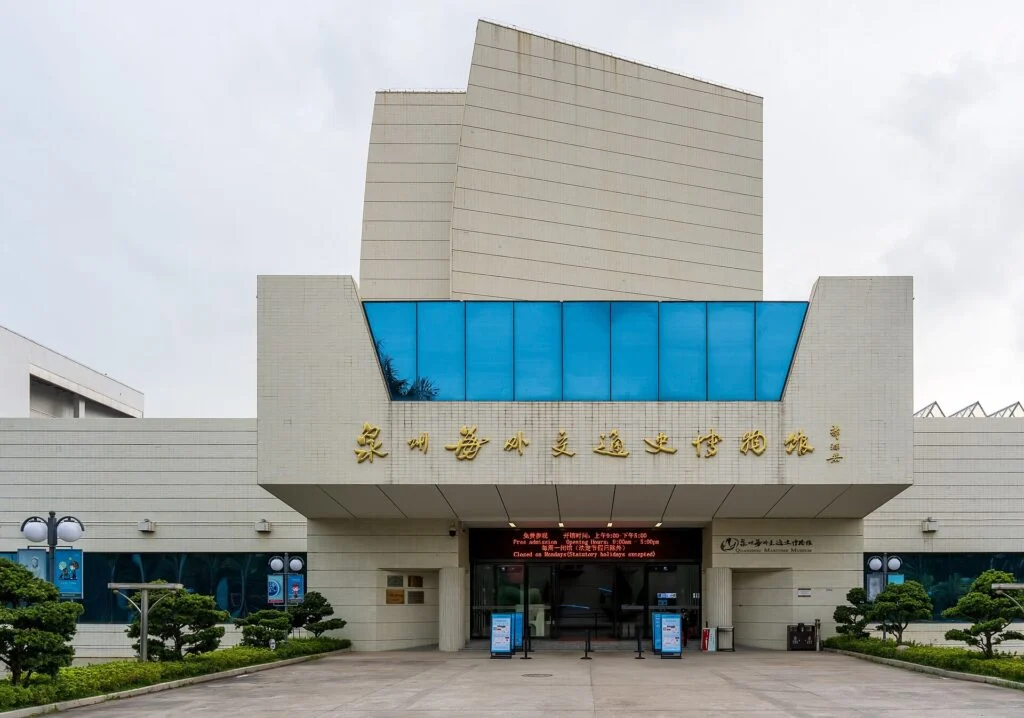
Approaching the Quanzhou Maritime Museum, visitors are likely to encounter an exterior that reflects its maritime focus, though architectural details and layout are not heavily ornate or grandiose. The museum’s position within the urban fabric of Quanzhou suggests it integrates with the city’s living heritage, rather than dominating it. Without extravagant façade treatments, it signals a focus on content over spectacle.
Inside, the entrance area generally serves as an initial orientation zone. This transitional space introduces the museum’s thematic concerns with banners, maps, or text panels setting the scene for maritime history. It acts as a frame, preparing visitors to move from the present city environment into a world shaped by ships, ports, and trade routes. The identity of the museum as a repository of regional maritime heritage is thus clearly established at the outset.
Visitors can expect to move from this introductory space into galleries organized around key themes such as seafaring technology, trade goods, shipwreck archaeology, and cultural interchange. The design likely integrates displays with artifacts like navigation instruments, ship models, ceramics, and historical documents. These features emphasize both material culture from the maritime domain and the broader historical processes connected to Quanzhou’s role as a port city.
Highlights and Key Exhibitions
The core of the Quanzhou Maritime Museum’s appeal lies in its collections that illustrate maritime trade activities and technologies from the Song dynasty onward, with objects dating primarily from the 10th to 14th centuries. The museum includes substantial ceramic collections recovered from shipwrecks, which demonstrate the city’s role in trading Chinese goods to destinations across Asia, the Middle East, and possibly further afield. These ceramics showcase not only local production but also styles reflecting intercultural exchange.
Ship models and navigation instruments are another central feature, allowing visitors to understand the technological achievements of mariners who sailed these seas. These displays provide insights into the design and construction of sailing vessels, including junks and other regional ship types. They also highlight how navigation techniques evolved with knowledge from different cultures, underscoring Quanzhou’s position as a crossroads of technological transmission.
Archaeological findings from nearby shipwreck sites form a distinctive portion of the museum’s exhibits. These include a range of cargo items, coins, and tools that offer a glimpse into maritime commerce and the risks involved in sea travel. The shipwreck artifacts enrich the narrative by bridging historical texts and material evidence, adding a layer of authenticity to the story of maritime trade routes extending beyond China’s shores.
Another significant dimension of the exhibition is its attention to cultural exchanges facilitated through maritime contact. Objects of foreign origin, including Southeast Asian, Middle Eastern, and South Asian artifacts, illustrate the diversity of cultures connected through Quanzhou’s ports. Religious artifacts reflecting Buddhism, Islam, and Christianity hint at the city’s multicultural character as a commercial hub where merchants and sailors brought their faiths and customs.
Throughout these galleries, there is a coherent focus on the practical and economic aspects of maritime history, accompanied by social and cultural contexts. This breadth allows different types of visitors—whether academic, enthusiast, or casual—to engage with the museum’s offerings on multiple levels. The museum does not only recount the glory of maritime trade but also addresses the complexity of these intercultural encounters and their long-term impacts.
Visitor Experience
The visitor experience at the Quanzhou Maritime Museum is likely to be structured and informative, though somewhat specialized. The content leans heavily on historical and archaeological sources, making it particularly valuable for those interested in maritime history, archaeology, and regional studies of East Asia. Its exhibition style presumably balances textual panels, artifact displays, and illustrative maps or diagrams.
Audience fit here is relatively focused. General museum-goers with a casual interest in history might find certain sections densely packed with data or technical information, but the museum’s thematic clarity and vivid artifact collections should maintain engagement. For children or visitors without a strong background in maritime history, some exhibits may require additional explanation or contextualization to be fully appreciated.
The pacing of a visit may depend on the level of detail a visitor wishes to absorb. Clear signage and logical progression through the galleries support a coherent narrative flow, moving from local history into wider maritime networks. However, the museum’s reliance on static displays could limit dynamism for some, as there is no indication of interactive elements or multimedia presentations commonly found in newer museums.
Interpretive materials are likely designed to ground the historical material within broader maritime and cultural contexts, although these tools may lean more heavily on text than interactive engagement. Visitors not familiar with Chinese history might find certain concepts or place names less accessible without supplementary explanations.
In terms of physical layout and visitor flow, the museum’s galleries seem arranged to allow a sequential exploration of the subject matter, which aids understanding but could feel linear. The museum’s setting in a less tourist-heavy city might mean fewer crowds, resulting in a more contemplative atmosphere. This could be an advantage for scholars or those wanting focused time with the exhibits.
Tickets, Access, and Planning
Specific information about tickets, opening hours, and additional visitor services for the Quanzhou Maritime Museum is not fully documented in publicly available sources. Potential visitors should verify these practical details on the official website or through local tourist information resources before planning a trip.
Given its status as a regional museum and focus on historical exhibitions, the museum is unlikely to have complex booking procedures but official confirmation is advisable. The location in Quanzhou suggests that access can be combined with visits to other historical and cultural sites in the city, allowing for a fuller appreciation of local heritage.
Accessibility details are not exhaustively presented in common sources, so mobility or sensory accommodations should be checked in advance to ensure the museum meets individual needs. The presence or absence of amenities such as guided tours, audio guides, or educational programs is also not clearly specified, so visitors interested in these services should confirm availability.
The museum’s relevance will vary with visitor interest; those drawn to maritime history, trade routes, or Chinese history more broadly will find it particularly rewarding. Others may find the specialized focus less immediately engaging unless prepared with some contextual knowledge.
Final Verdict
The Quanzhou Maritime Museum stands out as a focused institution that illuminates the historical maritime role of a significant Chinese port city. Its collections of shipwreck salvage, ceramics, navigation artifacts, and commercial records provide detailed evidence of Quanzhou’s place within a vast maritime trade system. The museum situates this history in both a local and international context, showing how ancient maritime commerce shaped cultural and economic exchanges.
For visitors with an interest in maritime archaeology, trade history, or the dynamics of cross-cultural contact along the maritime Silk Road, the museum offers detailed and thoughtfully curated material. Its strengths lie in the authenticity and specificity of its collections rather than in theatrical or highly interactive presentation methods.
At the same time, the museum’s appeal may be limited for audiences seeking broad overviews of Chinese history or those expecting contemporary museum technologies and facilities. The interpretive approach prioritizes textual and artifact-based displays which require some commitment to appreciate, and it may be less accessible to casual visitors unfamiliar with maritime history.
Overall, the Quanzhou Maritime Museum is a valuable resource for understanding one of China’s key maritime centers, closely tied to a global network of exchange over centuries. Visitors should plan with clear expectations about the museum’s content and style and verify practical details before visiting. It offers a concentrated look at a historically significant theme, presented within a solid archaeological and historical framework, making it a worthwhile destination for focused historical inquiry.