Miraikan – National Museum of Emerging Science and Innovation Review
Science Museums · Tokyo, Japan. Opened in 2001, the Miraikan – National Museum of Emerging Science and Innovation in Tokyo represents Japan’s focused attempt to create a dedicated space for public engagement with current scientific and technological developments. This…
Science Museums · Tokyo, Japan. Opened in 2001, the Miraikan – National Museum of Emerging Science and Innovation in Tokyo represents Japan’s focused attempt to create a dedicated space for public engagement with current scientific and technological developments. This…
Best forScience fans, families, hands-on learning
Review focusScience exhibits, innovation, and visitor planning
Historical Context
Opened in 2001, the Miraikan – National Museum of Emerging Science and Innovation in Tokyo represents Japan’s focused attempt to create a dedicated space for public engagement with current scientific and technological developments. This institution is part of a wider governmental and academic effort to highlight the role of science and technology in society’s future, reflecting Japan’s status as a global leader in technological innovation. Managed by the Japan Science and Technology Agency, the museum situates itself at the intersection of cutting-edge research and public education, aiming to translate complex scientific ideas and emerging technologies into accessible formats.
Unlike traditional science museums rooted primarily in historical collections, the Miraikan concentrates on contemporary and even speculative scientific domains, such as robotics, space exploration, and environmental sciences. Its founding ties to government science agencies and its strategic location in the Odaiba district of Tokyo underscore its role not just as a repository of knowledge but as an active participant in the dialogue between the scientific community and the public. As such, it reflects current trends in museum practice that emphasize interaction and real-time demonstration over static displays.
What You See on Arrival
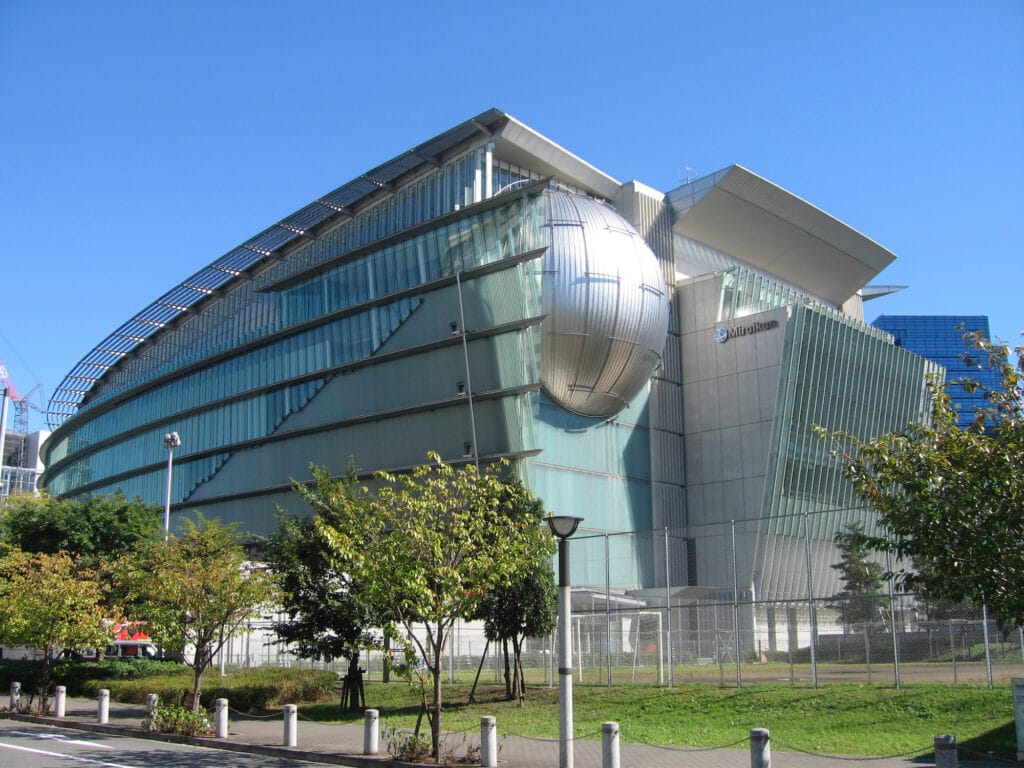
Approaching Miraikan, visitors are immediately confronted with a sleek, modern architectural presence that underscores its focus on the future rather than the past. Its location in the futuristic setting of Odaiba, a man-made island with wide public spaces and waterfront views, helps frame the museum’s identity as a place to look ahead. The exterior’s clean lines and expansive glass surfaces suggest transparency and innovation, blending high-tech aesthetics with open public space.
Inside, visitors encounter a large central hall that functions as a sort of scientific forum. Rather than a traditional entrance lobby stacked with merchandise or grand staircases, this space is usually animated by dynamic exhibits and installations designed to engage curiosity right away. The layout generally avoids a strict chronological flow, opting instead for thematic zones focusing on different areas of emerging science. As such, the museum’s identity is intended to be experienced as exploratory rather than linear, aligning with its emphasis on scientific questions in flux rather than fixed historical narratives.
Information desks, signage, and thematic divisions provide some orientation, but the overall impression is one of stepping into a stimulating environment where visitors are invited to explore and question. Visual and interactive displays are prominent from the outset, framing the museum as a space for active learning and engagement rather than passive observation.
Highlights and Key Exhibitions
The Miraikan’s permanent exhibitions center on several intersecting themes in contemporary science and technology. Robotics is a major focus, reflecting Japan’s unique global position in this field. The museum frequently showcases humanoid robots capable of interaction and demonstration, offering visitors a glimpse into current robotic capabilities and research directions. This focus serves both educational and cultural functions, highlighting technological progress while addressing questions about human-robot relationships.
Another key domain is space science and exploration. The museum presents models, interactive simulations, and data visualizations related to Japan’s space program and broader space research. This can include satellite technology, planetary probes, and experiments conducted on the International Space Station. Through such displays, visitors encounter up-to-date scientific information combined with an accessible presentation style that includes hands-on components.
Environmental science and sustainability are also evident themes, with exhibits discussing climate change, renewable energy, and biodiversity. Rather than only providing data, these displays often incorporate interactive elements to demonstrate scientific principles or environmental impacts. This approach encourages reflection on the contemporary challenges facing society and the role of science in addressing them.
One notable permanent exhibit is the Geo-Cosmos, a large spherical display covered in LED panels that visualize Earth’s surface and climate data in real time. This installation has become emblematic of the museum’s mission to connect visitors with global scientific phenomena. Its impressive scale and visual impact seek to foster a tangible sense of planetary interconnectedness.
Beyond these, the museum offers exhibitions related to the frontiers of life sciences, including genetics and brain science, where often multimedia and tactile models elucidate complex topics. These thematic areas reveal the museum’s objective to keep pace with rapidly evolving scientific frontiers while translating them into formats understandable for non-specialists.
Overall, the museum’s exhibition strategy avoids treating historical science as fixed background. Instead, it emphasizes emergent science as dynamic and unfolding, reflecting ongoing research and often incorporating live data or real-time demonstrations. This gives the institution a distinct character that differs from more traditional science museums.
Visitor Experience
The visitor experience at Miraikan is typically oriented toward active engagement. Exhibits often employ hands-on elements, multimedia displays, and interactive technologies that require participation. This approach aligns well with younger visitors, students, and those with a curiosity about modern science and technology. However, the density and technical nature of some exhibits may pose challenges for casual visitors or those without a basic interest in the topics presented.
Interpretation varies across the museum but generally favors visual and experiential communication over dense text panels. This supports accessibility, although it might leave some deeper scientific questions insufficiently explored for visitors with a more specialized interest. The museum’s layout encourages free movement between themed zones, which can be enriching but might lack a cohesive narrative thread for visitors expecting a linear or chronological presentation.
Pacing a visit can also be variable, depending on individual engagement with interactive exhibits and multimedia content. The abundance of information and the demand for active participation can lead to cognitive overload for some, especially if visits are undertaken without prior knowledge or preparation. That said, the diversity of topics lets visitors focus on areas of personal interest.
While the museum uses technology effectively to visualize abstract scientific phenomena, this reliance can also limit accessibility for visitors less comfortable with digital interfaces. Some areas may feel crowded during peak times, which can affect the ease of interaction with exhibits. Documentation in English is present but not always comprehensive, reflecting the museum’s largely domestic audience but posing a mild limitation for non-Japanese speakers.
Tickets, Access, and Planning
Information regarding tickets, access, and visiting procedures should be verified on the museum’s official website before planning a visit. Admission policies and hours can change due to special events or public health advisories. It is advisable to confirm whether advance booking or timed entry is necessary, particularly during peak periods or weekends.
The Miraikan’s location in the Odaiba district means it is accessible via several transport routes including subway lines and bus services, although reaching the island can require additional transit compared to central Tokyo museums. Visitors may wish to plan journeys accordingly, considering transfer times and connections.
For those dependent on accessibility services, an official resource check is important to ensure that accommodation needs can be met. Likewise, information on available language support, guided tours, or audio guides should be reviewed for the current status as offerings may vary.
Facilities such as cafés, shops, and resting areas typically contribute to the overall visit but details should be sourced directly from museum communications to confirm availability and service options.
Final Verdict
The Miraikan – National Museum of Emerging Science and Innovation stands as a distinctive institution within Tokyo’s cultural and educational landscape, focusing squarely on contemporary and future scientific issues. Its strengths lie in its cutting-edge themes, interactive exhibits, and attempts to connect scientific research directly with public audiences.
The museum successfully avoids traditional historical science presentation in favor of a forward-looking, exploratory model. This approach suits visitors interested in technological development, robotics, space sciences, and environmental issues who are prepared for a level of engagement requiring active participation and openness to sometimes technical content.
However, this focus can also limit appeal for more casual visitors or those seeking a straightforward, curated narrative. The density of information and reliance on technology may occasionally overwhelm or frustrate visitors preferring a more relaxed museum experience. Language accommodation for international visitors is useful but not comprehensive, which may require some preparation for non-Japanese speakers.
Overall, the Miraikan offers a unique experience that conveys the excitement and challenges of science at the frontier. It is a noteworthy destination for those with an interest in emerging sciences, though visitors should be prepared for an educational visit that demands engagement and curiosity rather than passive viewing. Checking the museum’s official resources in advance is essential for up-to-date information on tickets, hours, and visitor services, ensuring a well-planned trip.