Riga Motor Museum Review
Tickets & Tours
Compare ticket options and guided tours from trusted booking partners.
We may earn a commission if you book through these links.
Historical Context
The Riga Motor Museum, located in Latvia's capital, provides an intriguing lens through which to explore the nation’s automotive heritage and broader historical currents. Established in 1989, the museum grew out of efforts to preserve and celebrate Latvia’s motoring evolution, particularly during the Soviet era, when car manufacturing and usage revealed much about technological advancements and social change. Given Latvia’s position as a crossroads in Northern Europe and its complex 20th-century history, including Soviet occupation and subsequent independence, the museum’s collection offers not only mechanical artifacts but also a reflection of shifting political and economic tides.
Conceived initially as a repository for vehicles and motoring memorabilia, the museum has evolved into a significant cultural institution chronicling nearly 130 years of automotive development. It holds one of the largest collections of classic cars in the Baltic States, featuring models ranging from early gasoline engines to Soviet-era utility vehicles. The museum’s development is closely tied to Riga’s identity as a regional capital integrating Western and Eastern influences, making it a unique repository of motor history within Latvia, and indeed, the wider post-Soviet context.
What You See on Arrival
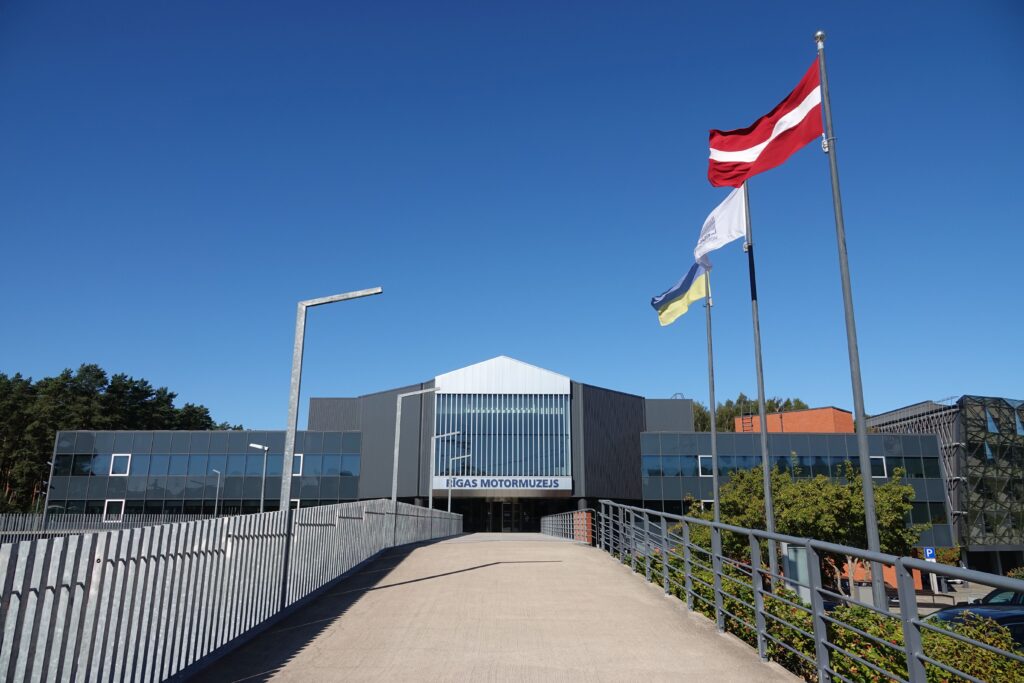
Situated on Sergeja Eizensteina Street, the museum occupies a distinctive, industrial-style building that hints at its functional and archival purpose. The exterior is straightforward and unassuming, with a practical façade composed largely of brick and large windows, which contrasts with the imaginative mechanical displays housed inside. Visitors approaching the site are met by a modest entrance, supplemented by clear signage that directs toward ticketing and visitor services.
The lobby area serves as a transition point, designed to ease crowds and prepare visitors for the varied exhibits ahead. Notably, few contemporary architectural flourishes are employed, reflecting a focus on the artifacts rather than the building itself. Beyond the entrance, there is immediate sight of several vehicles housed behind glass partitions, offering a quick engagement with the collection. The atmosphere on arrival signals a museum devoted to depth and detail, rather than superficial display, inviting visitors to explore at their own pace.
Highlights and Key Exhibitions
The heart of the Riga Motor Museum lies within its diverse and well-curated collection of vehicles and related exhibits. Stretching across multiple halls, the displays traverse the timeline of automotive technology and culture from the late nineteenth century to the modern motor age. One of the defining features is the extensive showcase of Soviet-era vehicles, which represent a significant portion of the collection. These cars and motorcycles, ranging from utilitarian models to luxury cars produced under Soviet constraints, serve as tangible reminders of Latvia’s past political and industrial realities.
Equally important are several Western European and American models, providing an informative comparison between divergent automotive design philosophies and technologies during the Cold War era. The museum also excels at highlighting Latvia’s unique contributions, including locally made prototypes and vehicles that reflect regional preferences and requirements.
In addition to vehicles, the museum includes exhibits on automotive engineering, maintenance, and cultural impact. Mechanical components, tools, vintage advertisements, and interactive displays help contextualize the vehicles, providing insights into the broader social importance of motoring. The inclusion of rare and unusual vehicles—such as custom-built cars and experimental models—adds an element of curiosity and depth to the narrative.
Visitor Experience
Visitors to the Riga Motor Museum can expect a largely self-guided experience, with clear informational placards accompanying the displays. These labels provide technical specifications, historical background, and occasionally explain the economic or cultural significance of individual exhibits. The text is generally comprehensive, although non-Latvian speakers will find that English translations are available, albeit sometimes sparse in detail compared to the Latvian versions.
The layout encourages a chronological or thematic exploration, allowing for flexible pacing. Seating areas are strategically placed along the route, affording moments of rest amid extensive visual and informational content. While the museum does not heavily rely on multimedia or interactive technologies, it strikes a balance by presenting detailed restorations and authentic materials, which may appeal to enthusiasts and scholars.
A modest gift shop offers motoring books, memorabilia, and souvenirs, suitable for those seeking to deepen their understanding post-visit or take home reminders. Facilities including restrooms and a small café cater to basic visitor needs but are functional rather than elaborate, reflecting the museum’s primary focus on its collection. Given the museum’s relatively specialized subject matter, it may be less engaging for visitors without a pre-existing interest in automotive history, but it nevertheless provides a solid and educational experience.
Tickets, Access, and Planning
The Riga Motor Museum is accessible via public transportation, with bus and tram stops located within walking distance. Parking options are available nearby for those arriving by car, although spaces may be limited during peak tourist seasons or weekends. The physical layout is generally accommodating for visitors with mobility impairments; however, some variability in surface texture inside the building and occasional narrow passages could pose challenges.
Ticket prices are reasonable and reflect the museum’s status as a cultural institution rather than a commercial enterprise. Discounts are commonly extended to students, seniors, and groups. Opening hours are typically regular throughout the week but can vary seasonally, so it is advisable to consult the official website for current times before planning a visit.
While audio guides or guided tours are not a standard offering, the museum organizes occasional lectures or temporary thematic events, which, when scheduled, provide deeper engagement and expert commentary. Potential visitors should weigh interests and time availability, as a thorough walkthrough may take between one and two hours depending on attention to detail.
Final Verdict
The Riga Motor Museum occupies a distinctive niche within the museum landscape of Riga and indeed the Baltic region. Its strength lies in a focused and substantial collection that recounts Latvia’s automotive history in parallel with wider social and political transformations. While the museum’s presentation favors substance over spectacle, the careful curation and rich assemblage offer an informative glimpse into how vehicles have shaped and reflected Latvian identity and technology over the past century.
Potential visitors seeking a comprehensive understanding of motoring history, particularly in the context of Soviet and post-Soviet Eastern Europe, will find the museum rewarding. Its methodological approach ensures that the stories behind the machines are told with clarity and respect for historical nuance. For more general audiences, the museum may require a degree of patience and curiosity, but the exhibits remain accessible and thoughtfully arranged.
Practically, the Riga Motor Museum is best experienced with some prior knowledge or interest in automotive topics, given the largely text-based interpretative materials and limited interactive elements. Nonetheless, the value of its collection and the insights it provides make it a notable cultural institution worthy of inclusion in a considered exploration of Riga’s diverse museum offerings. For planning details, updates, and ticket information, the museum’s official website offers the most reliable resource.