Kongernes Jelling Review
Archaeology Museums · Jelling, Denmark. Kongernes Jelling, located in the small Danish town of Jelling, serves as a monumental testament to the Viking Age and Denmark’s early medieval history. Often referred to as the “birthplace of Denmark,” the site…
Archaeology Museums · Jelling, Denmark. Kongernes Jelling, located in the small Danish town of Jelling, serves as a monumental testament to the Viking Age and Denmark’s early medieval history. Often referred to as the “birthplace of Denmark,” the site…
Best forTransport history, engineering, families
Review focusCollection, storytelling, practical visit
Historical Context
Kongernes Jelling, located in the small Danish town of Jelling, serves as a monumental testament to the Viking Age and Denmark’s early medieval history. Often referred to as the “birthplace of Denmark,” the site is deeply interwoven with the nation’s formation and Christianisation. Its origins trace back to the late 10th century when two massive burial mounds were constructed by King Gorm the Old and his son Harald Bluetooth, pivotal figures in Danish history. Harald Bluetooth, in particular, is credited with uniting Denmark and Norway and introducing Christianity to the region. These burial mounds, together with rune stones and a reconstructed wooden church, form the nucleus of this UNESCO World Heritage Site. The museum complements the ancient monuments by providing historical context and archaeological insights, presenting a comprehensive narrative about the transition from paganism to Christianity and the emergence of Denmark as a unified kingdom during the Viking era.
What You See on Arrival
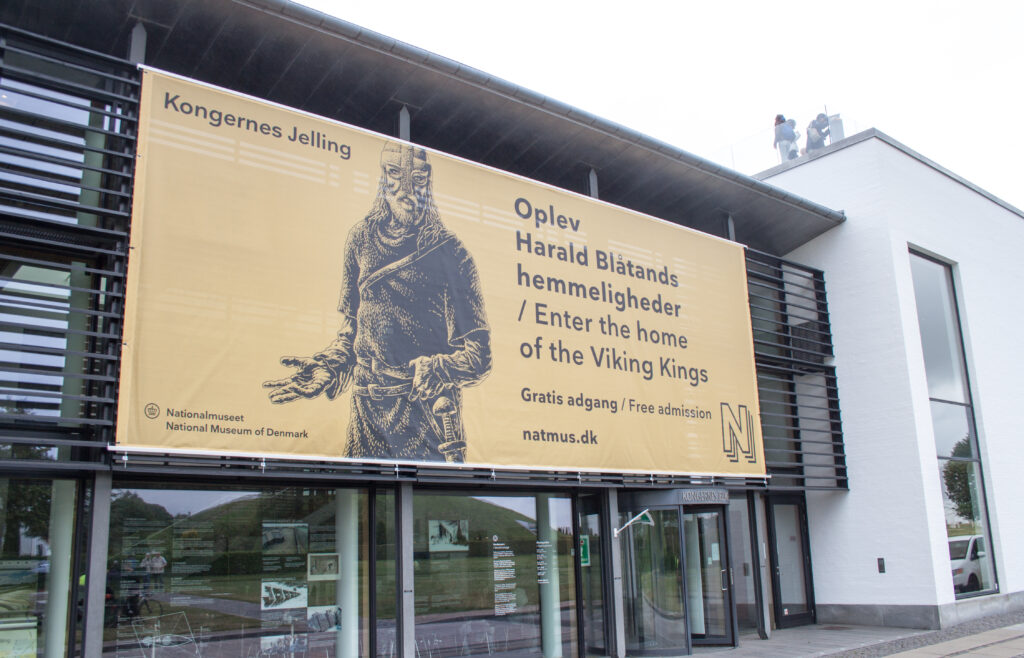
Upon arrival at Kongernes Jelling, visitors are greeted by a striking blend of ancient and modern elements that together encapsulate centuries of Danish heritage. The site’s landscape is dominated by two large burial mounds, one of which is the larger of the two and is distinguished by its sheer scale and the symbolic weight it carries. Nearby stands the famous Jelling Stones—massive rune stones inscribed with intricate carvings and texts claiming Harald Bluetooth’s achievements. These stones are central to the site’s historical significance and remain some of Denmark’s most important runic artefacts. Adjacent to the stones is a carefully reconstructed wooden church, echoing the architectural style believed to have been in place during Harald’s reign, offering visitors a tangible sense of spiritual and cultural transition. The visitor centre sits unobtrusively yet invitingly at the site’s edge, combining minimalist modern design with interpretive displays that initiate the historical journey before exploring the outdoor monuments.
Highlights and Key Exhibitions
The core of Kongernes Jelling’s appeal lies in its uniquely preserved burial mounds and, above all, the Jelling Stones. The larger stone, often called Denmark’s “birth certificate,” depicts the first written record of the country’s name alongside Christian iconography, reflecting the nation’s pivotal conversion from paganism to Christianity. The runic inscriptions are a rare and invaluable insight into Viking Age linguistics, politics, and religious change. Beyond these stones, the reconstructed wooden church constitutes a striking highlight, offering an immersive atmosphere that helps visitors envision early ecclesiastical architecture and the socio-cultural realities of the 10th century. Inside the visitor centre, detailed exhibitions provide context about Viking craftsmanship, burial customs, and the broader geopolitical shifts of the era. The integration of multimedia presentations and archaeological artefacts enhances the storytelling, bridging the gap between past and present. While the outdoor elements anchor the visit with authenticity, the museum’s displays enrich understanding by exploring the lives of those who built these monuments and their significance through the ages.
Visitor Experience
Kongernes Jelling is designed to deliver a reflective and thoughtfully paced exploration of Viking history and Denmark’s formative period. The layout encourages visitors to move fluidly between outdoor and indoor experiences, allowing for both contemplation amid ancient monuments and engagement with educational content inside the visitor centre. Signage is bilingual, typically available in Danish and English, which makes the information accessible to international visitors without diluting its academic rigour. The pathways are well maintained, facilitating an easy stroll around the grounds, where one can appreciate the scale and craftsmanship of the burial mounds and stones. Within the reconstructed church and exhibition halls, the atmosphere is deliberately serene, fostering a sense of reverence appropriate for the symbolic sites on display. Audio guides and knowledgeable staff members, when available, add layers of interpretation and encourage deeper inquiry. However, the site presumes some prior interest in Viking history to fully appreciate the nuances presented, which might feel dense for those new to the subject. Overall, the museum balances immersive storytelling with scholarly detail that appeals to a range of visitors, from history enthusiasts to families.
Tickets, Access, and Planning
Access to Kongernes Jelling is straightforward, with the site reachable via public transport and well-signposted roads for those travelling by car. Parking facilities are available on-site, improving convenience without detracting from the site’s natural setting. The visitor centre’s opening hours are generally in line with seasonal tourism patterns, emphasizing longer hours in summer months, so careful planning around these times is advisable. Ticket pricing is moderate and reflects the site’s blend of indoor exhibitions and outdoor monuments; family and group tickets offer some savings, making it an affordable cultural outing. Admission fees typically cover access to all parts of the museum grounds as well as entrance to the visitor centre. There is no additional charge for guided tours, though booking ahead is recommended during peak seasons to ensure availability. The museum maintains a high standard of accessibility, including wheelchair-friendly paths and facilities, though the terrain around the burial mounds may present minor challenges for those with limited mobility. Visitors are encouraged to allot at least two to three hours to absorb the full experience at a leisurely pace.
Final Verdict
Kongernes Jelling stands out as a vital cultural and historical destination that succeeds in illuminating a crucial chapter of Danish and Nordic history. Its combination of monumental archaeological sites, meticulous reconstructions, and well-curated exhibitions create a richly layered experience. The narrative it tells—of dynastic power, religious transformation, and nation-building—is both compelling and well-supported by tangible artefacts and innovative interpretive strategies. While some visitors may find certain historical content dense, the overall visitor experience is enriched by informative displays and a thoughtful site layout that fosters appreciation for both the grand scale and intimate details of the Viking legacy. For those interested in medieval Scandinavia, early Christianity, or European archaeological heritage generally, Kongernes Jelling offers a meaningful journey into the past. The site’s commitment to preservation and education ensures it remains a cornerstone of Denmark’s cultural landscape, worthy of inclusion on any itinerary that explores the roots of Northern Europe.