Mémorial de la Shoah Review
Holocaust Memorial Museums · Paris, France. The Mémorial de la Shoah in Paris stands as a profound tribute to the victims of the Holocaust and those who resisted Nazi persecution during World War II. Established in a country with a…
Holocaust Memorial Museums · Paris, France. The Mémorial de la Shoah in Paris stands as a profound tribute to the victims of the Holocaust and those who resisted Nazi persecution during World War II. Established in a country with a…
Best forScience, technology, hands-on learning
Review focusExhibits, interpretation, visitor flow
Historical Context
The Mémorial de la Shoah in Paris stands as a profound tribute to the victims of the Holocaust and those who resisted Nazi persecution during World War II. Established in a country with a complex history of collaboration and resistance, it serves not only as a memorial but also as an educational hub. France’s occupation and the resulting deportation of thousands of Jews have left a deep imprint on national memory, and this institution plays a crucial role in fostering reflection and awareness. Opened in 2005, the museum merges archival preservation with poignant storytelling, aiming to educate visitors about the atrocities of the Holocaust and the importance of combating antisemitism and all forms of intolerance today. It is part of a wider network of memorials and museums across Europe that contribute to Holocaust remembrance and the ongoing dialogue about human rights and historical responsibility.
What You See on Arrival
Upon approaching the Mémorial de la Shoah, visitors are met with a solemn and understated facade nestled within a quiet Parisian neighborhood in the 4th arrondissement. The building itself is modern yet respectful in its architectural tone, avoiding grandiosity in favor of solemnity and reflection. Outside, the gardens quietly evoke a sense of remembrance, featuring symbolic sculptures and plaques that gently prepare visitors for the weighty experience inside. There is a sense of calm and reverence that permeates the atmosphere well before the entrance doors. The external design choice highlights the museum's focus on contemplation and education rather than spectacle. Signage is clear, though modest, guiding visitors to the entrance and ticketing area without detracting from the somber mood. The site, being centrally located near the historic Jewish quarter of Paris, enriches the contextual atmosphere as visitors are reminded of the community’s ongoing presence and legacy.
Highlights and Key Exhibitions
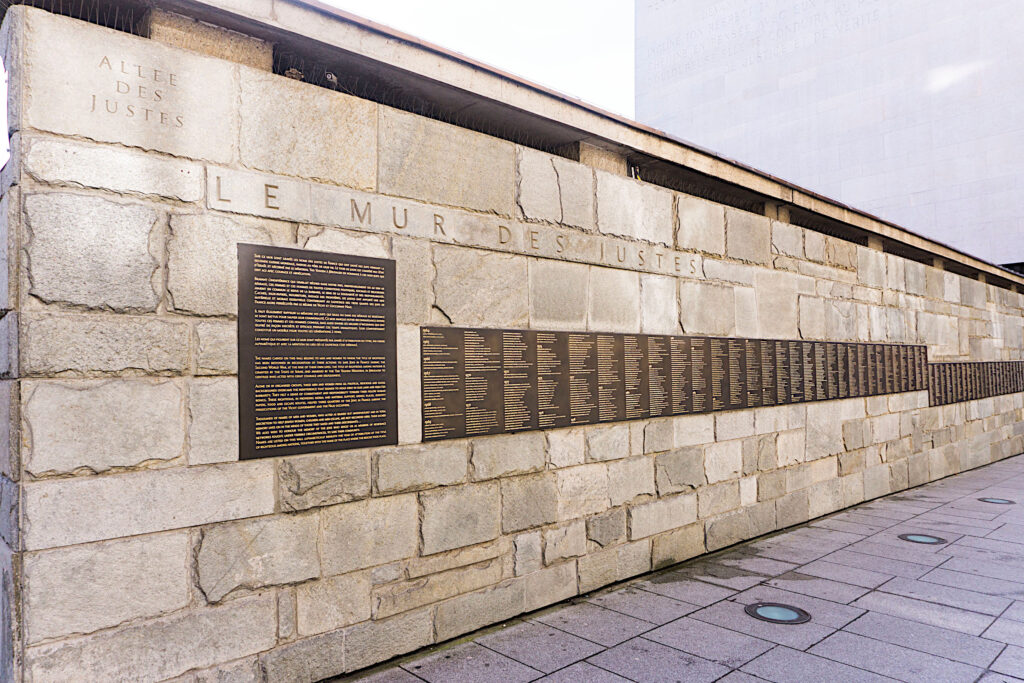
Inside the Mémorial de la Shoah, the exhibitions are meticulously curated, combining historical documents, photographs, personal testimonies, and multimedia presentations that create a deeply immersive educational experience. One of the museum’s cornerstone exhibitions centers on the rise of anti-Jewish legislation and deportation policies in France under the Vichy regime. This section uses original artifacts and testimonies to document the mechanisms of persecution and the devastating human impact. Another compelling highlight is the extensive remembrance wall listing the names of victims deported from France—an emotionally powerful tribute that personalizes the magnitude of loss.
The museum also dedicates significant space to exploring the spirit of resistance within France, showcasing stories of individuals and groups who fought against Nazi oppression. This balanced approach between victimhood and defiance broadens the narrative beyond tragedy to include elements of courage and solidarity. Additionally, audio-visual stations provide survivors’ testimonies in their own voices, lending a haunting immediacy and authenticity. While the permanent exhibitions provide comprehensive historical coverage, the museum’s archival library and documentation center serve as critical resources for researchers and those eager to delve deeper into Holocaust studies.
Visitor Experience
The visitor journey through the Mémorial de la Shoah is thoughtfully designed to encourage contemplative engagement. The lighting and spatial organization are subtle yet purposeful, with quieter zones allocated for reflection interspersed among more information-dense sections. Exhibition labels are available in multiple languages, including English, which broadens accessibility and ensures that non-French speakers can fully engage with the content. The presentation style successfully combines educational rigor with emotional resonance, striking a balance that neither overwhelms nor under-informs.
Staff members are generally noted for their professionalism and sensitivity, guiding visitors with respect and offering additional information when sought. While the museum can evoke challenging emotions, especially for those encountering the subject matter for the first time, it is careful not to descend into sensationalism. Instead, it fosters an atmosphere of learning and remembrance. The presence of interactive displays and well-curated multimedia content helps to maintain engagement for visitors of varying ages and backgrounds. However, the museum’s overall experience might require a considerable time commitment, as the depth of information is substantial and requires focused attention to fully appreciate.
Tickets, Access, and Planning
The Mémorial de la Shoah operates with an admission policy that ensures accessibility, offering free entry to prioritize educational outreach. However, due to its sensitive and potentially distressing content, visitors are advised to plan their visit accordingly, allowing sufficient time both for the exhibition walkthrough and moments of pause. The museum is situated within easy reach of several public transportation options in Paris, including metro stations, which facilitates convenient arrival for both local residents and tourists.
For those planning a visit, the official website provides essential information regarding opening hours, guided tours, and upcoming educational programs. While photography inside the exhibition spaces is typically restricted to preserve the sanctity of the artifacts and testimonies, visitors are encouraged to use the museum's resources for further reading and reflection post-visit. Accessibility for visitors with limited mobility is addressed thoughtfully, although potential visitors should verify specific accommodations in advance to ensure a seamless experience.
Final Verdict
The Mémorial de la Shoah in Paris stands as an essential institution for Holocaust remembrance and education. Its unflinching presentation of France’s wartime history, including the arrest, deportation, and extermination of French Jews, is both comprehensive and respectful. The museum’s strength lies in its meticulous curation of artifacts and testimonies, which bring historical statistics to life through deeply personal narratives. This approach effectively honors the victims while educating successive generations about the dire consequences of hatred and complicity.
While the museum demands emotional engagement and intellectual focus from its visitors, it does so with sensitivity, avoiding sensationalism in favor of solemn commemoration and insightful pedagogy. Its location in Paris's historic Jewish quarter enhances its historical resonance, making it a significant site for all visitors interested in World War II, human rights, and collective memory. The Mémorial de la Shoah is a must-visit for those seeking to understand the Holocaust’s impact in France and beyond, providing a powerful reminder of the ongoing necessity of vigilance against intolerance in all its forms.