Peggy Guggenheim Collection Review
Art Museums · Venice, Italy. The Peggy Guggenheim Collection in Venice stands as a beacon of modern art reverence, housed in the 18th-century Palazzo Venier dei Leoni, a once-modest unfinished palace on the Grand Canal. The venue itself holds…
Art Museums · Venice, Italy. The Peggy Guggenheim Collection in Venice stands as a beacon of modern art reverence, housed in the 18th-century Palazzo Venier dei Leoni, a once-modest unfinished palace on the Grand Canal. The venue itself holds…
Best forMasterpieces, architecture, cultural history
Review focusCollection highlights, building, visitor flow
Historical Context
The Peggy Guggenheim Collection in Venice stands as a beacon of modern art reverence, housed in the 18th-century Palazzo Venier dei Leoni, a once-modest unfinished palace on the Grand Canal. The venue itself holds profound significance: it was the longtime home of Peggy Guggenheim, an American heiress and pioneering art collector whose vision shaped this unique institution. Born into a family synonymous with industrial wealth and cultural patronage, Guggenheim was a formidable presence in the art world, fostering groundbreaking relationships with artists central to 20th-century modernism and surrealism. Founded in 1951, the collection reflects Guggenheim’s discerning eye and commitment to avant-garde art, proudly showcasing works from her personal acquisitions and those she nurtured. Over decades, the museum has established itself as a vital cultural hub, bridging American modernism and European artistic innovation, and contributing significantly to Venice’s identity beyond its rich classical heritage.
What You See on Arrival
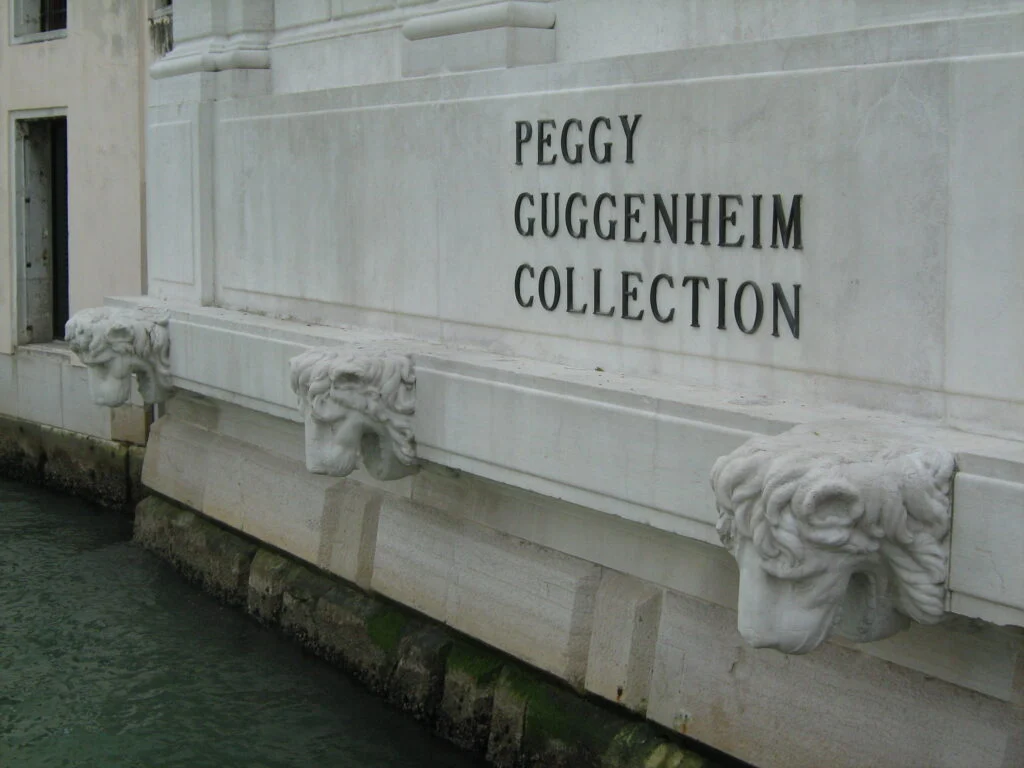
Approaching the Peggy Guggenheim Collection unfolds a distinct experience that melds the allure of Venice’s waterways with the promise of modern art’s vibrancy. The palazzo’s modest façade—its pale stonework punctuated with arched windows and wrought iron balconies—does not scream grandiosity, but rather invites curiosity. Situated on the Grand Canal near the Accademia bridge, the setting enchants with views of gondolas and shimmering water traffic, providing a quintessential Venetian backdrop. Upon entering, visitors encounter a tranquil courtyard garden, a lush oasis that already hints at the fusion between art and nature cultivated within. The palazzo’s intimate scale contrasts sharply with the cosmopolitan expanse of many larger museums, offering a sense of privacy and intimacy that is rare in art institutions. The exterior’s historic artistry subtly prepares guests for the modernist treasures contained inside, poised halfway between heritage and innovation.
Highlights and Key Exhibitions
The Peggy Guggenheim Collection’s holdings are widely regarded as one of Europe’s finest assemblages of modern art, centered around the personal taste and pioneering acquisitions of its founder. Among the highlights is a significant collection of works by Jackson Pollock, including seminal drip paintings that demonstrate his revolutionary technique and influence on Abstract Expressionism. Equally compelling is the presence of Pablo Picasso’s multidimensional Cubist works, which reveal the radical fragmentation of form that defined early 20th-century artistic exploration.
The museum’s commitment to showcasing art’s transformative power is reflected in its diversity, featuring pieces by Salvador Dalí, Max Ernst, and Wassily Kandinsky. Kandinsky’s abstract compositions provide a vibrant counterpart to the surreal imaginations of Dalí and Ernst. The collection also emphasizes European avant-garde movements, with highlights including Alberto Giacometti’s sculptural explorations of human form and scale, offering stark contrasts to the two-dimensional canvases nearby.
One of the collection’s singular strengths is its preservation of the relationship between art and space. The palazzo’s layout enables dialogue between painting, sculpture, and the surrounding decorative elements, facilitating an immersive experience. Visitors can discover carefully curated rooms that convey a narrative of 20th-century artistic evolution from cubism through surrealism to post-war abstraction. The museum’s permanent collection is bolstered by thoughtfully selected loans, maintaining a dynamic yet coherent presentation year-round.
Visitor Experience
The Peggy Guggenheim Collection excels in fostering a visitor experience that balances educational depth with aesthetic pleasure. The atmosphere is intimate rather than overwhelming, encouraging contemplative engagement with the art. The museum’s layout respects the palace’s original architecture, using natural light strategically to enhance the visual impact of works. However, some visitors may find the spatial constraints challenging, especially during peak seasons when foot traffic rises.
The museum provides accessible guides and audio tours that elucidate the historical and artistic significance of the collection. These resources are well-crafted, addressing audiences ranging from casual visitors to art aficionados. Multilingual materials support the collection’s international appeal, given Venice’s status as a global cultural crossroads.
The café and bookshop extend the visit’s cultural enrichment, offering carefully curated literature and opportunities for reflection. The café enjoys garden views, reinforcing the museum’s blending of art and environment. For those seeking a deeper dive, regular lectures and educational programs underline the museum’s role as a living institution rather than a static gallery. Still, planning ahead for these events is advisable, as attendance can be limited.
Tickets, Access, and Planning
Practical considerations for visiting the Peggy Guggenheim Collection are largely favorable but merit some forethought. Tickets can be purchased in advance online, a strongly recommended option to avoid queues, particularly during the high tourist season. The establishment offers varied pricing tiers, including reduced rates for students, seniors, and EU citizens, as well as free admission days aligned with cultural initiatives.
The museum’s location on the Grand Canal is accessible via Venetian vaporetto (water bus) lines, with stops located near the Accademia bridge, highlighting the necessity of relying on waterborne transport within Venice’s unique urban geography. While the palazzo itself is a historic building with inherent spatial limitations, efforts have been made to accommodate visitors with mobility challenges. Wheelchair access is available, although some areas of the building’s upper floors may be less accessible without assistance.
Opening hours are consistent with typical cultural institution schedules, but checking the official website before planning a visit remains important to confirm current times and any special advisories. Winter months generally see lighter crowds but may come with reduced hours. Supplementary services, such as guided tours and educational workshops, often require advance booking, and dedicated visitors should plan accordingly to secure spots.
Final Verdict
The Peggy Guggenheim Collection stands out as a cornerstone of modern art appreciation within Venice’s richly layered cultural mosaic. Its unique integration of historic Venetian architecture with a premier collection of 20th-century masterpieces provides a nuanced perspective on the evolution of modernism, as curated through the life and vision of a singular art patron. The collection’s depth and quality, underscored by the presence of iconic works by Pollock, Picasso, and Kandinsky among others, make it essential for understanding the trajectory of contemporary art in both Europe and the United States.
While the museum’s scale is more intimate than that of grand national institutions, this intimacy enhances the visitor’s ability to engage deeply with the art and its historical context. Physical constraints inherent to the palazzo’s structure may pose minor inconveniences, but these are largely outweighed by the richness of the experience and the thoughtful presentation throughout.
In sum, the Peggy Guggenheim Collection offers a compelling journey through the breakthroughs of modern art, set against the evocative backdrop of Venice’s waterways and historic ambiance. Whether sought out by seasoned connoisseurs or new admirers of modernism, it remains an indispensable destination for those wishing to explore the intersections of art, history, and personal vision. Visitors embarking on this cultural encounter will find a museum that not only preserves an extraordinary collection but also invites ongoing dialogue about the enduring impact of avant-garde creativity.