Queensland Maritime Museum Review
Maritime Museums · Brisbane, Australia. The Queensland Maritime Museum, situated on the Brisbane River at South Bank, holds a significant place in the cultural landscape of Australia’s Queensland state. Established in the late 20th century, the museum reflects Queensland’s…
Maritime Museums · Brisbane, Australia. The Queensland Maritime Museum, situated on the Brisbane River at South Bank, holds a significant place in the cultural landscape of Australia’s Queensland state. Established in the late 20th century, the museum reflects Queensland’s…
Best forMaritime history, ship lovers, port culture
Review focusMaritime collections, ship history, and visitor planning
Historical Context
The Queensland Maritime Museum, situated on the Brisbane River at South Bank, holds a significant place in the cultural landscape of Australia’s Queensland state. Established in the late 20th century, the museum reflects Queensland’s deep historical ties with maritime trade, naval defense, and riverine transport that have shaped the region’s economy and identity. Queensland’s extensive coastline and its position as a gateway to the Pacific and the Torres Strait underpin the museum’s thematic focus. The institution’s collections document the evolution of seafaring technology and commerce in the region, from Indigenous watercraft traditions through colonial era vessels to modern marine engineering.
The maritime history represented at the museum is not limited to commercial interests; it also highlights military naval operations, reflecting Queensland’s strategic role during conflicts such as World War II. The collection contributes to a greater understanding of how maritime activities influenced coastal communities and supported industries like fishing, shipbuilding, and passenger travel. Over the decades, the museum has expanded its scope to include different forms of maritime heritage, adopting a broader perspective of cultural history and technological progress in Australia’s northeast.
The Queensland Maritime Museum sits within the broader context of maritime museums in Australia, where there is ongoing dialogue about how to preserve and present the multiple narratives linked to watercraft and seafaring cultures. By focusing on Queensland’s geographical and historical specificity, the museum provides an important regional complement to national institutions. Nevertheless, it must balance local historical detail with appeal to visitors who may be unfamiliar with Australia’s maritime past.
What You See on Arrival
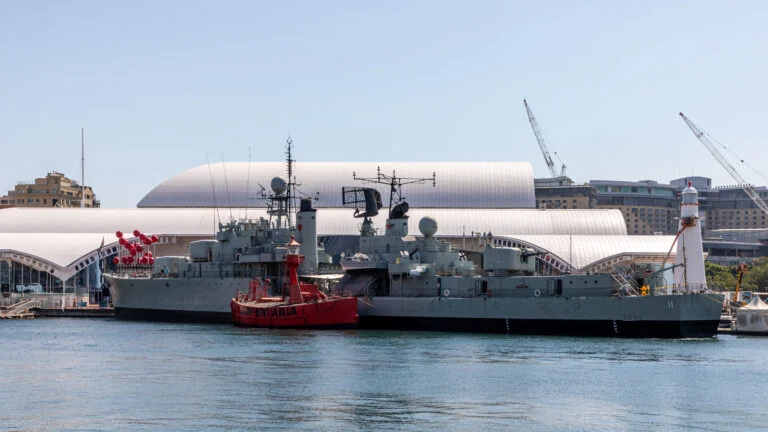
Upon approach, visitors are greeted by a complex of buildings and outdoor spaces which communicate the museum’s maritime focus visually and spatially. The site on the Brisbane River incorporates several docks alongside the main gallery halls, providing an immediate sense of connection to water. Large vessels moored outside, including decommissioned warships and historic tugs, are notable elements of the museum’s exterior presentation. These floating exhibits function both as maritime artifacts and as an invitation to explore inside, marking the museum as a hands-on, tangible heritage site rather than one confined to traditional display cases.
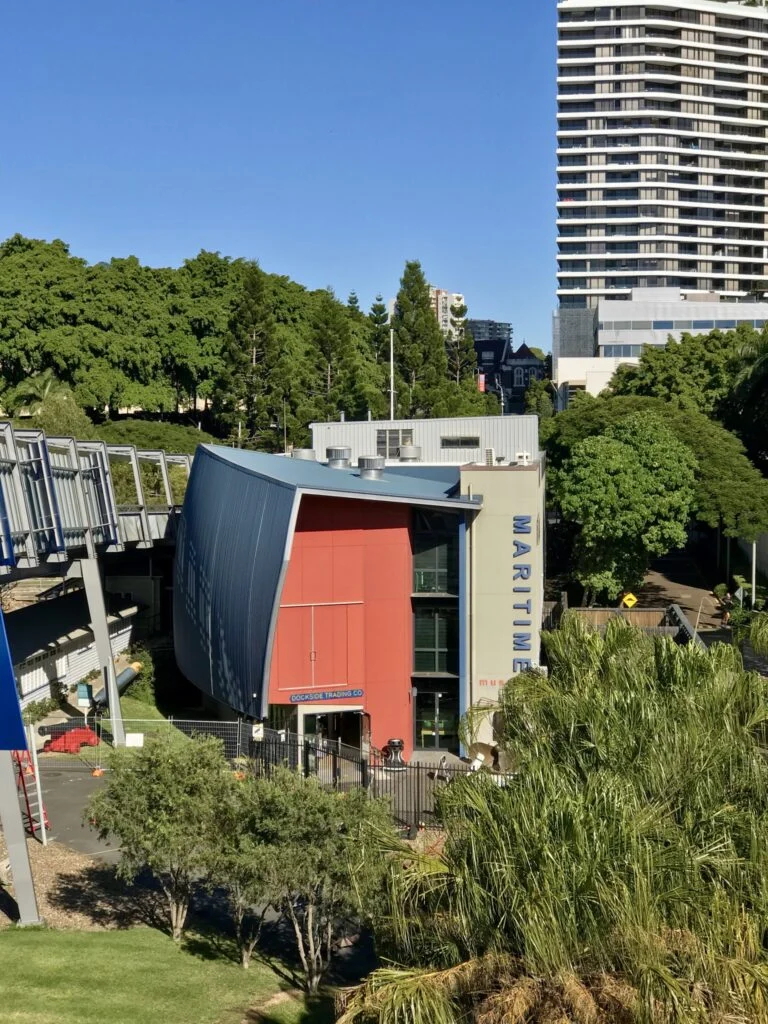
The architecture itself is functional rather than ornamental, reflecting the museum’s utilitarian source material: ships, engines, and navigational instruments. Signage and arrangement at the entry are clear but restrained, focused on orienting visitors toward various galleries and outdoor exhibits. The museum’s branding and identity emerge through a consistent use of maritime motifs and information panels that emphasize the story of Queensland’s waterways as lifelines for commerce and culture.
Visitor impressions at first sight are dominated by the scale and weight of the vessels outside, juxtaposed with smaller craft and historical models inside. This interplay of large and small, outdoor and indoor, mechanical and cultural underlines the museum’s claim to represent a wide spectrum of maritime heritage, from everyday coastal boats to naval artifacts of significant historical consequence. The framing of the space suggests a working museum that prioritizes material authenticity over spectacle.
Highlights and Key Exhibitions
The core of the Queensland Maritime Museum’s collection lies in its extensive display of vessels, models, and maritime technology that cover a timeline from the earliest recorded local watercraft to mid-20th-century naval and commercial ships. Among the most prominent exhibits is a former naval launch and assorted smaller boats that illustrate the variety of maritime operations in Queensland’s waters. This selection offers a concrete glimpse into the development of propulsion and design tailored to specific conditions, such as riverine navigation or open sea voyages.
A central focus is the museum’s coverage of naval history, particularly Queensland’s role during both World Wars. Artifacts include weapons, uniforms, and personal items that contextualize service life in the region. The presence of a Second World War corvette, permanently berthed as a museum ship, anchors this narrative strongly. Visitors can examine the vessel’s construction and fittings, which reveal technological adaptations made during wartime. This highlight is particularly valuable for those interested in military history as it provides a rare opportunity to experience a naval vessel of this scale up close.
The museum also allocates significant space to merchant and passenger ships, illustrating Queensland’s transformation through maritime trade. Models and artifacts depict the vessels that connected Brisbane with global markets, emphasizing the import-export economy foundational to local development. Interpretive panels explain the economic impact of this shipping network and detail the technological shifts from sail to steam and diesel engines.
Another notable facet of the collection is its attention to Indigenous and early settler watercraft. While the focus remains predominantly on European maritime technology, exhibit materials acknowledge pre-colonial and Torres Strait Islander seafaring skills, including traditional canoes and navigation methods. This contextualization adds depth and broadens interpretive scope, though visitors seeking comprehensive Indigenous maritime histories may find the coverage relatively limited.
The museum’s technical exhibits include displays of marine engines, navigation equipment, and shipbuilding tools. These sections appeal to those with an interest in the mechanics and engineering behind watercraft. The variety ranges from small combustion engines to large-scale ship parts, illustrating the progression of marine technology and industrial skills in Queensland.
Overall, the Queensland Maritime Museum presents its exhibitions in a chronological and thematic progression, combining artifacts, photographs, archival materials, and ship models. Lighting and spatial arrangements generally aid comprehension, though some display areas can feel cramped or cluttered given the density of objects. Labels are factual and informative, but interpretation can be utilitarian rather than narrative-driven, which might challenge visitors who are less familiar with maritime terminology or history.
Visitor Experience
The museum caters to an audience interested in maritime history, naval technology, and Queensland’s cultural heritage by water. Its appeal lies in the tangible and mechanical qualities of the exhibits, especially for visitors who appreciate hands-on or industrial heritage museums. The physical presence of ships alongside detailed displays provides a multi-dimensional experience that can engage a range of learning styles.
Pacing the visit is largely self-directed. Visitors may move between indoor galleries and outdoor vessel decks at their discretion, which means time spent at the museum can vary widely depending on individual interest. The scale of the main vessel exhibits naturally encourages slower, more detailed exploration, while smaller galleries offer quicker overviews.
Interpretation aims for clarity and accessibility but may not always accommodate visitors without prior knowledge of maritime subjects. The educational content is solid but tends toward straightforward presentation rather than storytelling or thematic curation. Interactive elements or multimedia displays are limited, which could affect younger or less specialist audiences looking for engaging ways to connect with the material.
In terms of environment, the museum’s riverside location offers a pleasant external setting, though weather conditions could influence the comfort of outdoor exploration. The layout involves some walking along docks and steps to access ship decks, which suggests that visitors with mobility challenges should plan accordingly after checking accessibility options.
The museum’s audience extends across family groups, maritime enthusiasts, local residents, and tourists interested in regional history. While the content is unlikely to appeal universally, those with a specific interest in Queensland’s waterways or naval past will find a focused, carefully maintained collection. The museum’s presentation style suits visitors who prefer straightforward factual overviews and appreciate original artifacts in a relatively undisturbed setting.
Tickets, Access, and Planning
For those considering a visit to the Queensland Maritime Museum, it is advisable to consult the institution’s official website before making arrangements. Practical details regarding opening hours, cost of admission, discounts, group visits, or availability of guided tours are subject to change and should be verified with current sources. Additionally, information about accessibility provisions, including wheelchair access or facilities for visitors with limited mobility, should be checked directly with museum staff.
Given the museum’s location on the riverbank, access may involve crossing bridges or navigating pedestrian zones, which could affect visitors arriving by different transport modes. Planning for adequate time to explore both the indoor exhibitions and outdoor ship displays is recommended, especially if interest extends to the larger vessels.
The site does not emphasize extensive visitor amenities such as cafés or shops, so those expecting full-day visits might consider nearby options in the South Bank precinct. The spatial arrangement of exhibits encourages sequential movement but also allows flexible pacing, which helps accommodate different visitor preferences.
Final Verdict
The Queensland Maritime Museum stands as a substantive institution documenting the maritime heritage of Queensland with an emphasis on practical vessel displays and historical artifacts linked to naval and commercial seafaring. Its strengths lie in the presence of real ships on the river alongside a collection that spans military, commercial, and technological aspects of maritime history. This combination offers a distinctive experience that deepens understanding of Queensland’s ties to its aquatic environment and maritime economy.
The museum’s focus is geographically and thematically specific, making it particularly relevant for visitors interested in the history of Australian maritime activity and its regional variations. It avoids overly general or purely decorative presentations, providing instead a grounded, artifact-driven narrative. However, the straightforward interpretive style may limit engagement for visitors without prior interest or knowledge in maritime subjects. More narrative or interactive approaches could broaden appeal and accessibility.
Logistically, the museum’s site along the river and the physical demands of moving between ship decks suggest some visitors should assess accessibility in advance. Its setting within Brisbane’s South Bank area offers convenient contextual connections but fewer on-site visitor facilities than larger cultural institutions.
In sum, the Queensland Maritime Museum offers a detailed and well-maintained survey of maritime heritage that rewards careful exploration. It is particularly suited to maritime enthusiasts, students of naval history, and anyone curious about Queensland’s place in maritime trade and defense. Prospective visitors should align their expectations with the museum’s focused scope and somewhat traditional presentation style, while consulting current visitor information to plan their trip effectively. The museum’s commitment to preserving tangible aspects of maritime history, including substantial vessel exhibits, ensures it remains a valuable resource for understanding this vital dimension of Queensland’s past.