Pergamon Museum Review
Pergamon Museum Ancient Civilisations · Berlin, Germany Monuments Reconstructed The Pergamon Museum does not display fragments. It reconstructs worlds.
Pergamon Museum Ancient Civilisations · Berlin, Germany Monuments Reconstructed The Pergamon Museum does not display fragments. It reconstructs worlds.
Best forMasterpieces, architecture, cultural history
Review focusCollection highlights, building, visitor flow
Historical Context
The Pergamon Museum in Berlin is one of the most important archaeological museums in the world, renowned for its monumental reconstructions and extensive collections from ancient civilizations. Opened in 1930 on Museum Island, a UNESCO World Heritage Site, the museum was designed specifically to house large-scale architectural fragments brought to Germany during the late 19th and early 20th centuries.
Its origins lie in the era of European archaeological expeditions, when German teams conducted excavations across the Middle East and Mediterranean regions. These expeditions uncovered significant remains from ancient cities such as Pergamon, Babylon, and Miletus. Many of these artifacts were transported to Berlin under agreements that reflected the political and cultural dynamics of the time.
The museum’s most famous installations, including the Pergamon Altar and the Ishtar Gate, were reconstructed within purpose-built galleries, allowing visitors to experience ancient architecture at full scale. This approach transformed the traditional museum model, shifting from displaying isolated objects to recreating entire environments.
Today, the Pergamon Museum is also part of ongoing discussions about cultural heritage and the ownership of artifacts, reflecting changing perspectives on archaeology and museum practice. Despite periods of renovation and partial closures, it remains a central institution for understanding ancient civilizations.
What You See on Arrival
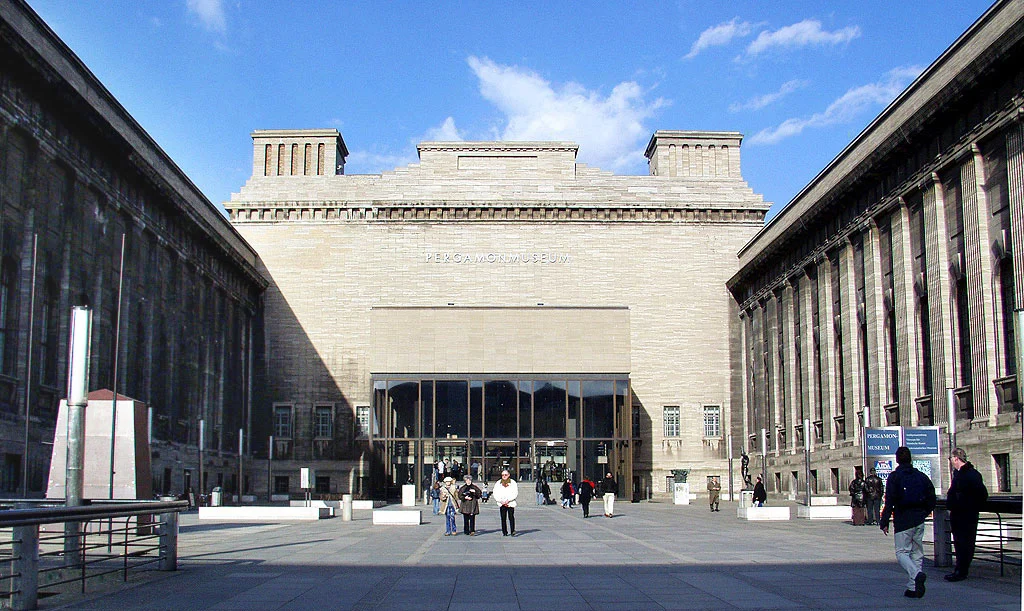
Approaching the Pergamon Museum, visitors encounter a grand neoclassical building that reflects the institutional authority of early 20th-century museum architecture. Its location on Museum Island places it among other major cultural institutions, reinforcing its significance within Berlin’s museum landscape.
Inside, the first impression is one of scale and ambition. The museum is designed around large halls that accommodate monumental reconstructions, creating an immediate sense of immersion. Unlike traditional galleries filled with smaller objects, these spaces are dominated by architectural forms that surround the visitor.
The layout guides visitors through different cultural zones, including the Ancient Near East, the Islamic Art collection, and the Classical Antiquities section. Each area is distinct in character, yet connected through a broader narrative of human history.
The mood is both dramatic and contemplative. The lighting and spatial design emphasize the grandeur of the structures while allowing space for reflection. From the outset, it is clear that the Pergamon Museum offers an experience that is as much about space as it is about objects.
Highlights and Key Exhibitions
The Pergamon Altar is undoubtedly the museum’s most iconic exhibit. This massive Hellenistic structure, originally from the ancient city of Pergamon in modern-day Turkey, features a detailed frieze depicting a mythological battle between gods and giants. The scale and craftsmanship of the altar create a powerful visual and emotional impact.
Equally impressive is the Ishtar Gate from Babylon, with its deep blue glazed bricks and reliefs of animals such as dragons and bulls. Walking through this reconstruction provides a sense of the grandeur of ancient Mesopotamian architecture and the ceremonial importance of the gate.
The Market Gate of Miletus is another highlight, showcasing Roman architectural design on a monumental scale. Its reconstruction demonstrates the complexity of ancient urban spaces and the engineering skills of the period.
The Islamic Art collection offers a different perspective, with intricate architectural fragments, textiles, and decorative objects. The Aleppo Room, in particular, provides insight into domestic interiors and artistic traditions from the Ottoman period.
These exhibits are complemented by smaller artifacts and contextual information, helping visitors understand the broader historical and cultural significance of the structures.
Visitor Experience
The visitor experience at the Pergamon Museum is defined by its immersive approach. The large-scale reconstructions create a sense of presence that is rarely achieved in other museums, allowing visitors to engage with history in a spatial and physical way.
Pacing is generally manageable, as the layout naturally divides the museum into distinct sections. However, the intensity of the experience can be demanding, particularly in the larger halls where the scale of the exhibits requires time to fully appreciate.
Signage and interpretive materials provide essential context, though some visitors may benefit from additional resources such as audio guides or guided tours. These tools can enhance understanding, particularly for those unfamiliar with the historical background of the exhibits.
Crowds can be significant, especially around the most famous installations. However, the size of the spaces helps to distribute visitors, allowing for moments of quieter observation.
Facilities are well integrated, supporting longer visits with rest areas and amenities. Overall, the experience is both educational and visually striking, offering a unique way of engaging with ancient history.
Tickets, Access, and Planning
The Pergamon Museum is centrally located on Museum Island in Berlin and is easily accessible by public transport, including trains, trams, and buses. Its location makes it part of a broader cultural itinerary that includes several other major museums.
Due to ongoing renovations, access to certain sections of the museum may be limited, and it is important to check current information before planning a visit. Tickets are typically required and can be purchased in advance to avoid queues.
Visitors should allow at least two to three hours to explore the museum, though those with a strong interest in archaeology may wish to spend more time. Planning ahead by identifying key exhibits can help ensure a focused and rewarding visit.
Accessibility is generally well considered, though the historic nature of the building may present some challenges in certain areas. Facilities such as elevators and ramps are available in most sections.
Nearby cafés and restaurants provide options for breaks, making it easy to integrate the visit into a full day on Museum Island.
Final Verdict
The Pergamon Museum offers one of the most distinctive museum experiences in the world, combining monumental architecture with detailed historical interpretation.
Who should visit? This museum is essential for those interested in ancient history, archaeology, and the civilizations of the Mediterranean and Middle East. It is particularly valuable for visitors seeking a deeper, more immersive understanding of the past.
Why visit? Because the Pergamon Museum allows visitors to step into history on a scale that few institutions can match. Its combination of iconic structures and thoughtful presentation makes it a truly unforgettable cultural experience.