Palazzo Colonna Gallery Review
The Palazzo Colonna Gallery is housed within the Colonna Palace, an aristocratic residence steeped in centuries of Roman history. The Colonna family, one of Rome’s most influential noble lineages, has occupied the palace since the 13th century, gradually…
The Palazzo Colonna Gallery is housed within the Colonna Palace, an aristocratic residence steeped in centuries of Roman history. The Colonna family, one of Rome’s most influential noble lineages, has occupied the palace since the 13th century, gradually…
Best forMuseum lovers, culture travelers, first-time visitors
Review focusCollections, visitor experience, and practical planning
Historical Context
The Palazzo Colonna Gallery is housed within the Colonna Palace, an aristocratic residence steeped in centuries of Roman history. The Colonna family, one of Rome’s most influential noble lineages, has occupied the palace since the 13th century, gradually assembling an extensive art collection that reflects their prominence and taste. The gallery itself is part of a much larger complex that includes private apartments, courtyards, and a chapel, preserving a unique link between aristocratic life and art patronage in Italy.
Over the centuries, the Colonna family amassed artworks spanning the Renaissance, Baroque, and later periods, with notable contributions from leading artists of their eras. While many Roman palaces possess private collections, the Palazzo Colonna Gallery stands out for its continuity of ownership and the retention of works specifically acquired or commissioned by the family. This context offers visitors an opportunity to encounter artworks in a setting closely aligned with their original domestic intent, providing a contrast to institutions where art has become entirely secularized or museumified.
The preservation of this collection within an aristocratic palace also highlights historical themes such as the interaction between nobility and the Church, representation of power through art, and the evolution of Roman art collecting. Though not a public museum in the traditional sense until the 20th century, opening the gallery to visitors contributes to the understanding of how art collections functioned as both private treasures and social capital. It also contributes to Italy’s broader cultural landscape by anchoring art within a lived historical environment.
What You See on Arrival
Upon approaching the Palazzo Colonna Gallery, visitors would first encounter the imposing façade of the Colonna Palace itself, an emblem of Roman aristocratic architecture. Its stone exterior, decorated with sculptural capitals and heraldic emblems, signals the historic lineage of the family and the dignified nature of the collection housed within. The setting immediately establishes that this is not a conventional public gallery but a historic home with an extensive private collection.
Entry follows via an interior courtyard, typical of Roman palaces, which sets a tone of discovery and invitation into an older way of living. The courtyard’s sculptural features and design contribute a sense of place and continuity with the art to come. The contrast between the open air of the courtyard and the intimate rooms that contain the gallery is part of the overall narrative visitors encounter: the movement from public display to private contemplation.
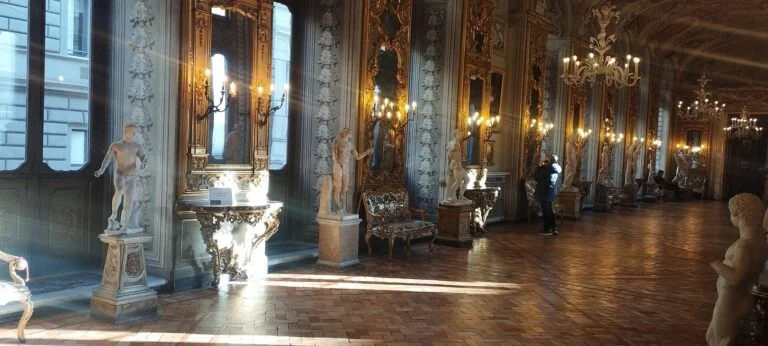
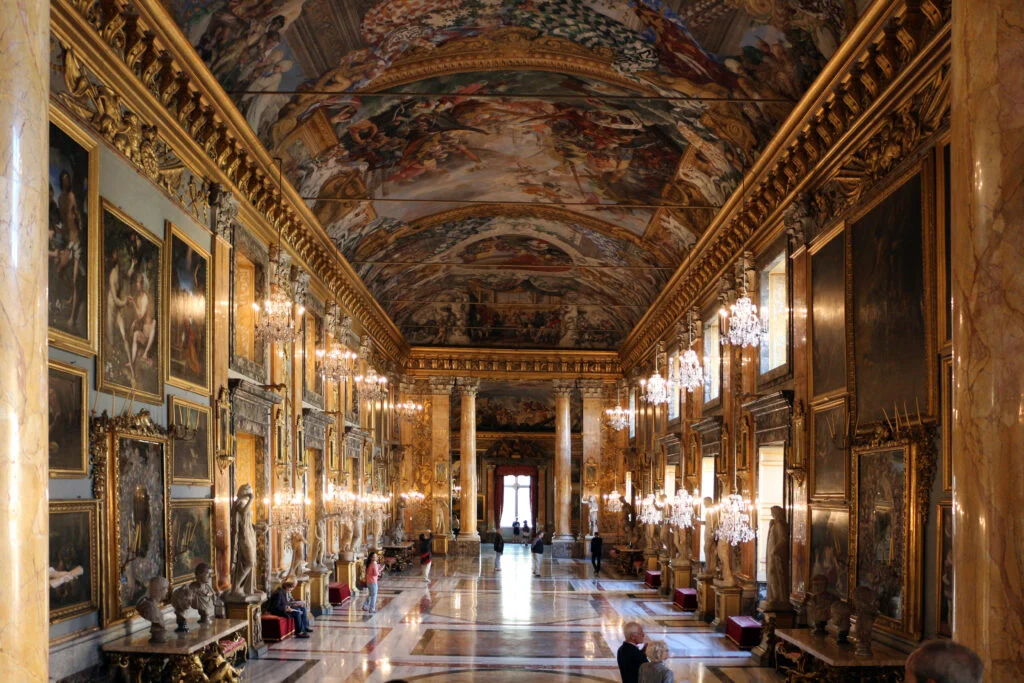
Inside, the gallery spaces remain close to the style and scale one might expect from the Colonna family’s historic apartments. High ceilings, ornate molding, and frescoed walls provide an integrated context for the works on view. This setting shapes the visitor’s expectations, emphasizing the collection as it was meant to be seen: not arranged purely for thematic exhibition but preserving the atmosphere of aristocratic patronage.
While the layout can feel dense, the palace’s architecture contributes a tangible sense of heritage and gravity that frames the artworks as part of a living history rather than isolated objects. Visitors should anticipate a museum experience where the environment is as much a part of the story as the individual pieces.
Highlights and Key Exhibitions
The Palazzo Colonna Gallery’s collection is notable for its diverse holdings across several centuries, with a strong emphasis on Italian Renaissance and Baroque painting. Among the highlights are works by artists such as Tintoretto and Annibale Carracci, whose canvases capture the stylistic shifts and evolving visual language of their times.
Tintoretto’s inclusion brings Venice’s dramatic, dynamic brushwork and chiaroscuro into dialogue with the Roman setting, illustrating the interregional artistic ties of the period. His work in the Colonna collection often exemplifies vigorous composition and an energetic approach to religious and mythological narratives. Carracci, founder of the Bolognese school, represents a return to classical balance and naturalism that influenced much of later Baroque painting. His contributions to the gallery articulate the period’s complexity in blending realism with idealized forms.
The ceremonial rooms hosting these paintings also showcase exquisite decorative arts, including intricate stuccoes, gilded frames, and tapestries. This layering of visual elements enhances the immersive effect and evidences how the Colonna family curated their collection as a Gesamtkunstwerk, a total work of art, combining architecture, painting, and decoration.
In addition to the grand paintings, the gallery contains significant portraits of Colonna family members and other notable figures. These portraits serve as a reminder of the social function of art in advancing family prestige, documenting lineage, and anchoring historical identity through visual means. Visitors interested in social history as much as artistic merit will find these portraits useful for understanding the nexus of art and aristocratic representation.
Sculptural works and antique Roman artifacts appear as complementary components, reinforcing the continuity between the family’s ancient roots and their Renaissance cultural aspirations. These smaller but rich collections include busts and reliefs that add a tactile dimension to the otherwise pictorial focus.
While the majority of works are from Italy, occasional pieces reflect the broader European context of the family’s interests and diplomacy. This subtle diversity enriches the narrative of the collection without distracting from its primarily Roman and Italian character.
Overall, the Palazzo Colonna Gallery does not function as a museum with rigidly curated thematic exhibitions but rather as a historic collection where the art is embedded in the architectural and social fabric of the palace. This creates an experience that appeals to those interested in art history, social history, and the continuity of aristocratic culture.
Visitor Experience
The experience of navigating the Palazzo Colonna Gallery is oriented more towards intimate discovery than large-scale public exhibition. The palace’s historic rooms have been adapted to display artworks without radically altering their original function, meaning visitors encounter artworks in proximity and relation not often found in modern museums.
This proximity can be both a strength and a challenge. On the positive side, the close placement of paintings, portraits, and decorative elements invites careful, detailed viewing and fosters an understanding of the collection as integral to the family’s living environment. The ornate interior décor and frescoed ceilings contribute to a multisensory experience, making visitors aware of the multiple roles art played in expressing wealth and taste.
However, this density can also limit the circulation and pacing for larger groups or visitors accustomed to typical museum layouts. Some may find the tour through multiple smaller rooms to be somewhat labyrinthine or unevenly paced, requiring attention to signage, lighting, and the variable scale of works. Those who prefer linear narrative exhibitions might miss clearer historical or thematic context.
Interpretative materials—such as wall texts and guides—tend to emphasize the historical and artistic significance of major works and the role of the Colonna family in developing the collection. While detailed, these materials may not cater to all learning styles or provide the level of comprehensive background familiar from larger national galleries. Audiences prepared for this will find the content insightful; others might wish for an increased interpretive framework or audio guide options, should these be available.
In terms of audience fit, the gallery principally suits visitors with prior interest or knowledge in Italian art history, Renaissance and Baroque painting, and aristocratic culture. Those seeking a broad, encyclopedic overview of art or contemporary exhibition programming might find the focus limiting. Families with young children may also find the environment somewhat formal and restrained.
Nevertheless, for those drawn by the combination of art with a historic domestic setting, the Palazzo Colonna Gallery offers a distinct experience that differs markedly from traditional museums or modern galleries. The emphasis on the lived-in aspect of art collection provides a nuanced sense of how art functioned in elite circles.
Tickets, Access, and Planning
Practical planning for a visit to the Palazzo Colonna Gallery should involve checking the official website for the most up-to-date information on opening hours, admission fees, and visitor requirements. The gallery, being part of a private palace, may have restricted opening days or require advance booking, especially during peak tourist seasons.
Information regarding accessibility provisions, guided tours, and audio guides is not consistently detailed in public sources, so potential visitors with specific needs or expectations should confirm these details in advance. Given the historic architecture, some areas may have limited access for visitors with mobility challenges.
The location in central Rome makes the gallery accessible via public transport and on foot from many major city landmarks. However, visitors should anticipate navigating urban traffic and Roman streets, which can be crowded and require comfortable footwear.
While there is no confirmed information on internal facilities such as cafés or shops, the presence of basic amenities or nearby options can typically be found in the historic city center. Visitors should plan accordingly for refreshments and breaks.
Given the nature of the gallery’s layout and collection display, visitors may benefit from dedicating sufficient time to absorb both the artworks and the architectural environment, avoiding rushed visits. Consciously pacing the visit will enhance appreciation of the layered environment.
Final Verdict
The Palazzo Colonna Gallery represents a distinctive form of museum experience rooted in aristocratic tradition rather than conventional public exhibition practices. Its value lies less in the comprehensive or thematic breadth of its collection and more in the way the artworks are situated within a historic palace that remains a testament to centuries of elite Roman life.
The collection’s strengths are clear: notable Italian Renaissance and Baroque paintings by significant masters, the integration of decorative arts, and family portraits that anchor the artworks to a social narrative. This integration encourages visitors to consider the interplay between art, power, and domestic life. The palace itself is an essential part of the experience, offering an environment that many modern museums cannot replicate.
On the other hand, the density of the collection, the sometimes limited interpretative scope, and the formally historic ambiance may not appeal equally to all museum-goers. Visitors seeking large-scale, heavily curated exhibitions or a museum experience designed for rapid circulation might find the gallery relatively demanding. The nature of the presentation presupposes a visitor willing to engage with art in its historic context, with an openness to the aristocratic worldview it reflects.
In sum, the Palazzo Colonna Gallery is well suited for a focused audience interested in Italian art history, aristocratic culture, and historic interiors. It deserves consideration as an integral piece of the Roman cultural and artistic landscape, providing access to a private collection that has remained relatively intact over centuries. For those with the appropriate interests and expectations, it offers a compelling and nuanced encounter with art and history, albeit with some logistical considerations to keep in mind. Prospective visitors should consult official sources for current access information and plan accordingly to make the most of this distinctive cultural asset.